How Can Plastic Pallets Help You Save Money? Five Ways That Truly Affect Long-Term Costs
The cheapest pallet is not necessarily the pallet that will cost you the least in the end. Frequent pallet replacements, empty pallets filling your warehouse, return trips taking up vehicle space, packaging snagged by wood splinters, or having to deal with wooden packaging before export can all gradually eat away at the purchase price you saved at the beginning.
Plastic pallets are not cheaper on every route. They truly save money when you can reuse them, recover empty pallets, reduce cargo damage, or support continuous export operations. The five costs below are often more important than the price of one pallet.
| Costs You Keep Paying | What Plastic Pallets Can Change |
|---|---|
| Frequent breakage and emergency pallet replacement | Spread the purchase cost across more trips |
| Empty pallets taking warehouse and return-vehicle space | Nestable designs reduce empty-pallet volume |
| Wood-pallet export treatment | Eliminate ISPM 15 wood-treatment steps for the pallet itself |
| Cargo damage, splinters, and cleaning time | Reduce problems caused by wood splinters, loose boards, and moisture |
| Disposal of retired pallets | Preserve opportunities for reuse and material recycling |
1. How Does Reuse Lower Cost?
A plastic pallet may cost more to buy than a standard wood pallet, but once it returns and continues to be used, the cost no longer happens only once. What you should really look at is how many stable loaded trips the pallet completes, not how much you paid the first time you bought it.
When pallets move repeatedly between your factory, warehouse, distribution centre, or regular customers, reusable plastic pallets can reduce the cost of constantly buying new pallets, arranging emergency replacements, and handling damaged pallets. When you spread purchasing, recovery, cleaning, and replacement costs across the actual number of completed deliveries, the long-term cost becomes much clearer.
Research into the life cycle of pallets has found that, in most studies, wooden pallets are used between 5–30 times, while plastic pallets are commonly used for 50–100 trips. In another model based on 1,000 transport trips, wood pallets were assumed to be used an average of 20 times and plastic pallets an average of 66 times. To complete the same transport task, the model required about 50 wood pallets or 15.2 plastic pallets. This is not a universal service-life promise for every pallet, but it clearly shows why you should look at the cost of each successful trip.
| Trip Data Reference | Wood Pallets | Plastic Pallets |
|---|---|---|
| Number of uses in most studies | 5–30 trips | 50–100 trips |
| Average number of uses applied in the study | 20 trips | 66 trips |
| Modelled quantity required for 1,000 transport trips | 50 pallets | 15.2 pallets |
If your route is stable, plastic pallet lifespan and the number of completed trips matter more than simply comparing the purchase price of one pallet.
2. How Do Nestable Pallets Save Space?
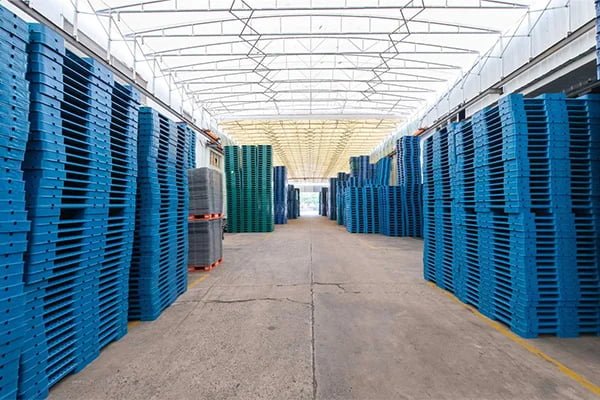
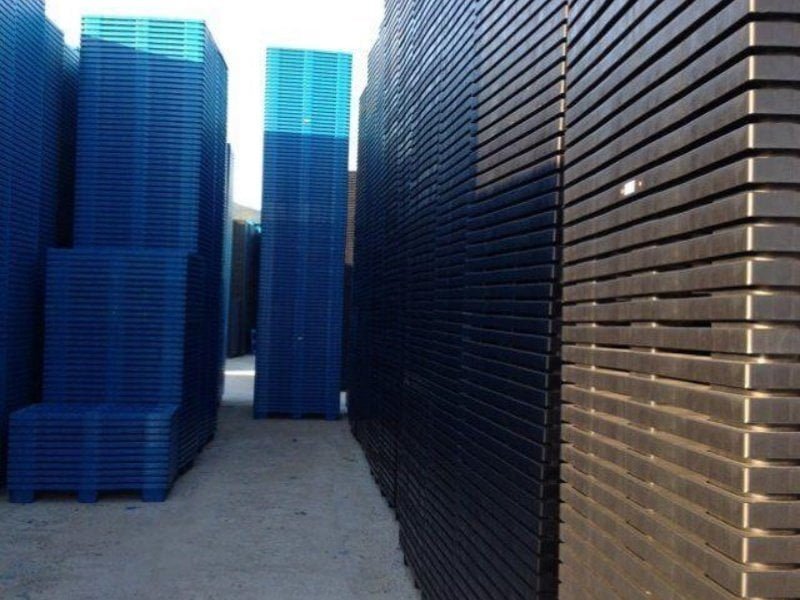
Empty pallets carry no goods, yet they continue to take up storage locations, forklift time, and return-vehicle space. In many cases, the expensive part is not the pallet itself, but the growing stack of empty pallets in your warehouse and the empty volume they occupy during return transport.
Nestable plastic pallets can nest into one another when empty. Compared with non-nestable pallets, some nestable designs can reduce empty-pallet storage space by about 70%. You can store more empty pallets in the same location and reduce the space empty pallets take up in return vehicles.
These nestable plastic pallets are especially suitable for routes with frequent empty-pallet recovery, limited warehouse space, consolidated export preparation, or a need to lower empty pallet storage cost and return-freight cost.
3. How Do Plastic Pallets Cut Export Costs?
If you use solid-wood pallets for export, you usually need to deal with ISPM 15 heat-treatment, fumigation, or marking requirements. Plastic pallets themselves are not solid-wood packaging material regulated by ISPM 15, so you do not need to add these wood-treatment steps for the pallet itself. The official ISPM 15 guidance makes clear that the standard regulates wood packaging material.
This can reduce pre-export processing time, the risk of rework caused by non-compliant wood packaging, and the waiting and management costs related to wood pallets. For orders without a return route, one-way export plastic pallets focus more on light weight, container loading, and destination fit, rather than using a heavy reusable pallet where it is not needed.
Pallet footprint, empty-pallet nesting method, and the number of pallets loaded into a container can also affect freight allocation per unit of goods. For more on plastic pallet export cost and container-loading efficiency, see Pallet Size and Container Utilization.
4. How Do Fewer Failures Save Money?
Wood splinters, broken boards, loose nails, and moisture-related deformation do not usually cause only one pallet to be discarded. They can also tear bags, scratch outer cartons, increase cleaning time, and force you to replace a pallet during loading or unloading.
Plastic pallets have no exposed nails or wood splinters, and their one-piece construction does not create loose deck boards. For bagged goods, food outer packaging, humid environments, or high-frequency handling routes, flat or closed decks can reduce packaging damage, product rearrangement, and the trouble of emergency pallet changes. OSHA warehouse safety guidance also identifies wood splinters and uneven surfaces as handling risks associated with wood pallets. OSHA warehouse packaging guidance
When you need stable floor stacking, explore stackable plastic pallets. For food, beverage, or clean operations with frequent washing, hygienic plastic pallets can reduce the handling time caused by surface cleaning and dirt build-up.
5. How Do Recycled Pallets Cut Costs?
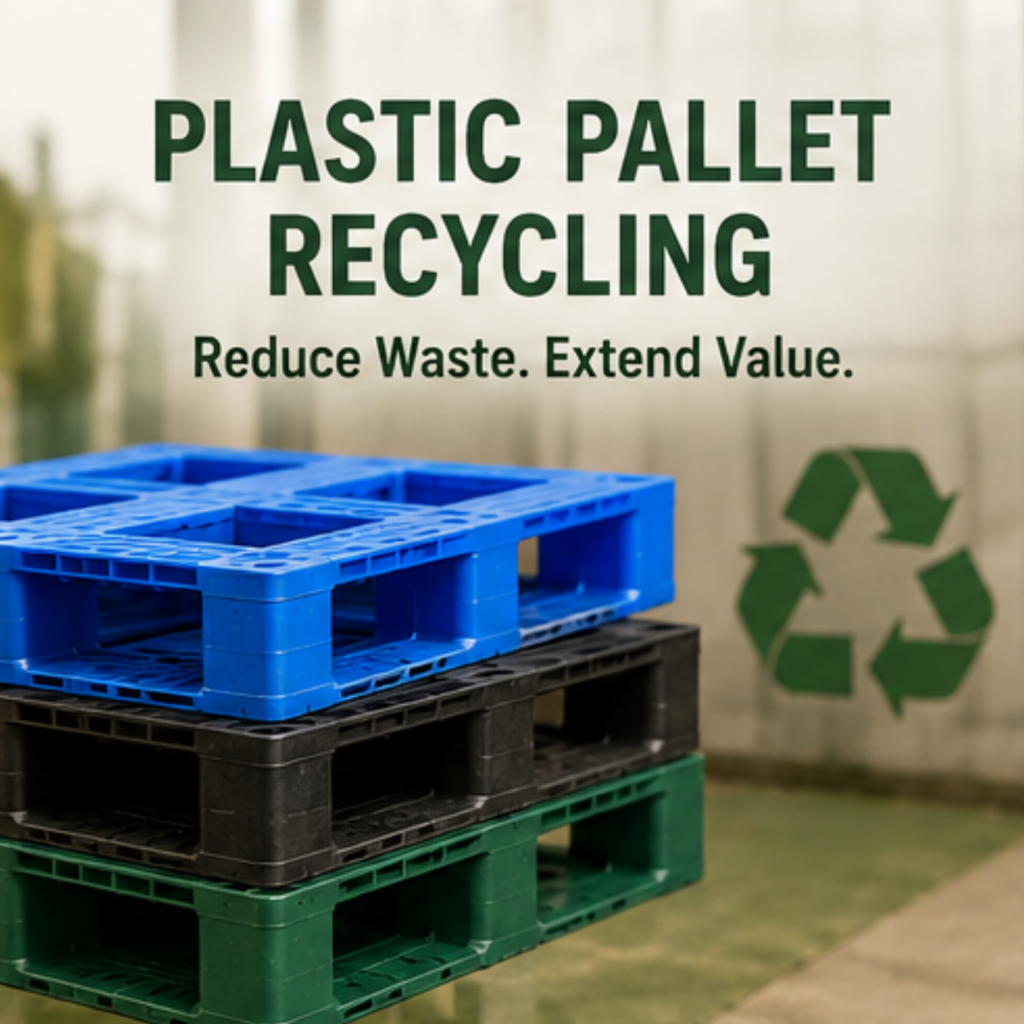
Do not confuse a “recycled-resin pallet” with a “reusable pallet.” Recycled resin means that the pallet uses recovered plastic material. Reusable means that you can recover the pallet and continue using it.
If a pallet only makes one trip, or is mainly used for light export, empty-pallet nesting, and short-cycle distribution, recycled plastic pallets can directly reduce upfront material cost. Based on supplier-published factory reference ranges in 2025, recycled plastic pallets cost about US$6–15 per piece, while virgin-resin plastic pallets cost about US$12–50 per piece. These are factory planning references rather than live global market prices, but they show why recycled-resin options are usually better suited to controlling the purchasing budget for one-way logistics. For more pricing context, see our plastic pallet price guide.
| Cost Direction | What Recycled Resin or Recovery Routes Can Change |
|---|---|
| Initial purchase | Recycled resin can reduce part of the raw-material cost |
| One-way export | Lightweight, nestable designs can reduce purchasing cost and empty-pallet volume |
| End-of-life handling | Clean, identifiable HDPE or PP pallets can enter recycling processes |
| Material value | Used pallets in standardised models and concentrated volumes are more likely to retain material value |
When a pallet reaches the end of its service life, first keep the pallets that are still usable in your internal loop. Then sort damaged, clean pallets with clearly identified materials. Mechanical recycling usually includes sorting, cleaning, shredding, and remelting, which can reduce the number of pallets treated directly as waste. EPA guidance on plastic recycling processes
This does not mean every old plastic pallet has a fixed buy-back value. However, compared with treating every retired pallet as mixed waste, you can preserve more opportunities for reuse and recycling. When you need to handle used pallets, read our plastic pallet recycling guide.
When Might Plastic Pallets Not Save More Money?
If a pallet is shipped only once, cannot be recovered, and carries very light goods, an economical wood pallet or lightweight export pallet may have a lower initial purchase cost. The long-term cost advantage of plastic pallets depends on repeated use, empty-pallet return flows, or stable management.
The real difference between plastic pallet cost and wood pallet cost is not which material is naturally cheaper. It is whether you keep paying repeatedly for breakage, empty pallets, export treatment, cargo damage, and disposal.
Put Cost Savings Where They Actually Happen
The long-term value of plastic pallets comes from fewer replacements, less empty-pallet storage, smoother export preparation, less cargo damage, and more valuable end-of-life handling. Instead of comparing unit prices alone, compare how many ongoing costs the pallet can reduce across your route.
At Preface Plast, you can explore nestable, stackable, export, hygienic, rackable, and heavy-duty plastic pallets to match the pallet structure more closely to your transport, storage, and circulation method.
Share this article
Help others discover this content