
Plastic Pallets for the Food & Beverage Industry
From food processing to the retail aisle.
Find a pallet that fits your load, your hygiene requirements and your handling system.
Compare hygienic plastic food pallets, heavy-duty beverage pallets, nestable grocery pallets and options for cold storage, racking and automation.
Your pallet specification.
 Beverage production
 Cold-chain handling
 Automated logistics
Find the Right Pallet for Your Application
A food-processing pallet and a grocery pallet solve different problems. Start with the operating environment, then compare the structure and performance that matter.

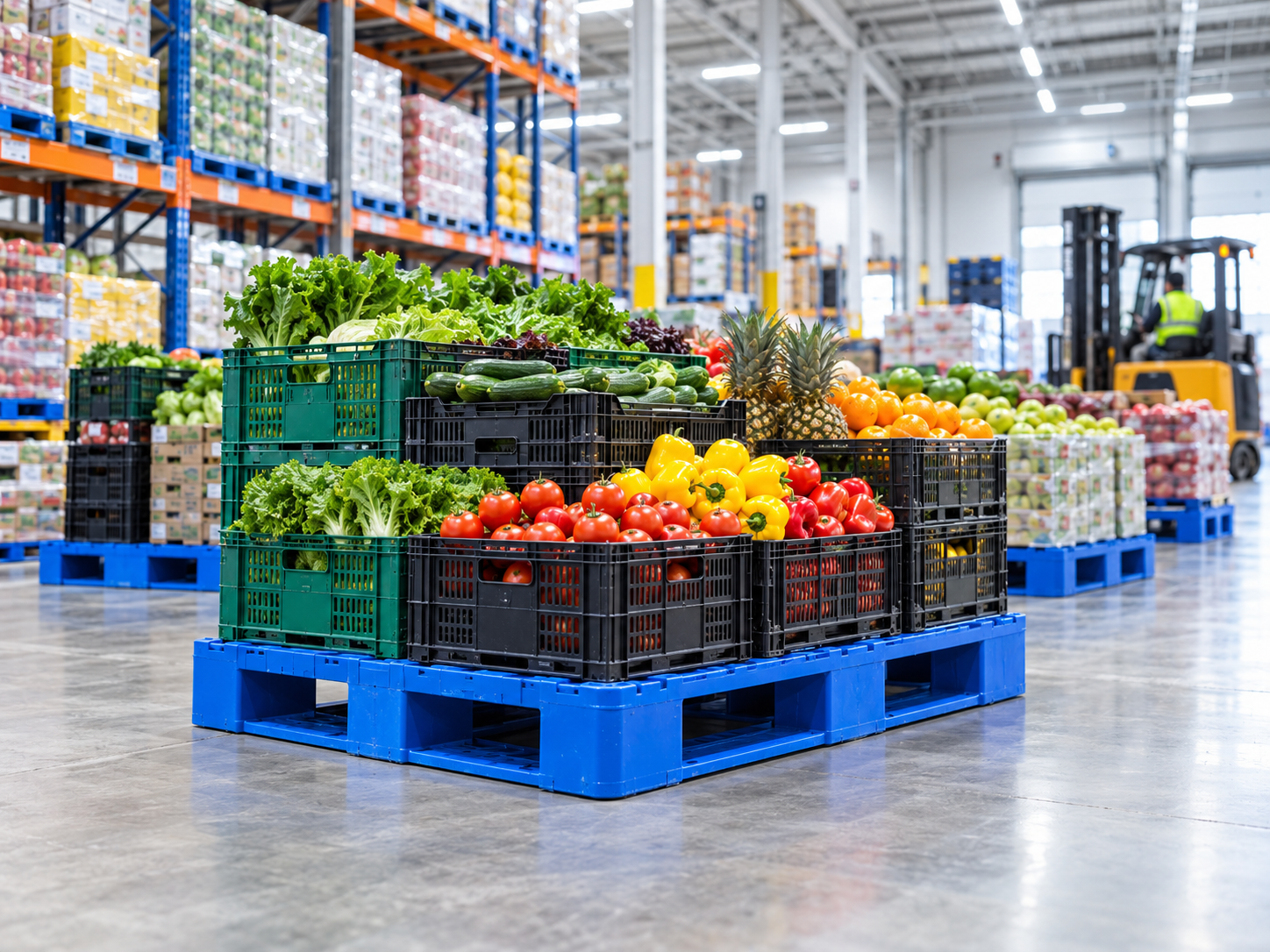
Food Processing
Cleanability, moisture and controlled material selection for meat, poultry, seafood, dairy, bakery and prepared foods.
Explore hygienic pallets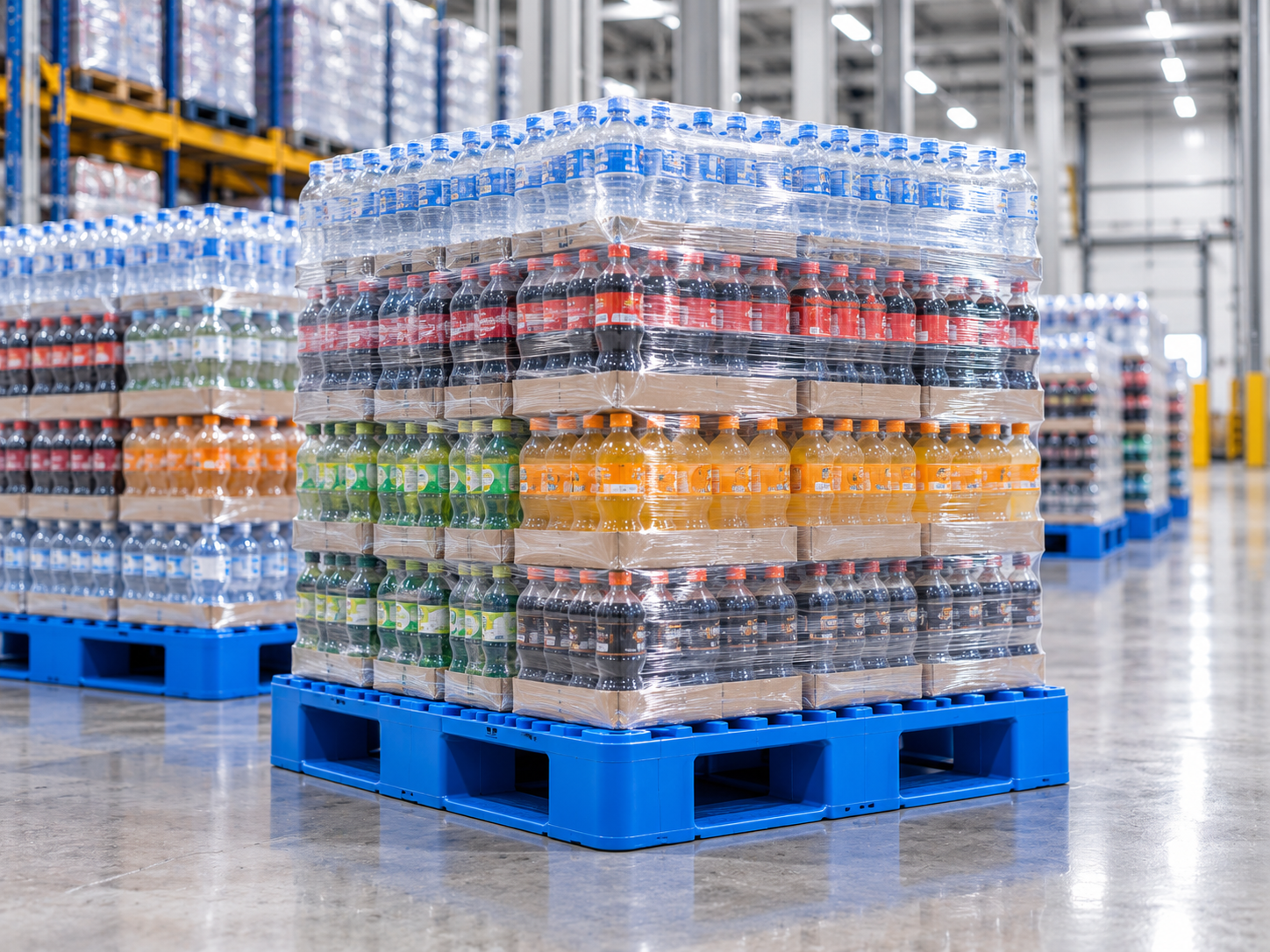
Beverage Production
High unit loads, repeated circulation and line compatibility for bottled water, beer, juice and soft drinks.
Explore beverage pallets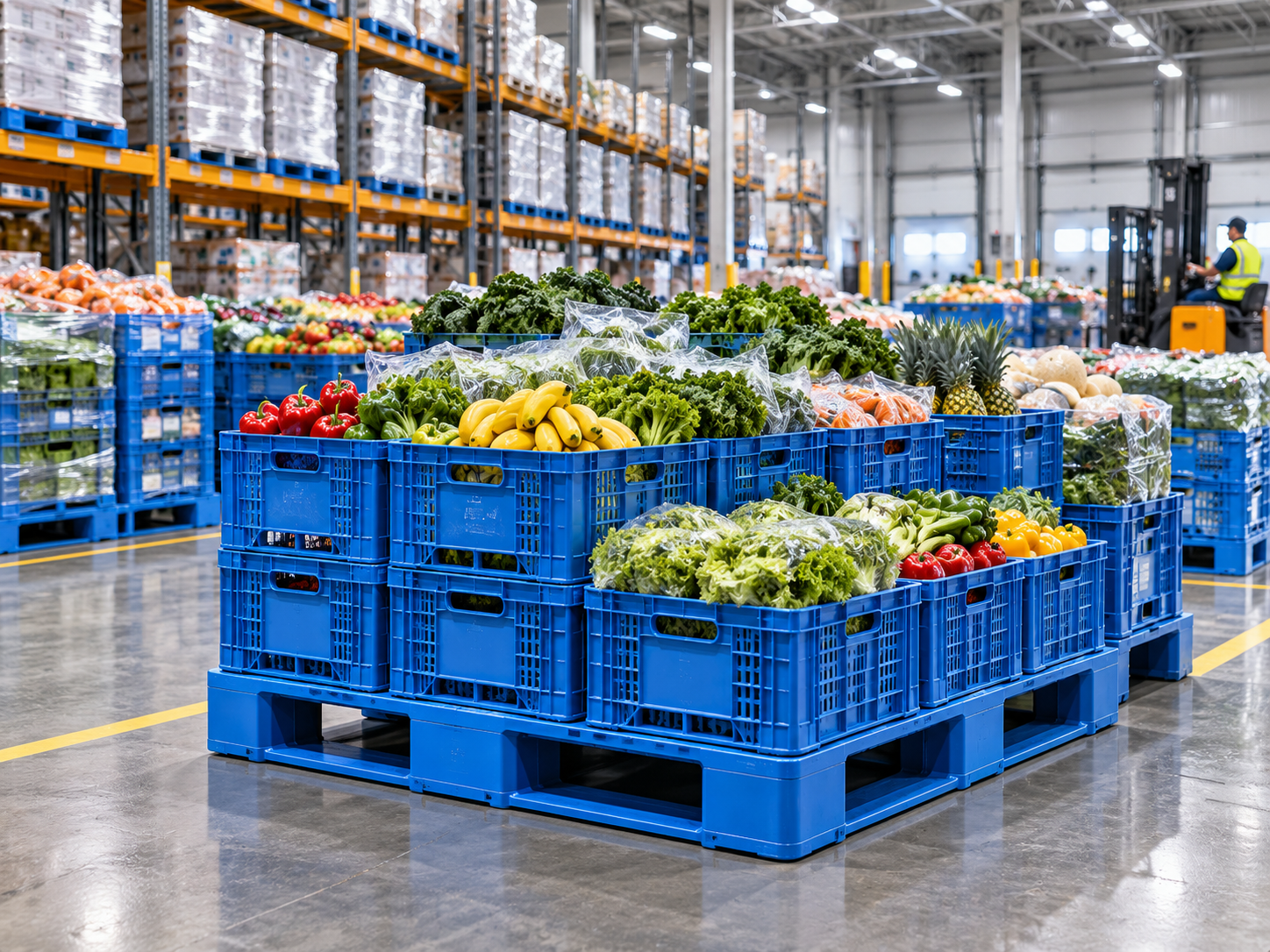
Grocery & Retail
Reusable transport and efficient empty returns between food distribution centers, supermarkets and stores.
Explore grocery pallets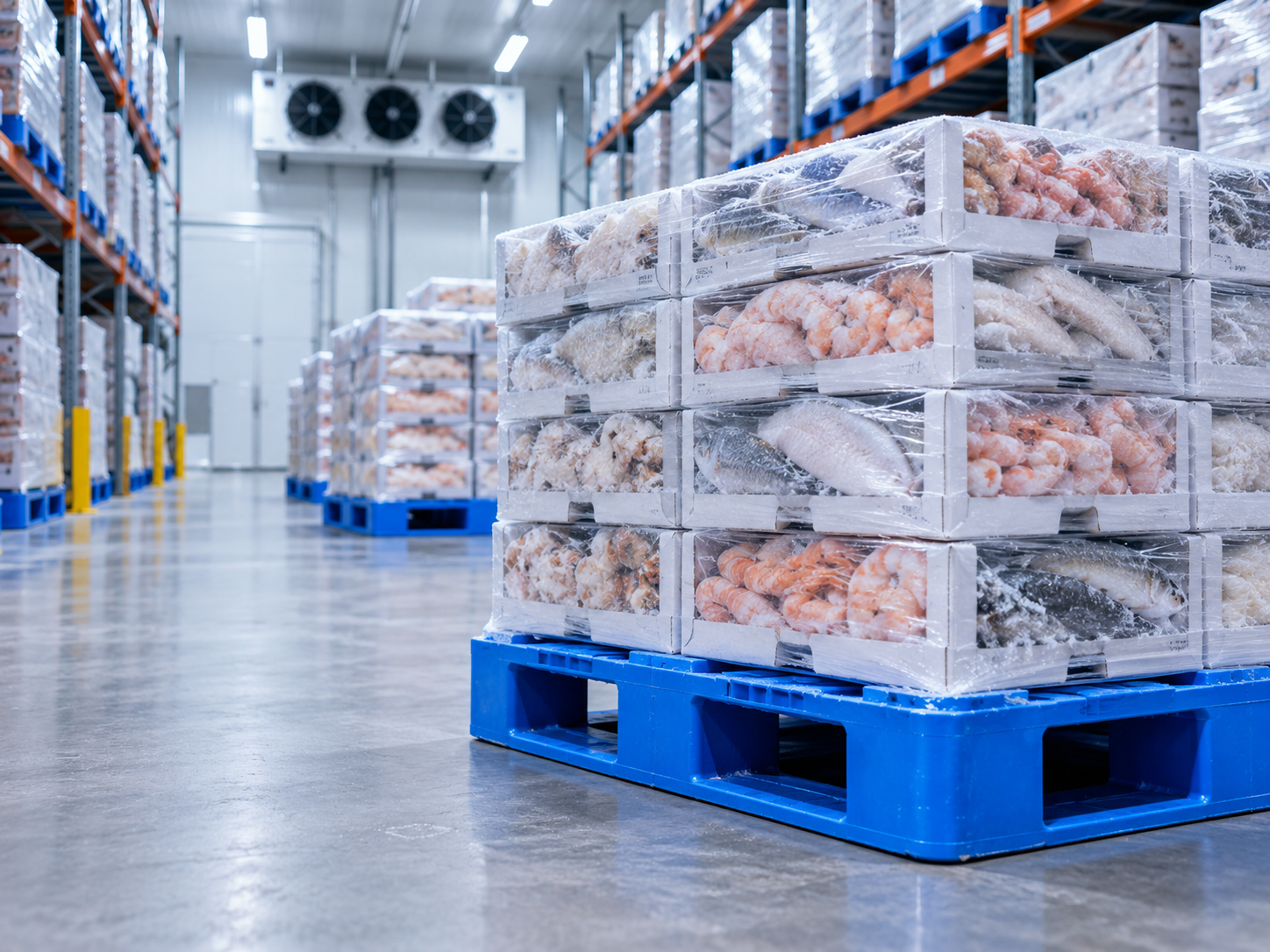
Cold Chain
Select around low-temperature handling, impact exposure and the actual warehouse storage method.
Explore cold-storage palletsPlastic Food Pallets by Material, Size & Load
Explore blue plastic pallets for virgin HDPE and PP specifications, or black plastic pallets for recycled-material requests. Compare the actual designs, dimensions and load configurations below.
1. Choose Your Pallet Material
Material and colour are separate specifications. These groups show different catalogue products. Confirm virgin or recycled resin availability, food-contact suitability and load performance for the quoted version. Recycled versions in this range are requested for packaged goods only.
4 blue pallet models shown.
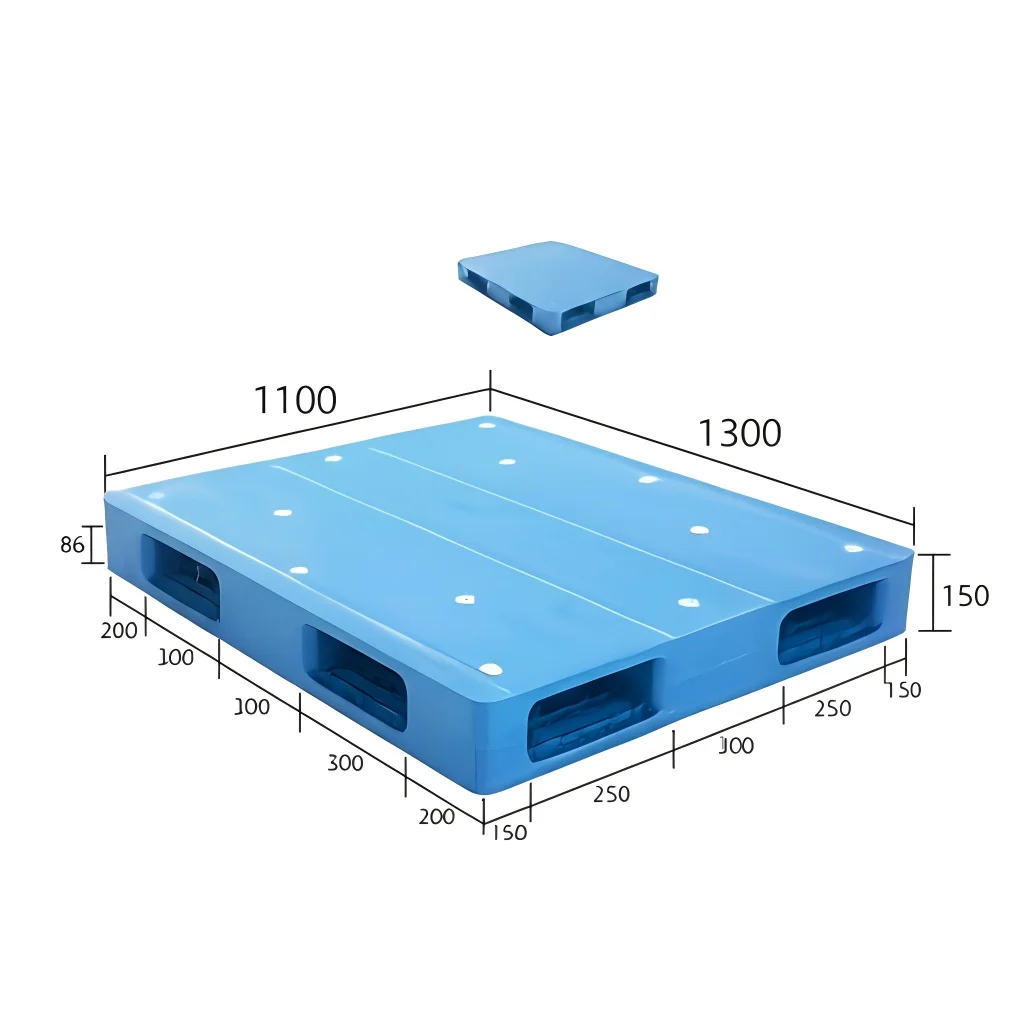 Image unavailable. View the original product →
1300 × 1100 Solid-Deck Plastic Pallet
A solid-deck HDPE pallet with a double-faced structure for loads requiring a continuous support surface. Request a virgin-material version for your food-handling project.
- Footprint
- 1300 × 1100 mm
- Plastic weight
- 24.5 kg
- Catalogue material
- HDPE
- Deck / base
- Solid / double-faced
- Dynamic
- 1,500 kg
- Static
- 6,000 kg
- Racking
- Verify separately
Reference: without steel reinforcement.
Configuration & specification notes
The page also lists a racking value without defining rack support conditions. Verify the rack datasheet separately. Optional steel details and any direct food-contact documentation must match the quoted version.
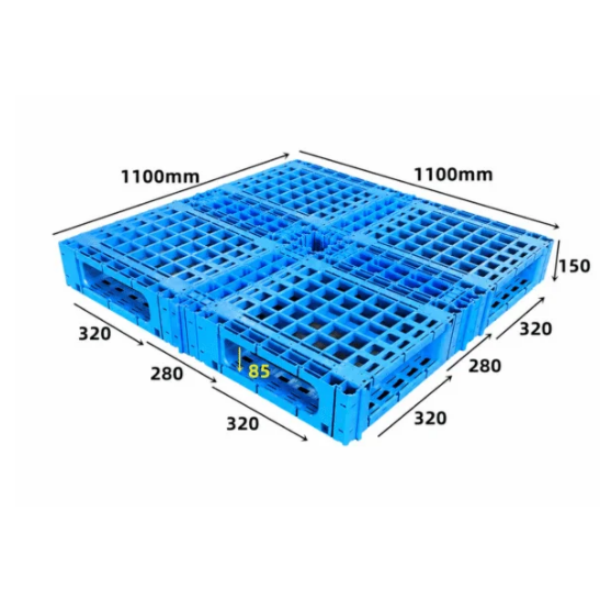 Image unavailable. View the original product →
1100 × 1100 Modular HDPE / PP Pallet
A modular HDPE or PP pallet with a vented deck and full-perimeter base. Compare configurations for adjustable unit loads and reusable food and beverage logistics.
- Dimensions
- 1100 × 1100 × 150 mm
- Pallet weight
- Configuration-specific
- Catalogue material
- HDPE / PP
- Deck / base
- Vented / full perimeter
- Dynamic
- 2,000 kg
- Static
- 6,000 kg
- Racking
- 1,000 kg
Maximum reference loads with the specified reinforcement.
Configuration & specification notes
The maximum load figures require the appropriate module layout, four or more steel bars and defined support conditions. Confirm the selected polymer and food-contact documentation before direct-contact use.
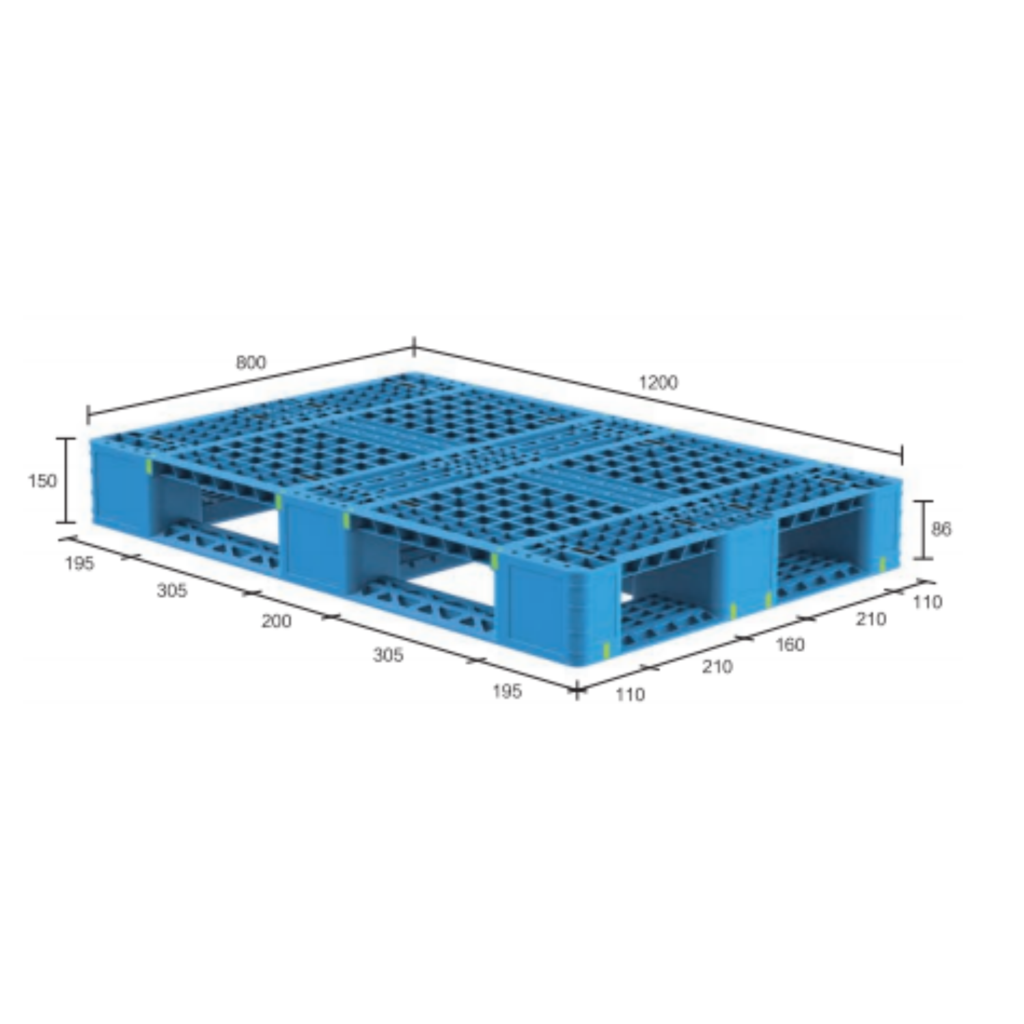 Image unavailable. View the original product →
1200 × 800 Full-Perimeter Euro Pallet
A Euro-size open-deck pallet with a full-perimeter base. Compare standard and reinforced configurations for packaged-food distribution and warehouse storage.
- Dimensions
- 1200 × 800 × 150 mm
- Pallet weight
- Confirm weight*
- Catalogue material
- HDPE
- Deck / base
- Open / full perimeter
- Dynamic
- 1,000 kg
- Static
- 4,000 kg
- Racking
- Reinforced only
Reference: standard, unreinforced configuration.
Configuration & specification notes
*The product summary lists 5 kg, while the specification table lists 11.6 kg. Confirm the final weight. With the specified steel tubes, reference capacities are 1,500 kg dynamic, 6,000 kg static and 1,000 kg racking.
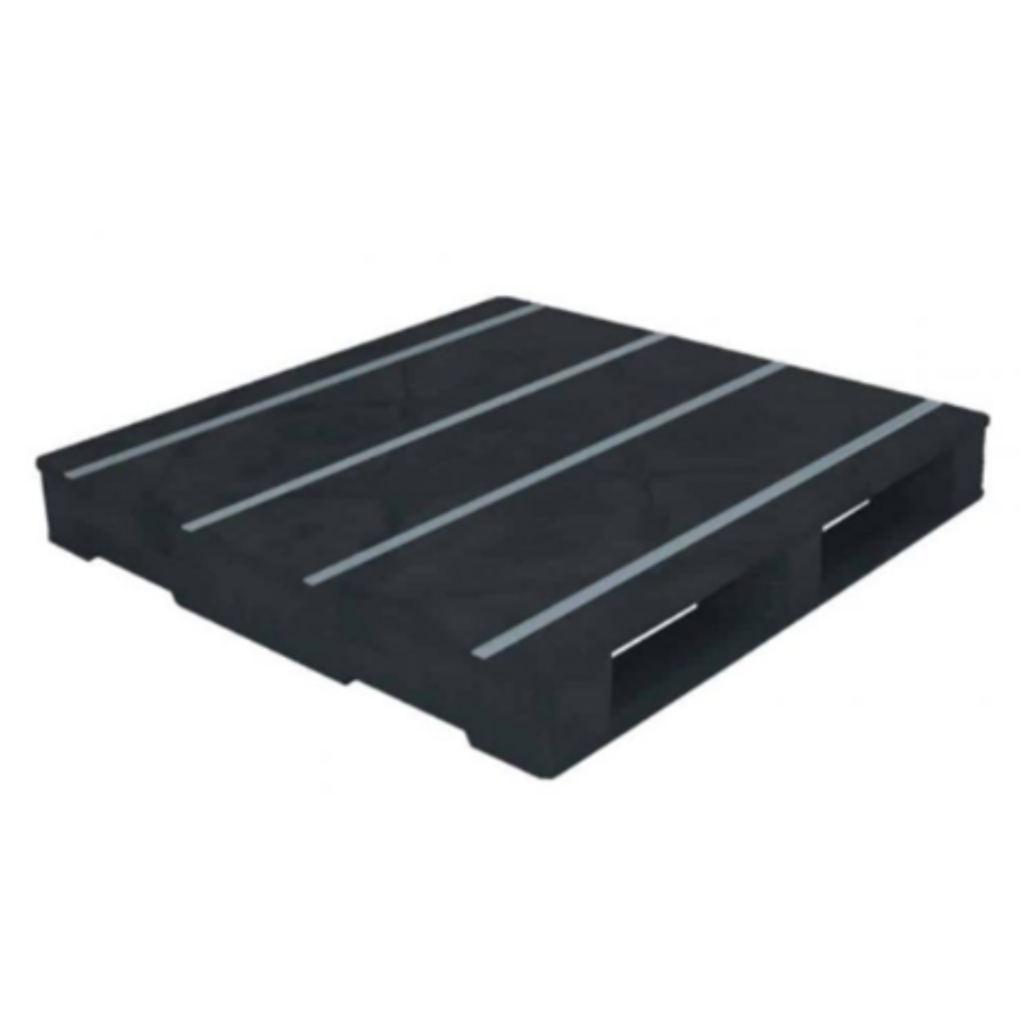 Image unavailable. View the original product →
1165 × 1165 Heavy-Duty Flat-Deck Pallet
A black flat-deck pallet for dense packaged loads. Compare standard and steel-reinforced configurations for beverage cases, warehouse storage and repeat handling.
- Dimensions
- 1165 × 1165 × 150 mm
- Plastic weight
- 23.2 kg
- Optional steel
- 5 kg
- Deck / base
- Flat / grid-style base
- Dynamic
- 1,500 kg
- Static
- 6,000 kg
- Racking
- Reinforced only
Reference: standard version; steel excluded from plastic weight.
Configuration & specification notes
The reinforced version is listed at 2,000 kg dynamic, 6,000 kg static and 1,500 kg racking. The product page identifies the material as plastic, not a confirmed recycled formulation. Confirm recycled resin availability and its own load rating.
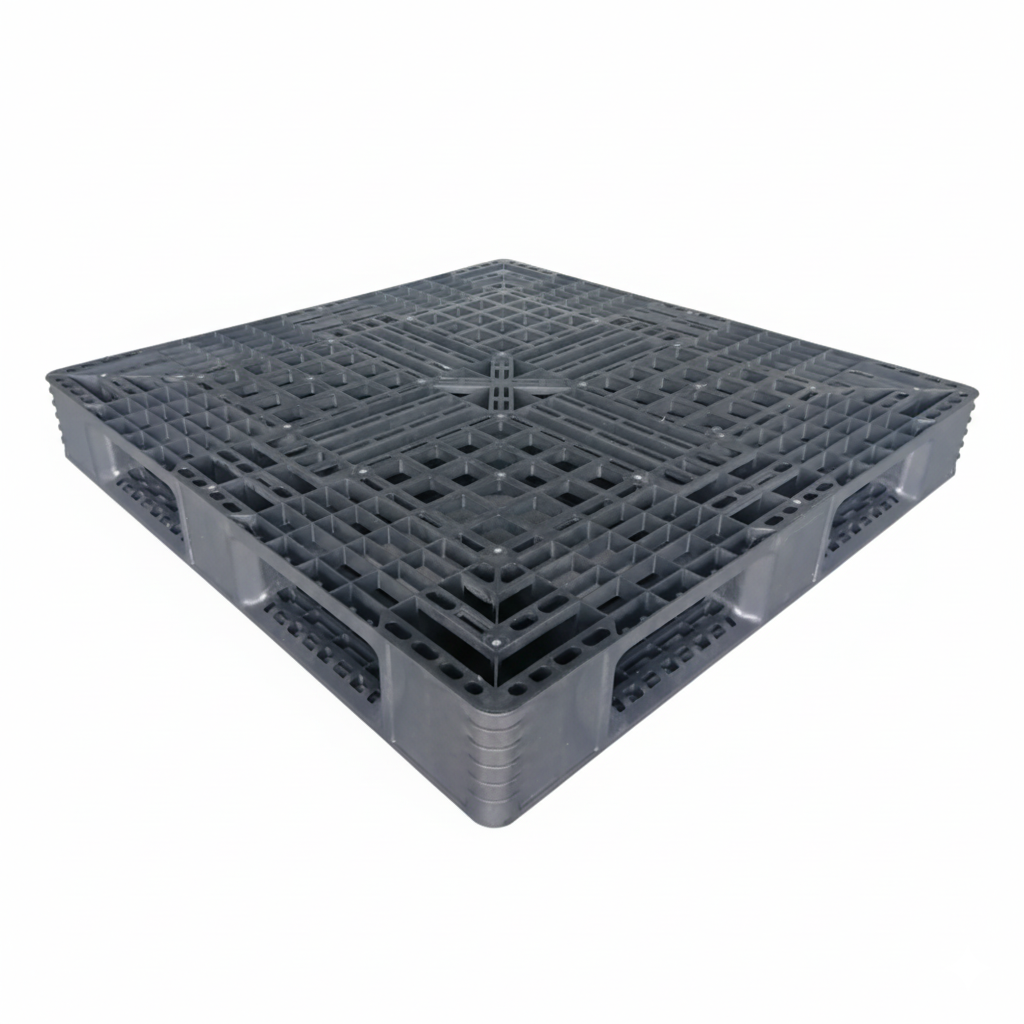 Image unavailable. View the original product →
1100 × 1100 Black Distribution Pallet
A black square pallet with a grid deck and perimeter base. Request a recycled-material quotation for boxed groceries, packaged drinks and distribution loads.
- Dimensions
- 1100 × 1100 × 150 mm
- Plastic weight
- 11 kg
- Steel reinforcement
- None listed
- Deck / base
- Grid / perimeter
- Dynamic
- 800 kg
- Static
- 2,000 kg
- Racking
- Verify separately
Model-specific reference: without steel reinforcement.
Configuration & specification notes
These are the model-specific no-steel figures, not the higher generic reference values also shown on the product page. Confirm recycled content, resin and performance for the quotation; black colour alone does not establish material composition.
Specification note: Loads are catalogue references for the stated configuration, not ratings for every resin version. Confirm the final datasheet, load distribution, rack supports and operating conditions before ordering. Product colour does not establish food-contact approval or recycled content.
Which Plastic Pallet Is Right for Your Operation?
The right food-industry pallet depends on more than its footprint. Review the product, load, storage, handling equipment, temperature, hygiene requirements and intended reuse cycle.
| Your application | Starting point | What changes the choice |
|---|---|---|
| Meat & poultry processing | Hygienic plastic pallet | Cleaning access, washdown and hygiene zoning |
| Seafood & dairy | Washable food pallet | Moisture, temperature and sanitation method |
| Bakery & food ingredients | Application-matched pallet | Bag or carton support, cleaning and load distribution |
| Bottled water, beer & soft drinks | Heavy-duty beverage pallet | Unit-load stability and production-line interface |
| Grocery & supermarket distribution | Reusable or nestable pallet | Store handling, empty returns and asset recovery |
| Cold storage & frozen food | Low-temperature pallet option | Temperature, impact and storage support |
| Food warehouses & ASRS | Rackable / automation option | Rack span, support geometry and loaded deflection |
| One-way food export | Export pallet option | Tare weight, load security and shipping route |
Static Load
Pallet performance while supported on a flat, rigid floor under a defined load arrangement.
Dynamic Load
Loaded handling with the specified equipment. Fork support, movement and load distribution matter.
Racking Load
Performance across defined rack supports. Span, orientation, temperature and duration must be stated.
Get a starting point for your pallet specification
This quick guide identifies a category to discuss. It does not approve a pallet for your load or equipment.
Built for Food & Beverage Handling
The value is not simply “plastic instead of wood.” It is a pallet design matched to the way your operation cleans, lifts, stores and returns its load carriers.
Accessible Cleaning
Smooth surfaces and a suitable base can make routine washing and visual inspection more straightforward.
Moisture Resistance
Plastic resists the wash-water absorption associated with untreated wood in wet and chilled environments.
No Wooden Splinters
Molded plastic construction avoids loose wooden boards, wooden splinters and pallet nails.
Repeatable Geometry
Controlled molding and dimensional checks support more consistent interfaces with handling equipment.
Heavy-Load Options
Reinforced structures can be evaluated for dense food, ingredient and beverage loads.
Reusable Handling
A recoverable pallet can circulate through a controlled logistics network and be assessed by cost per trip.
Hygienic Plastic Pallets for Food Processing
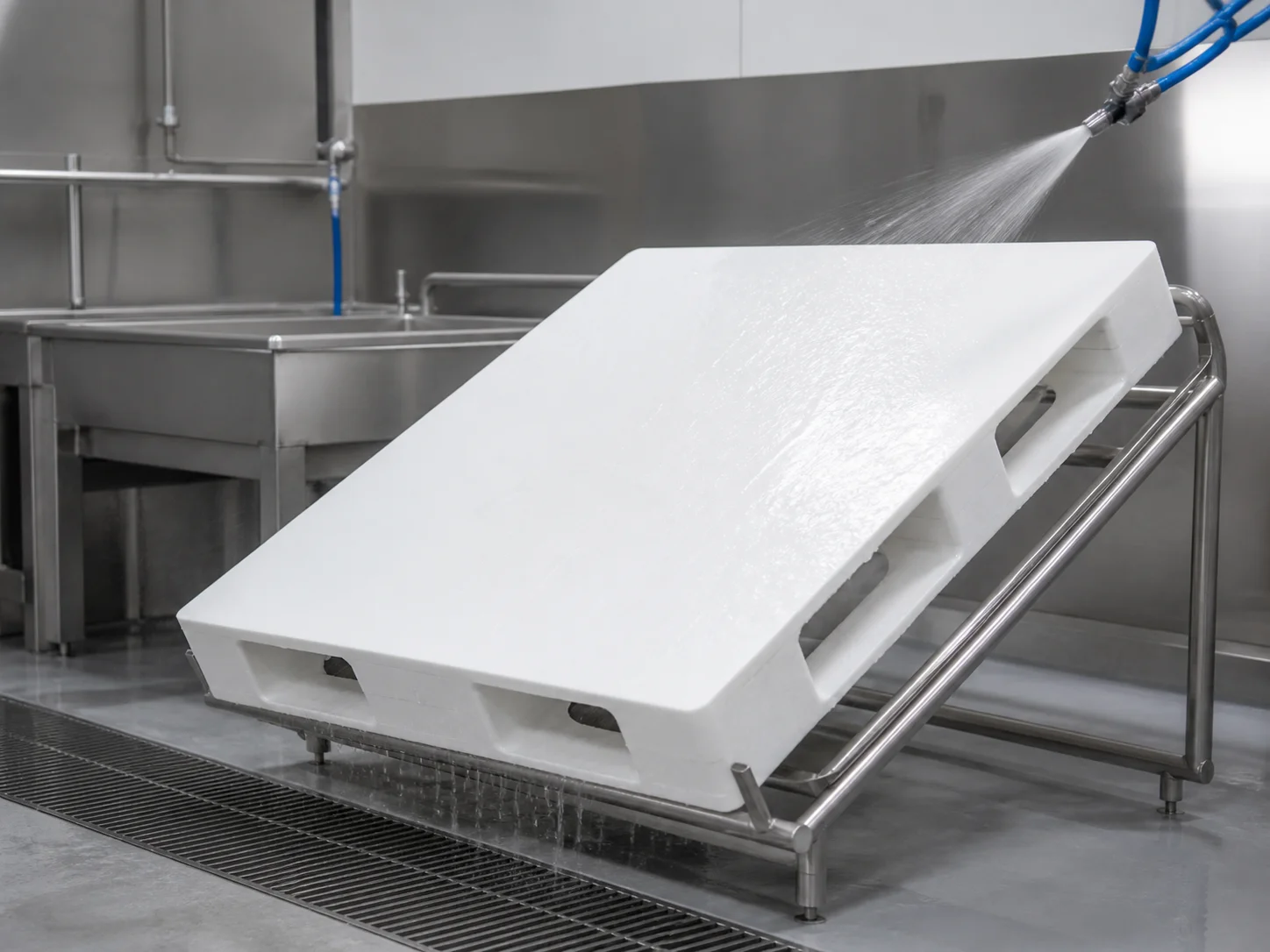
A hygienic pallet should fit your cleaning process—not just look clean. Surface geometry, runner access, joints and drainage matter alongside material selection.
Smooth surfaces, accessible bases
Review the deck and underside together. Exposed ribs, recesses, joints and damaged areas can be more difficult to inspect. Closed-deck hygienic plastic pallets provide a continuous upper surface; an open or perforated deck may better suit drainage or ventilation.
Cleaning, drainage and drying
Match the pallet to manual washing, pressure washing or an automated pallet washer. Confirm detergent, disinfectant, concentration, water temperature, contact time and pressure. After washing, the process should allow effective drainage and drying before reuse.
Virgin HDPE, PP and food-contact requirements
Virgin HDPE and PP options are considered where controlled resin specifications or supporting food-contact documentation are needed. “Food grade” describes suitability for an intended contact use; it does not mean every pallet can directly contact every food.
Confirm the exact model, resin and additives, food type, temperature and contact conditions. Food-industry use and direct food-contact use are separate requirements.
Color coding and internal material flow
Custom colors can help distinguish production areas, departments, product streams or pallet ownership. Color supports your operating procedures; it does not by itself prevent cross-contamination or establish food safety.


Ask for both a design review and the available documentation for the intended use. Neither a resin name nor a pallet color is a food-contact approval.

Plastic Beverage Pallets Built for Heavy Loads
Bottled water, beer, juice, soft drinks and canned beverages combine dense loads with repeated movement. Select beverage pallets around load stability, stiffness and the production line—not static capacity alone.
Dense Unit Loads
Review bottle or can format, cases per layer, number of layers, load distribution and total unit-load weight.
Reinforcement & Stiffness
Runner geometry, ribs and optional steel reinforcement can be selected around loaded deflection and support conditions.
Load Stability
Anti-slip features, locating rims and load restraint must be matched to packaging and the handling route.
Repeatable Line Handling
Confirm the footprint, height and underside with palletizers, depalletizers, conveyors and wrappers.
Reusable Grocery Pallets for Retail Distribution
Grocery and supermarket supply chains have a different pallet economy. When pallets return repeatedly, empty volume, handling efficiency and recovery rate matter alongside loaded performance.
Nestable Plastic Pallets
Feet fit into the pallet below when empty, reducing return volume. Confirm the actual nesting increment rather than relying on a generic space-saving percentage.
Lightweight, but Fit for the Load
Balance tare weight against payload, durability, pallet-truck access and the number of trips you expect to recover.
Cost per Trip, Not Price Alone
Include purchase, replacement, cleaning, loss, handling and return freight. Reuse creates value only when pallets return to the system.
Four-way forklift entry does not automatically mean four-way pallet-jack access. Confirm wheel clearance, runner layout and the actual equipment.

Plastic Pallets for Cold Storage & Frozen Food
Cold rooms and frozen-food warehouses combine low temperature, moisture and repeated handling. A freezer pallet needs a suitable material and a structure matched to the load and storage method.
HDPE & Application-Specific Materials
HDPE is commonly considered for low-temperature toughness. The actual limit depends on resin formulation, structure, load and handling conditions.
Impact in the Actual Environment
Review forklift contact and handling after the pallet has reached operating temperature—not only its behavior at room temperature.
Rackable Cold-Storage Options
Check rack span, orientation, load distribution, temperature, storage duration and reinforcement together.
Plastic Pallets for Automated Food & Beverage Operations
Automated equipment depends on predictable pallet geometry. Review dimensional consistency, bottom structure, support points and allowable deflection before approving an automation-compatible pallet.
Selected RFID pockets, barcode areas and identification features can support asset visibility. Tracking performance also depends on tags, readers, software and the operating process.
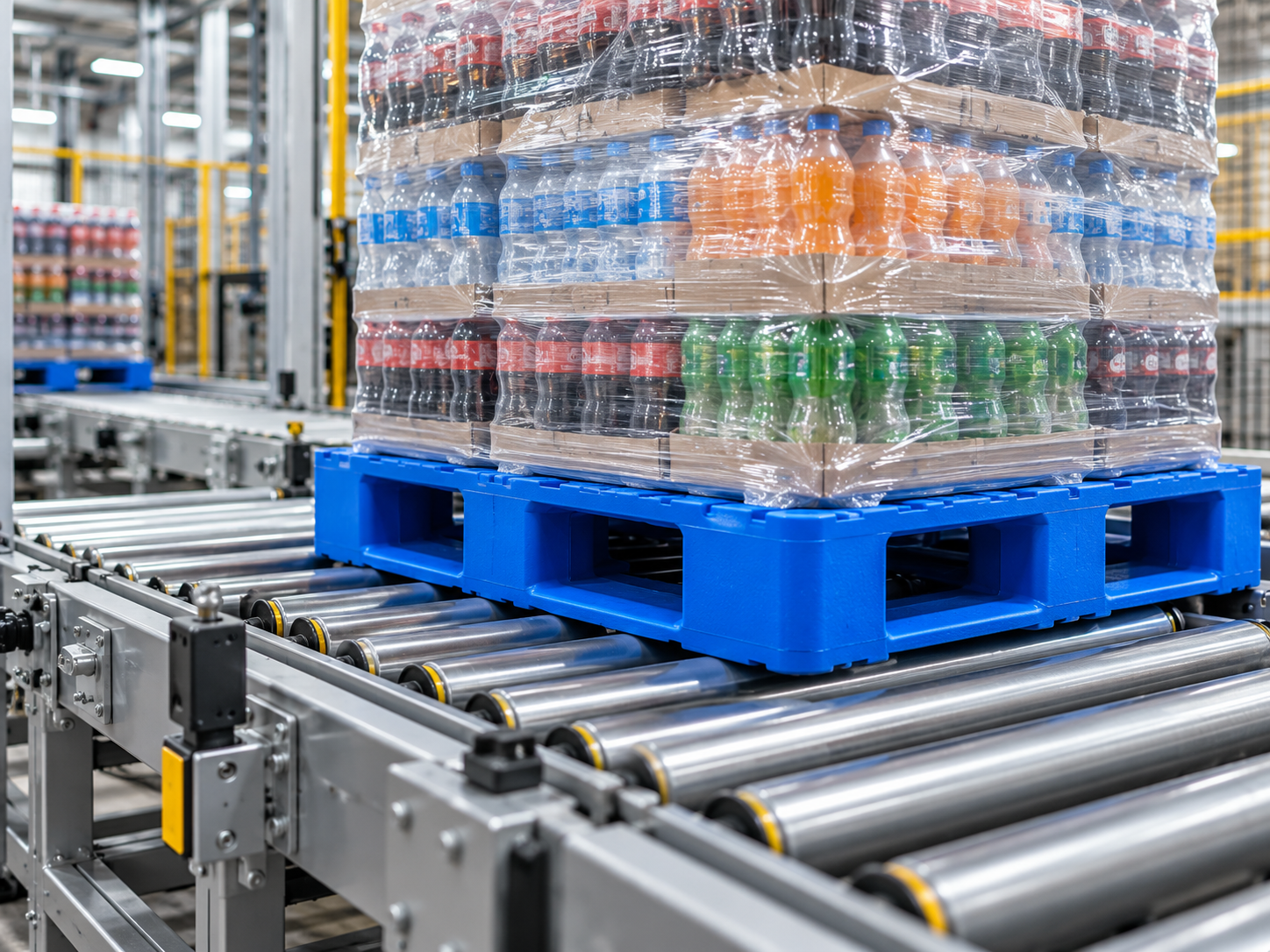
Conveyors
Runner spacing, roller or chain supports, transfer points, travel direction, flatness and unit load.
Palletizers
Pallet footprint, height, repeatable positioning, deck geometry and pallet-magazine requirements.
ASRS
Support span, tolerance, loaded deflection, long-term loading, temperature and sensor clearances.
AGV & AMR
Fork opening, entry height, wheel clearance, approach direction, load center and vehicle geometry.
No universal automation claim: matching the footprint alone is not enough. Drawings, support conditions and an application trial may be required. Explore the ASRS pallet range →
Standard Food Pallets or Custom-Built Solutions
When an off-the-shelf pallet does not fit your load, rack, conveyor or process, we can review an existing configuration or evaluate a new design.
Whether it requires adapting an existing pallet or developing a fully custom solution, we can support your application. A custom project starts with the required geometry, loads, equipment, material, quantity and acceptance criteria.
A Plastic Pallet Manufacturer Built for Large-Scale Supply
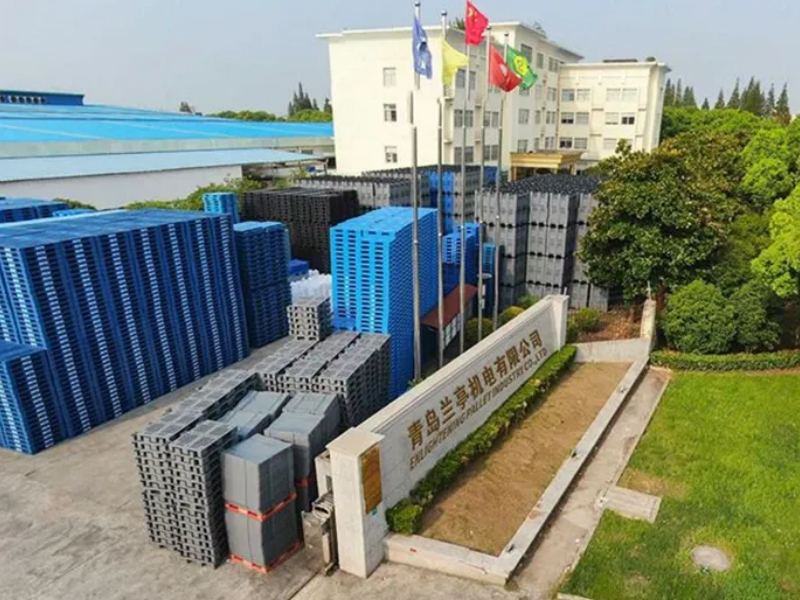
Founded in 2000, Preface Plast supports manufacturers, distributors, importers, food logistics operators and recurring pallet procurement programs.
Our company-wide mold and model resources help us compare standard options before recommending new tooling. Availability, material and delivery are confirmed for the actual product, color and order.
Confirm resin, dimensions, weight, structure, load requirements, identification, inspection criteria and packaging before production.
Generally 300 pieces
Subject to model, material, color, stock and customization.
Normally within 1 week
Confirm availability, sample terms, freight and destination requirements.
Typically 7–15 days
After 50% deposit and final specification confirmation; custom projects are quoted separately.
These figures describe the company-wide range, not dedicated food-pallet inventory or guaranteed delivery for every model.
Plastic Pallet Testing & Quality Control
A published load figure is only useful when the test and support conditions are known. Review the exact model and the evidence relevant to its intended use.
Raw-Material Control
Check the agreed resin, material source and formulation against the order specification.
Dimensional Inspection
Review length, width, height, flatness, fork openings and runner geometry.
Weight & Structure
Check unit weight, filling, surfaces, corners, welds, reinforcements and fitted components.
Static & Dynamic Review
Separate floor-supported performance from the load and support conditions used during handling.
Rack & Deflection Review
Define support span, load pattern, orientation, temperature, duration and acceptance criteria.
Pre-Shipment Verification
Confirm the selected product, quantity, identification and agreed inspection requirements.
Request the data your engineering and QA teams need
Ask for the available drawing, resin information, model-specific load evidence and the stated test method. A factory video is useful context, but it does not replace the test report or validate every pallet in the collection.

Optional video from your existing pallet page. YouTube loads only after you click; this is not food-contact or selected-model certification.
How the Right Food Pallet Changes with the Operation
These are selection examples, not claimed customer projects. They show how hygiene, load, temperature and equipment lead to different pallet specifications.
Bottled Water Production
The operating challenge
Dense case loads, repeated forklift handling and an automated bottling line.
A starting configuration
Review a reinforced beverage pallet against unit-load weight, restraint, support geometry and the equipment interface.
What to verify
Loaded deflection, line clearance and the palletizer or conveyor drawing.
Frozen Food Warehouse
The operating challenge
Frozen cartons moving between forklifts and warehouse racks.
A starting configuration
Review a low-temperature pallet configuration around load distribution, rack span, resin and storage duration.
What to verify
Minimum temperature, impact conditions and the actual rack load case.
Food Processing Plant
The operating challenge
Frequent washing, hygiene zoning and routine visual inspection.
A starting configuration
Review a smooth, accessible pallet with material and cleaning limits suited to the operation.
What to verify
Deck and underside access, drying and documentation for the intended contact use.
Food & Beverage Plastic Pallet FAQs
Practical answers about food-grade and hygienic pallets, beverage loads, frozen-food storage, racking, automated handling and wholesale supply.
Hygiene, materials & food contact
What type of plastic pallet is best for food processing?
Start with the cleaning process, hygiene zone, product packaging and intended contact conditions. Smooth hygienic pallets may suit frequent cleaning, while open decks can serve drainage needs. The final choice must also fit load, temperature, storage and equipment.
What is the difference between a food-grade pallet and a hygienic pallet?
Food-grade terminology relates to material suitability for the intended food-contact use. Hygienic design relates to cleaning access, geometry and sanitation. Neither replaces the other: the exact model needs appropriate design and, where required, supporting material documentation.
Are all plastic food pallets suitable for direct food contact?
No. A pallet used beneath packaged food is not automatically approved for unpackaged food. Confirm the exact resin, additives, pallet model, food type and conditions of contact, together with the documentation required for your destination market.
Are closed-deck pallets always more hygienic than open-deck pallets?
Not automatically. Closed decks provide a continuous upper surface, but underside cavities, joints, damage and drainage also matter. Open or perforated decks may be appropriate where drainage and ventilation are important. Review the whole pallet against the sanitation procedure.
Should I choose virgin HDPE, virgin PP or recycled plastic?
Select the formulation around impact, stiffness, temperature, cleaning and documentation requirements. Virgin material alone does not prove food-contact suitability. Recycled-material pallets can be considered for appropriate packaged-food logistics; any intended food-contact use needs its own compliance review.
Can food pallets be pressure-washed or cleaned with disinfectant?
Cleaning compatibility is model-specific. Share the cleaning chemical, concentration, temperature, pressure, contact time and cleaning frequency. Also check seals, welds, anti-slip components and drainage. Do not infer unlimited hot-wash or chemical resistance from the polymer name.
Beverage, grocery & cold-chain use
Which plastic pallet should I use for bottled water or beer?
A heavy-duty beverage pallet is a starting point, not a complete specification. Confirm the bottle or case layout, total unit-load weight, load restraint, rack supports and handling equipment. Dense loads and repeated movement make stiffness and consistent geometry important.
What is a nestable grocery pallet?
A nestable pallet has feet or pods that fit partly into the pallet below when empty. This can reduce empty storage and return volume in grocery and supermarket distribution. Confirm the nesting increment, loaded capacity, recovery route and pallet-truck access.
How do I compare reusable grocery pallets by cost per trip?
Compare purchasing, replacement, cleaning, handling, losses, storage and empty-return freight across the number of trips actually recovered. A reusable design does not create savings if pallets are lost or never returned. Use your own operating data rather than a universal saving percentage.
Are HDPE plastic pallets suitable for cold storage?
Selected HDPE formulations and pallet structures can suit chilled or frozen applications. Confirm minimum operating temperature, impact conditions, unit load and storage support for the exact model. Room-temperature performance should not be assumed to remain unchanged in a freezer.
What is the best pallet for frozen food in warehouse racks?
Review low-temperature performance and racking together. Important inputs include rack span, pallet orientation, load distribution, storage duration and allowable deflection. Choose a model with evidence for the relevant configuration rather than relying on a general freezer or rackable label.
Does the operating temperature also specify hot-washing capability?
No. Continuous service under load and a short cleaning exposure are different conditions. Request the applicable temperature, duration and load limits for both use and washing, including the cleaning chemicals and any fitted components.
Load ratings, racking & automation
What is the difference between static, dynamic and racking load?
Static load describes defined floor-supported conditions. Dynamic load relates to loaded handling with specified equipment. Racking load relates to defined rack supports or beams. These ratings are not interchangeable, and the load arrangement and conditions should accompany each value.
Can a stackable plastic pallet also be rackable?
Sometimes, but loaded stacking does not establish rack suitability. A rackable pallet must support the specified load across the actual supports. Confirm span, orientation, load distribution, temperature, duration, reinforcement and allowable deformation independently.
Does four-way entry mean the pallet fits all pallet trucks?
No. Four-way entry generally describes forklift access. A hand pallet truck also needs clearance for its load wheels and forks. The full-perimeter and double-sided models described in our existing range are not suitable for standard hand pallet jacks; confirm the selected model separately.
Can plastic beverage pallets run on roller or chain conveyors?
Selected designs can be matched to conveyors, but support geometry is critical. Provide runner positions, roller or chain spacing, travel direction, transfers and total load. A pallet that works on forklift forks may not be appropriate for the conveyor interface.
What information is needed for an ASRS plastic pallet?
Provide the footprint, height, dimensional tolerance, unit load, support points, rack span, allowable deflection, storage duration and operating temperature. Include palletizer, conveyor and sensor interfaces. An application trial may be required before approval.
Are your plastic pallets compatible with AGVs and AMRs?
Compatibility is specific to the pallet and vehicle. Review fork openings, entry height, approach direction, load center, bottom structure, wheel clearance and detection requirements. Share the equipment drawing so a suitable configuration can be evaluated.
Wholesale orders, customization & supply
What information should I include in a food pallet quotation request?
Send the application, destination, quantity, footprint, product packaging and unit-load weight. Add the storage method, equipment, temperature, cleaning process and any intended direct food contact. Rack spans and conveyor drawings make technical recommendations more precise.
What is the minimum order quantity for wholesale food pallets?
The typical standard pallet MOQ in our range is 300 pieces. Stock availability, material, color, logo and customization can change the minimum. Confirm the selected model and specification before relying on a collection-level quantity.
Can I request samples before placing a container order?
Available samples are normally dispatched within one week, subject to model availability, sample terms, freight and destination. Standard full-container shipment is typically 7–15 days after the 50% deposit and final specification confirmation. New tooling and custom projects require a separate schedule.
Can you make custom-size plastic pallets for food or beverage lines?
We first compare the requirement with existing models and configurations. New dimensions or major structural changes normally require tooling. Provide the load, footprint, equipment, resin requirements, quantity and acceptance criteria so the project can be evaluated.
Can I add custom colors, a logo, barcode or RFID?
Selected models support colors, logos, identification areas or RFID pockets. Confirm the available feature and its position against the mold, cleaning process and tracking system. RFID functionality also depends on the tag, reader and software—not only a pocket in the pallet.
Do plastic pallets need the wood-treatment process used for export?
Plastic pallets are not solid-wood packaging and do not require the wood heat-treatment or fumigation process. Confirm destination-specific import, hygiene and documentation requirements. Any wood packaging included in the shipment must be reviewed separately.
Let’s Find the Right Pallet for Your Operation.
Share your pallet size, unit-load weight, storage method and quantity. We will help you compare suitable structures, materials and handling configurations before you order.
Application-Led Selection
Start with your operation, not a generic food-grade label.
Technical Specifications
Review the dimensions, support conditions and required load data.
Standard & Custom Options
Compare existing structures before considering new tooling.
Wholesale Supply
Plan the material, quantity, packaging and destination together.
Request a Pallet Recommendation
Start with the essentials. Add drawings or technical details when available.