Which Plastic Pallet Works Best for Bags, Drums, and Irregular Loads?
A bagged load can sink into open deck gaps. Drums can shift sideways when a forklift turns. An irregular item can lean because only a few points touch the pallet. More stretch film will not fully solve any of these problems.
For bags, drums, and irregular loads, start with how your cargo touches the pallet. Bags and flexible loads need continuous support. Upright drums need a rigid deck plus a way to limit side movement. Irregular and off-centre loads need a solid support surface and a stable base. Choose a spill containment pallet only when you need to collect leaks.
A one-tonne bagged load, a one-tonne drum load, and a one-tonne machine part do not place the same pressure on a pallet.
Bagged materials settle into the deck. Drums can roll or move sideways. Irregular goods often concentrate their weight on only a few contact points. A lightweight pallet, a large open-grid deck, or cargo hanging beyond the pallet edge can quickly reduce load stability.
Do not start by asking only how many tonnes a pallet can hold. First, look at how your load actually sits on the pallet. Is it soft and likely to sag? Round and likely to roll? Or uneven and off-centre? That tells you whether you need a flat deck, a locating feature, a heavy-duty base, or spill control.
How Do You Prevent FIBC Bags, Sacks, and Bagged Materials From Sagging?
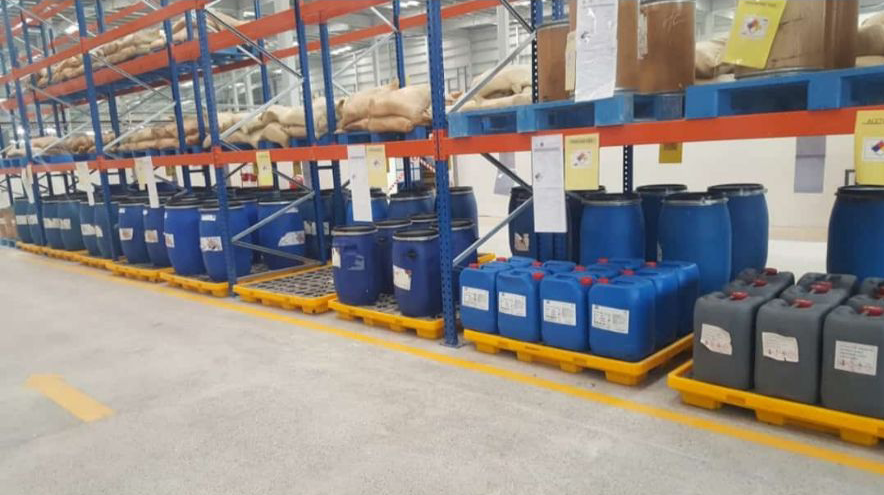
For FIBC bags, bulk bags, feed bags, cement sacks, powders, and granular materials, the key is full support under the bag. The bag should not sink into wide deck openings or hang over the pallet edge.
For soft bags and loads that can bulge underneath, a solid deck, closed deck, or continuous support surface works especially well. It reduces pressure points and helps you secure the bags as one stable unit. Loads with a hard base, outer carton, or rigid slip sheet can also work on an open-deck pallet.
An 1100 × 1100 mm footprint is a common square starting point for FIBC and large bulk bags. A 1200 × 1000 mm pallet is also widely used for bagged fertilizer, feed, cement, and ingredients. See 1100 × 1100 mm plastic pallets and 1200 × 1000 mm plastic pallets for related footprints.
You also want to avoid narrow straps creating pressure points across a soft bulk bag. A rigid top cover or wider restraint spreads the force across a larger area. FIBCA’s handling guidance likewise advises using pallets without nails or protrusions and keeping FIBC bags within the pallet edge. FIBCA FIBC Handling Guide
How Do You Stop 55-Gallon Drums From Rolling or Sliding?
Drums do not lock together like cartons. Even when you place them neatly on a pallet, they can move sideways during turning, braking, ramp movement, or forklift handling.
For a plastic pallet for drums, start with a flat, rigid support surface, then keep the drums and pallet working as one unit. Perimeter lips, locating features, anti-slip surfaces, and suitable strapping can all help reduce sideways movement.
A common 55-gallon drum has an outside diameter of about 22.5–23 inches (572–584 mm). Four drums in a 2 × 2 arrangement occupy roughly 45–46 inches of square deck area. That means:
- A 48 × 48 in or 1200 × 1200 mm pallet is a more common square starting point for four-drum layouts.
- A 48 × 40 in footprint is more suitable for two upright drums in line.
- Do not treat a 48 × 40 in pallet as a universal answer for three or four drums.
- A 45 × 45 in pallet creates a very tight four-drum layout with almost no edge clearance.
Drum rims, chimes, straps, pallet lips, and handling clearance also need space. The pallet should not be selected by drum diameter alone.
OSHA guidance on material stacking also stresses symmetrical drum placement and measures that prevent rolling or sideways movement. OSHA Materials Handling Guide
What Is the Difference Between a Transport Pallet and a Spill Pallet?
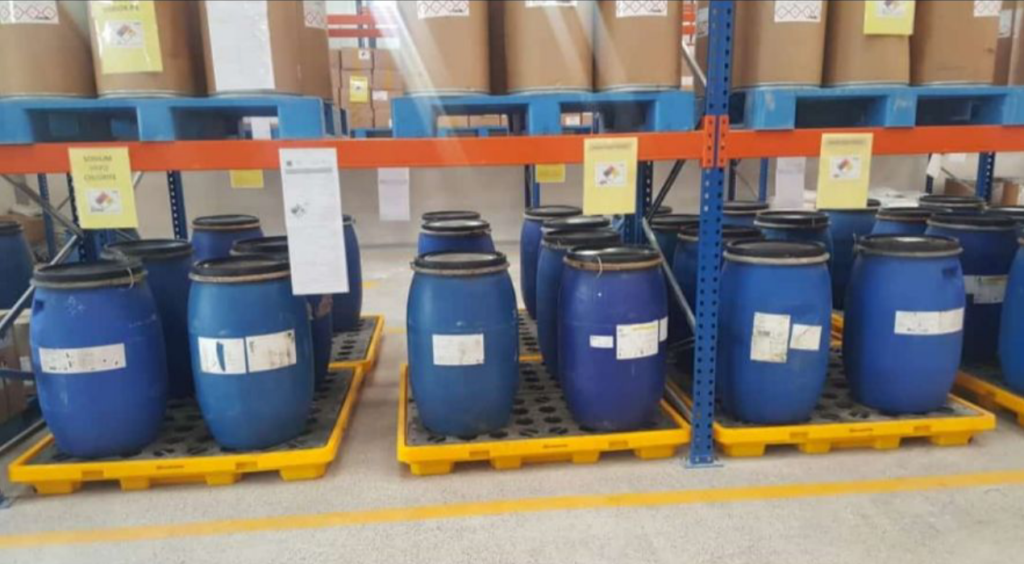
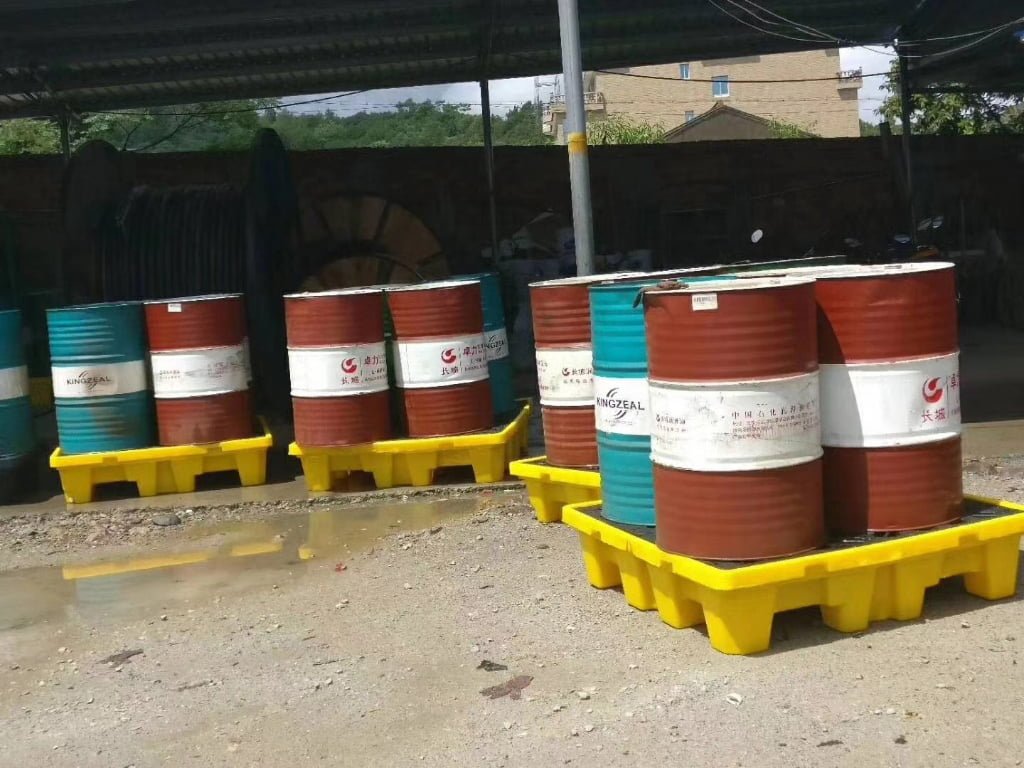
A transport pallet supports, moves, stores, and stabilizes the load. It helps you handle drums with a forklift, place them on the floor, or move them through your warehouse.
A spill containment pallet does something different: it uses a grate and sump to collect drips or leaks from drums and containers.
They do not replace each other:
- A heavy-duty transport pallet can support drum loads but does not collect leaked liquid.
- A spill pallet can collect liquid but does not replace strapping or unit-load restraint during transport.
- If your drums are moving through a warehouse or vehicle route, load support, side control, and restraint still matter.
For drums, FIBC bags, bagged materials, industrial loads, and containment options, see chemical and industrial plastic pallets.
Which Plastic Pallet Works Best for Paper Rolls?
Paper rolls create a different kind of loading risk: they can roll, shift sideways, or damage their edges during forklift movement. If a reel rests across large deck openings or near the pallet edge, its weight can create pressure marks that affect later rewinding, slitting, or printing.
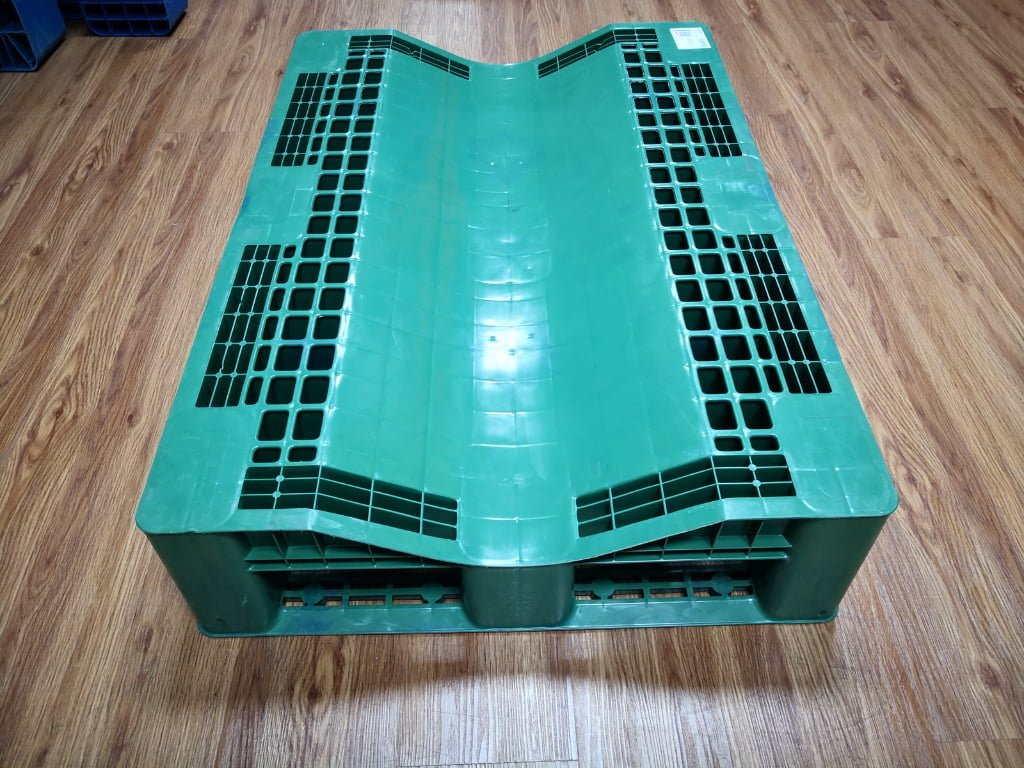
For horizontal paper rolls, use a paper roll pallet with V-shaped grooves, contoured cradles, molded stops, or chock positions. Each reel sits in its own locating area, helping prevent movement in either direction. A rigid, continuous support surface also keeps the roll from sinking into a wide grid deck or receiving concentrated pressure. During road transport, use restraints together with the anti-roll structure—stretch film alone does not stop a heavy paper reel from moving. OSHA’s paper-roll storage rules and UK DVSA load-securing guidance both stress the need for physical roll restraint.
For upright reels, choose a heavy-duty plastic pallet with a flat, closed deck so the whole roll base receives continuous support. Keep the reel centred, avoid edge overhang, and keep forklift tines away from the paper edge. For paper, paperboard, and production-line materials, see Printing & Papermaking Plastic Pallets. When your route needs a more stable runner base for repeated handling, you can also explore 3 Runner Plastic Pallets.
This section naturally covers: paper roll pallet, paper reel pallet, plastic pallet for paper rolls, anti-roll plastic pallet, paper mill pallet, and paper reel transport pallet.
Why Do Irregular and Off-Centre Loads Need Continuous Support?
The hardest part of an irregular load is often not its total weight. It is the concentrated pressure and uneven centre of gravity.
Machine parts, moulds, wide bags, large cartons, and uneven packages may touch the pallet in only a few places. A solid deck, closed deck, or continuous support surface helps distribute that pressure. It also gives you a more reliable base for straps, stretch wrap, edge protection, or top covers.
For a plastic pallet for irregular loads or a plastic pallet for uneven loads, a full-perimeter base, three-runner base, or heavy-duty flat deck can give you a more stable foundation for repeated forklift handling and floor storage.
Useful related structures include full-perimeter plastic pallets, heavy-duty plastic pallets, and three-runner plastic pallets.
With an off-centre load, keep the heavier side as close as possible to the pallet centre and toward the forklift mast. OSHA notes that uneven and off-centre loads reduce a forklift’s practical carrying capacity. OSHA Forklift Load Guidance
Which Load Rating Matters on Your Route?
Do not rely on one “maximum capacity” figure for bags, drums, or irregular goods.
- Static load is the weight a pallet supports when it rests on a level floor.
- Dynamic load is the weight it supports during forklift or pallet-jack handling.
- Racking load is the weight it supports when it spans warehouse rack beams.
A tonne of bagged material on the floor and a tonne of drums lifted by a forklift do not create the same working condition. An irregular load with an offset centre of gravity changes the situation again.
If bagged or drummed goods will sit on open rack beams, use a rackable plastic pallet with a published racking load instead of treating a floor static-load figure as a rack rating.
How Can You Match Your Load to the Right Pallet Structure?
| Load type | Suitable pallet direction | Main problem solved |
|---|---|---|
| FIBC bags and bulk bags | Square footprint with stable bag support | Reduces unsupported bag bottoms and edge wear |
| Feed, fertilizer, cement, and granular sacks | Flat deck or continuous support surface | Improves bag stacking and forklift stability |
| 55-gallon drums and chemical drums | Rigid flat deck, square footprint, restraint or locating method | Reduces rolling, sideways movement, and bottom damage |
| Drums with leak or drip risk | Spill containment pallet | Collects leaked liquid |
| Moulds, machine parts, wide bags, and irregular packs | Solid deck, full-perimeter base, or heavy-duty three-runner base | Spreads local pressure and reduces off-centre loading |
| Industrial loads stored on rack beams | Rackable pallet | Supports racking and repeated handling |
Which Pallet Packaging Mistakes Cause the Most Problems?
The most common mistakes are straightforward:
- Letting bags, FIBC loads, or cartons hang past the pallet edge.
- Using large deck openings under soft bagged materials.
- Placing drums on a flat pallet with no side control or restraint.
- Using a transport pallet where spill collection is required.
- Placing off-centre loads close to the pallet edge.
- Looking only at static load while ignoring forklift handling or rack storage.
You do not need extra stretch film to hide a poor support surface. Start by making the load stable from the bottom, then wrap and secure it.
Frequently Asked Questions
Can bagged goods go on an open-grid plastic pallet?
Yes, if the goods have a rigid base, outer carton, or stable slip sheet. Soft bags, powder sacks, and loads that bulge underneath work better on a flat deck or continuous support surface.
What pallet size works for four 55-gallon drums?
Four drums with a 22.5–23 in diameter need about 45–46 in of square support area in a 2 × 2 layout. A 48 × 48 in or 1200 × 1200 mm footprint is a more common starting point.
Can a spill pallet replace a normal transport pallet?
No. A spill pallet collects leaks. A transport pallet supports and moves the load. Drums still need to be stabilized and secured for handling and transport.
Can stretch wrap solve an off-centre irregular load?
Not completely. Stretch wrap can bind the load to the pallet, but it cannot create support under empty spaces or remove concentrated pressure caused by a seriously off-centre load.
Start With a Stable Base
Bags, drums, and irregular cargo do not need the same pallet. When you look first at whether your cargo is soft, round, off-centre, oversized, or exposed to leakage, you can choose the deck, base, and support area with much more confidence.
At Preface Plast, we provide plastic pallet solutions for bagged materials, FIBC bulk bags, chemical drums, heavy industrial loads, and irregular components. Our range includes flat-deck, full-perimeter, heavy-duty, rackable, and spill-containment options to help you build a safer and more stable unit load.
Share this article
Help others discover this content