
Industrial Stackable Plastic Pallets
Preface Plast manufactures stackable plastic pallets for warehouse storage, manufacturing, distribution, export shipping and closed-loop logistics. Our range includes lightweight and heavy-duty plastic stackable pallets with 4-way entry, runner, full-perimeter, double-sided, open-deck, solid-deck and steel-reinforced configurations.
Choose from more than 600 existing pallet models or let our team match a custom stackable plastic pallet to your unit load, stacking conditions, forklift, conveyor, rack or automated handling system.

Stackable Plastic Pallets by Size, Deck and Base
Compare industrial stackable plastic pallets by footprint, pallet weight, static and dynamic capacity, runner structure, deck and handling features. Published static load must not be used to estimate forklift, stacking or rack performance.

1200 × 1000 Heavy-Duty Stackable Plastic Pallet
A 1200 × 1000 stackable plastic pallet for repeated warehouse handling, loaded block stacking and industrial material flow. Its anti-slip deck and 4-way forklift entry support flexible handling; rack use must be verified for the actual support condition.
- Dimensions
- 1200 × 1000 × 150 mm
- Pallet Weight
- 16.5–18.5 kg
- Dynamic Load
- 1,500 kg
- Static Load
- 6,000 kg
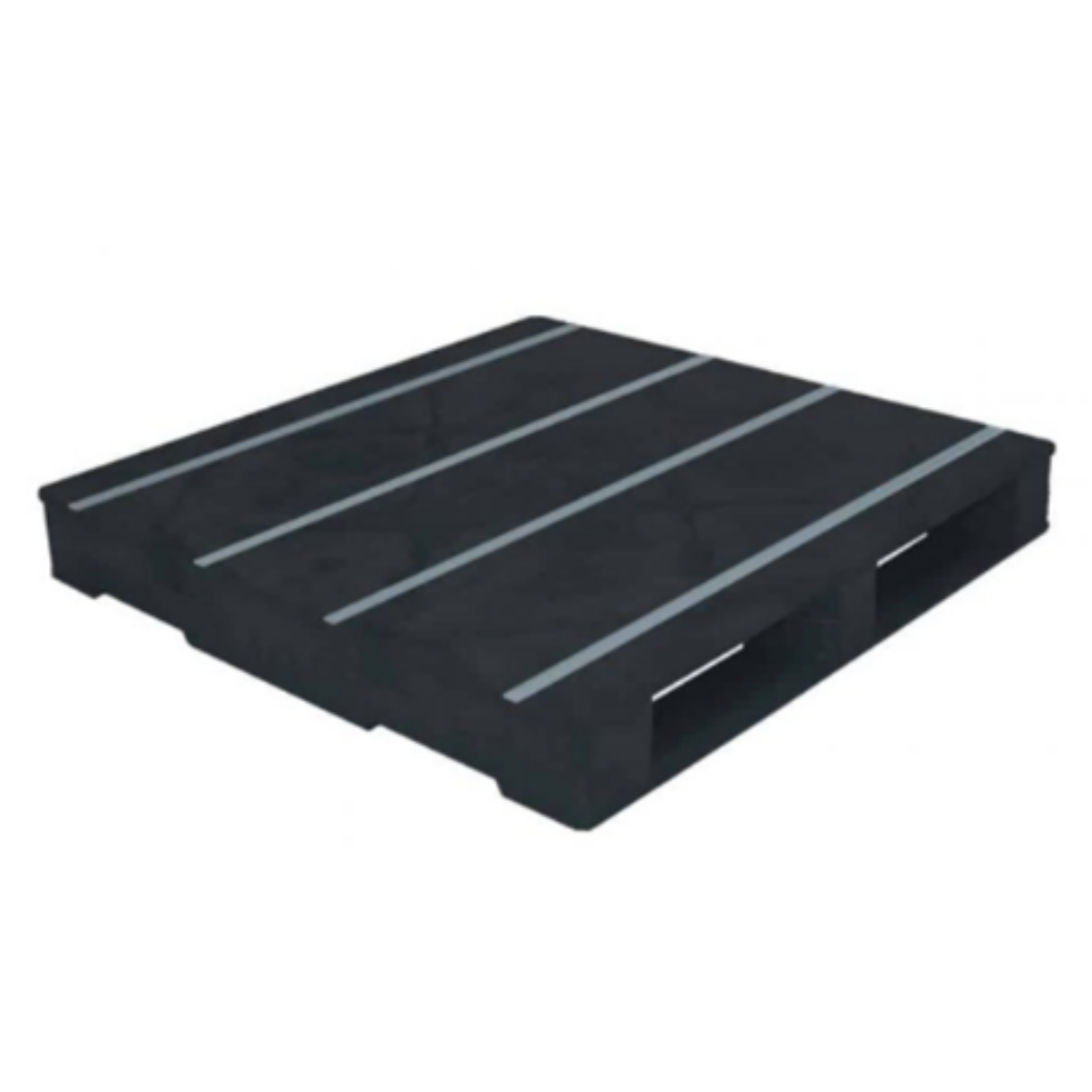
1165 × 1165 Heavy Duty Stackable Plastic Pallet
A heavy-duty plastic pallet with a flat deck, grid-style base and welded construction for stable warehouse storage, floor stacking and industrial handling. Optional 5 kg steel reinforcement increases moving and rack capacity.
- Dimensions
- 1165 × 1165 × 150 mm
- Pallet Weight
- 23.2 kg
- Dynamic Load
- 1,500 kg / 2,000 kg reinforced
- Static Load
- 6,000 kg

1200 × 800 Euro-Size Lightweight Stackable Pallet
A 14.5 kg Euro-size lightweight stackable pallet for warehouse storage, distribution and export programs that need a compact footprint with 4-way forklift handling.
- Dimensions
- 1200 × 800 × 135 mm
- Pallet Weight
- 14.5 kg
- Dynamic Load
- 1,000 kg
- Static Load
- 4,000 kg
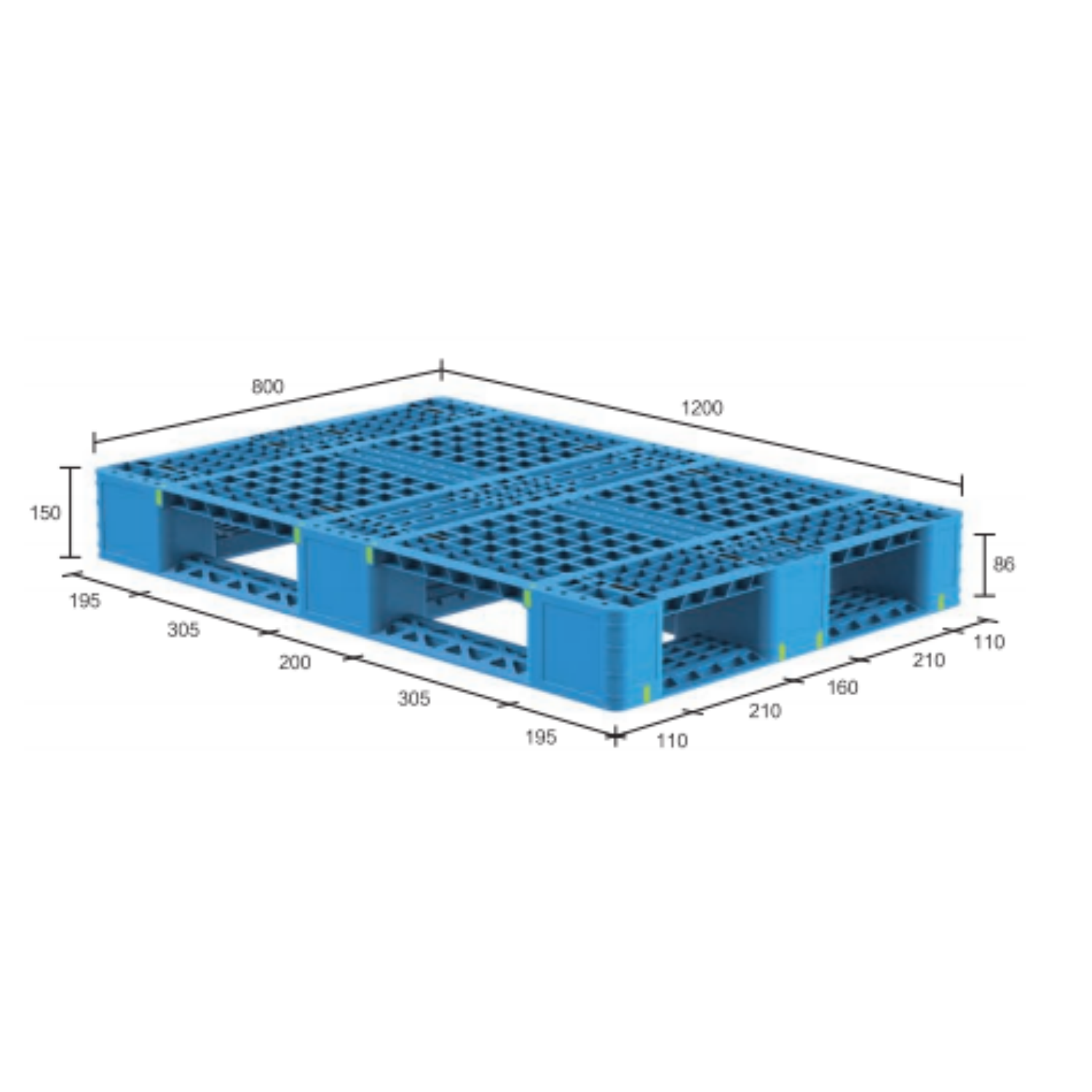
1200 × 800 Full Perimeter Euro Open Deck Stackable Plastic Pallet
A reusable Euro-size plastic pallet with an open deck, full-perimeter base, one-piece construction and 4-way entry for warehouse storage, floor stacking, transportation and distribution. Optional steel tubes support verified rack use.
- Dimensions
- 1200 × 800 × 150 mm
- Pallet Weight
- 11.6 kg
- Dynamic Load
- 1,000 kg / 1,500 kg reinforced
- Static Load
- 4,000 kg / 6,000 kg reinforced

1200 × 1100 4-Way Stackable Plastic Pallet
A large-format 1200 × 1100 plastic stacking pallet for industrial, warehouse and export loads. Four-way entry allows forklift approach from either side or end.
- Dimensions
- 1200 × 1100 × 150 mm
- Pallet Weight
- 17.5 kg
- Dynamic Load
- 1,000 kg
- Static Load
- 4,000 kg

1200 × 1200 Steel-Reinforced Stackable Plastic Pallet
A square heavy-duty stackable plastic pallet combining steel reinforcement, an anti-slip surface and 4-way entry for higher-load warehouse operations and verified rack applications.
- Dimensions
- 1200 × 1200 × 150 mm
- Pallet Weight
- 18.7 kg
- Dynamic Load
- 1,500 kg
- Static Load
- 6,000 kg

1100 × 1100 Square Stackable Plastic Pallet
A square-format 1100 × 1100 stackable plastic pallet for block stacking, warehouse storage and repeat-use logistics. The base can be evaluated against compatible roller or chain conveyor layouts.
- Dimensions
- 1100 × 1100 × 150 mm
- Pallet Weight
- 16.2 kg
- Dynamic Load
- 1,500 kg
- Static Load
- 6,000 kg

1300 × 1100 CP7 Runner-Base Stackable Plastic Pallet
A CP7-size runner-base pallet for chemical, manufacturing and industrial logistics. It supports 4-way forklift entry and can be matched to compatible conveyor systems after contact positions are confirmed.
- Dimensions
- 1300 × 1100 × 150 mm
- Pallet Weight
- 15 kg
- Dynamic Load
- 1,500 kg
- Static Load
- 6,000 kg

1400 × 1100 Reversible Grid-Deck HDPE Stackable Pallet
A large-format HDPE stackable pallet with a reversible grid deck and double-sided structure for industrial loads requiring broad bottom support and repeated handling.
- Dimensions
- 1400 × 1100 × 160 mm
- Pallet Weight
- 26 kg
- Dynamic Load
- 1,000 kg
- Static Load
- 4,000 kg

1400 × 1200 Reversible Rackable and Stackable Plastic Pallet
A large-format HDPE pallet with a reversible open deck for heavy industrial handling and compatible loaded floor stacking. Rack use requires a confirmed capacity for the actual beam spacing and load pattern.
- Dimensions
- 1400 × 1200 × 150 mm
- Pallet Weight
- 27 kg
- Dynamic Load
- 1,500 kg
- Static Load
- 6,000 kg
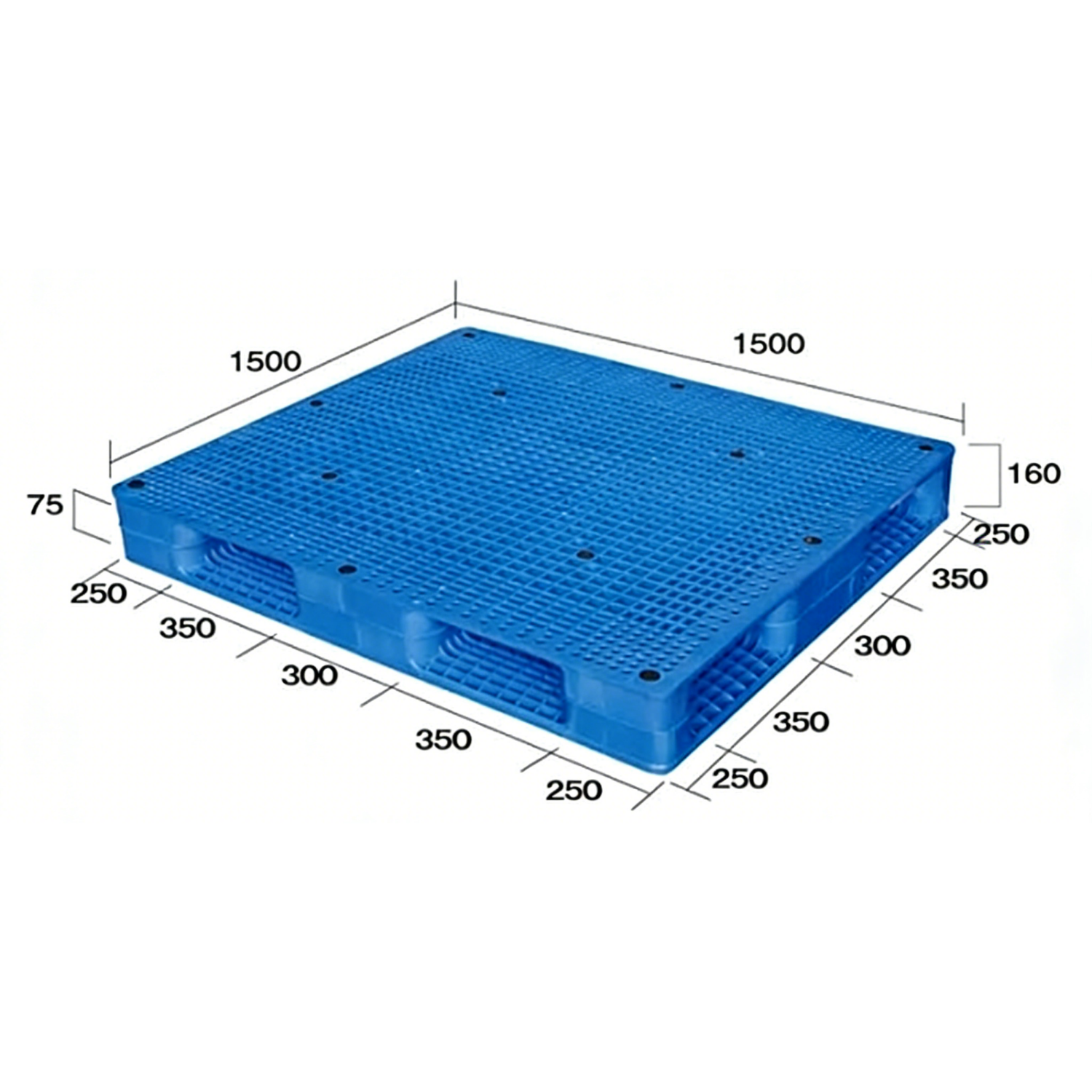
1500 × 1500 Double-Faced Stackable Plastic Pallet
An oversized double-faced plastic pallet with a durable grid deck and welded construction for large, heavy or irregular loads. Optional 8 or 12 steel tubes provide additional support for demanding storage and logistics applications.
- Dimensions
- 1500 × 1500 × 150 mm
- Pallet Weight
- 37 kg
- Dynamic Load
- 1,500 kg
- Static Load
- 6,000 kg

Custom-Size Stackable Plastic Pallet
A made-to-spec pallet developed around your footprint, unit load, stacking plan, forklift or conveyor route. Existing models are checked first; new dimensions or major structural changes normally require custom tooling.
- Dimensions
- To drawing or specification
- Pallet Weight
- Defined by design
- Dynamic Load
- Application-specific
- Static Load
- Application-specific
No Standard Model Matches Your Unit Load?
We can compare your requirement against 600+ existing pallet models before evaluating custom tooling. Send a drawing, sample, packaging layout, rack dimensions or equipment specification.
What Are Stackable Plastic Pallets?
Stackable plastic pallets are molded load platforms designed to carry goods during material handling and support compatible loaded unit loads placed on top of one another on a flat floor. They are commonly used as floor stacking plastic pallets or block stacking plastic pallets in warehouses, factories and distribution operations.
Unlike nestable pallets, which primarily reduce empty return volume, stackable pallets normally use 3-runner, 6-runner, full-perimeter or double-sided bases to form a stable support path beneath the unit load. This structure supports repeated forklift movement, organized floor storage and more effective use of vertical warehouse space.
In this range, “stackable” refers primarily to loaded stacking—not simply placing empty pallets together. Some products can also be rackable or compatible with conveyors and automated equipment, but those capabilities must be confirmed separately for the selected model and support condition.
Stacking Performance Depends on the Complete Unit Load
Safe stack height depends on pallet structure, product weight, load distribution, packaging compression strength, center of gravity, stretch wrap or strapping, floor condition, temperature and storage duration. Static load alone should not be divided by the weight per pallet to calculate stacking levels.
Product Range at a Glance
Find the Right Stackable Pallet by Requirement
Not every plastic stacking pallet is designed for the same load or handling route. Start with the operational requirement that matters most.
Lightweight Stackable Pallets
Lower-tare-weight designs for moderate loads, export programs and logistics routes where pallet weight affects freight efficiency.
4 Way Stackable Pallets
Forklift access from both the long and short sides gives operators more approach options in aisles, staging areas and loading zones.
Heavy-Duty Stackable Pallets
Rigid bases, reinforced ribs and optional steel bars for higher loads and repeated industrial handling.
Rackable and Stackable Pallets
Selected models combine loaded floor stacking with verified rack use under defined beam spacing, orientation and load conditions.
Closed and Solid Deck Pallets
A more continuous load surface for bags, cartons, small packages and operations where routine cleaning matters.
Custom Stackable Plastic Pallets
Adapt an existing model or evaluate new tooling for a custom footprint, fork opening, base, load or automation requirement.
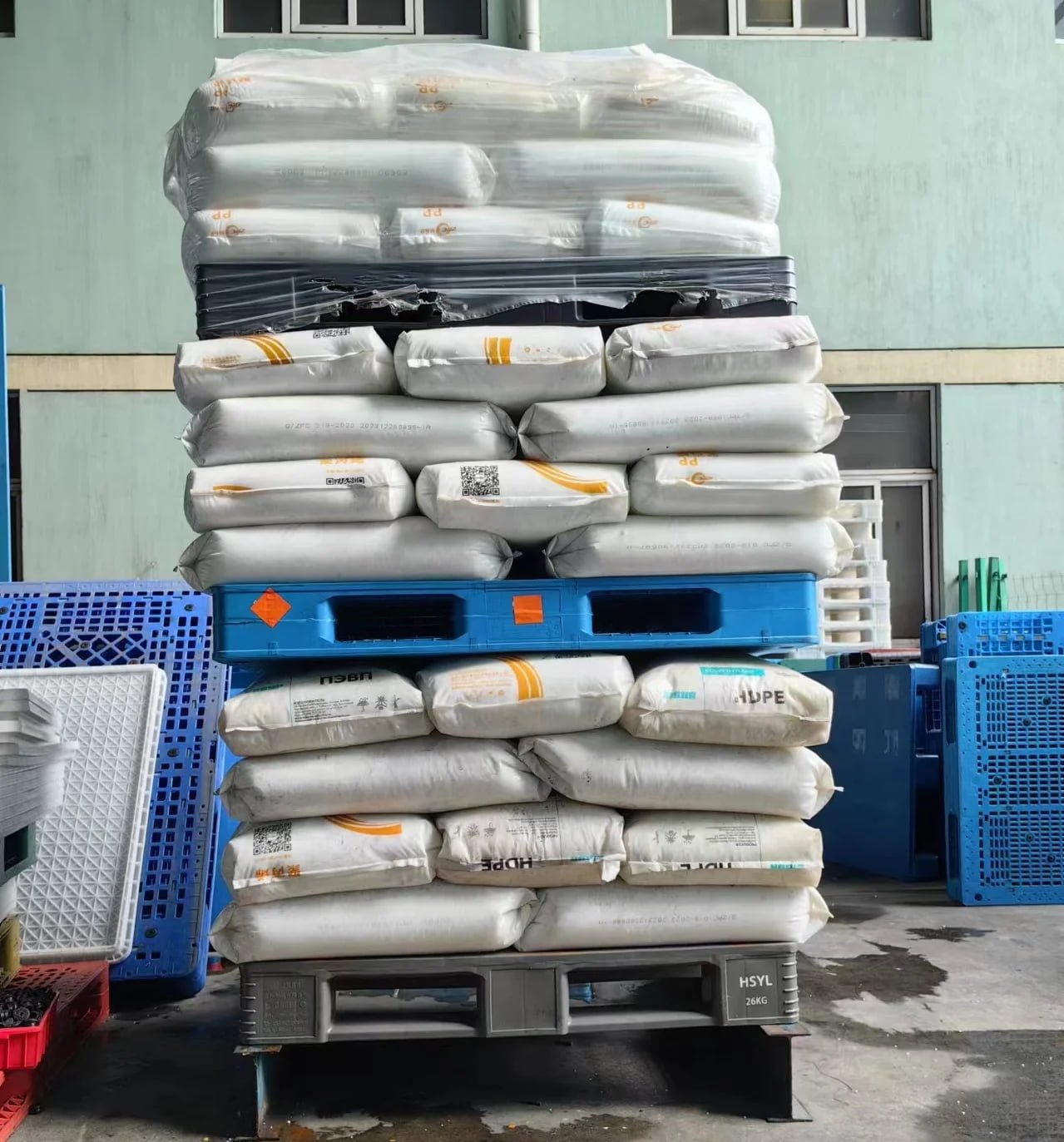
Typical loaded stacking plan after the pallet, packaging and storage conditions are verified.
Designed for Floor, Block and Double Stacking
Stable stacking is created by the complete unit load—not by one feature or one load number. Pallet geometry, packaging, load alignment, friction, restraint and floor condition must work together.
Rigid Load-Bearing Base
Runner, full-perimeter and double-sided bases create defined support paths beneath the loaded pallet.
Reinforced Rib Geometry
Rib depth, direction and connection points help distribute force and manage bending through the deck and base.
Controlled Load Transfer
Vertical compression should pass through supported pallet and packaging contact areas rather than isolated weak points.
Anti-Slip Options
Deck grommets, fork-contact pads and raised rims can help reduce movement according to the load and cleaning process.
Protected Fork Entry
Defined openings and reinforced junctions help manage repeated impact at common forklift contact points.
Unit-Load Restraint
Stretch wrap, straps, corner protection and a controlled center of gravity contribute to stack stability.
Choose the Base and Deck Around the Handling Route
The following market terms describe different structures. Actual geometry must be checked on the selected model.
3-Runner Stackable Pallets
Three longitudinal runners provide defined bottom contact for loaded floor stacking, forklifts, compatible conveyors and selected rack layouts. Runner position and support direction must be confirmed.
6-Runner & Full-Perimeter Pallets
A broad picture-frame or cruciform support layout distributes stacking pressure across a larger base area. In our range, full-perimeter pallets are not compatible with standard hand pallet trucks.
Double-Sided Stackable Pallets
Upper and lower deck structures provide broad support between loaded units. Reversible and non-reversible configurations are available; our double-sided models are not suitable for standard pallet jacks.
Open or Solid Deck
Open, grid and ventilated decks reduce weight and promote drainage. Closed, solid and flat-top decks provide a more continuous surface for bags, cartons and smaller packaged goods.
Stackable Plastic Pallets for Industrial and Logistics Applications
These pallets are best suited to operations that require repeat handling, stable loaded floor storage, controlled geometry and predictable material flow.
Warehouse Storage
Warehouse stackable plastic pallets support forklift movement, staging and block stacking where compatible loaded units are stored without racks.
Manufacturing
Industrial stackable plastic pallets manage raw materials, components, work-in-process and finished goods between production and storage areas.
Distribution & 3PL
Standard footprints, reusable construction and 4-way entry support repeat movement across distribution centers and multi-customer logistics operations.
Food, Beverage & Pharma
Moisture-resistant, cleanable plastic construction supports hygiene-sensitive handling. Material compliance must be confirmed for the selected resin and product.
Automotive & Closed Loop
Reusable stackable pallets support repeat movement of parts and packaged components. Colors, molded identification and RFID can support asset control.
Chemicals, Drums & Bags
Large-format and heavy-duty designs support drums, cartons, FIBC bags and packaged industrial materials after deck openings and point loads are reviewed.
Cold Storage
Virgin-material pallets can operate from -40°C to 70°C, subject to the model, load and conditions. Recycled-material temperature limits require confirmation.
Export & Returnable Logistics
Lightweight stackable shipping pallets can reduce tare weight, while reusable models create value when pallets are recovered and evaluated by cost per trip.
International Shipping Note
Plastic pallets are not solid-wood packaging and therefore do not require the heat treatment or fumigation applied to regulated wood pallets. Buyers should still confirm any destination-specific import, hygiene or documentation requirements.
See a Stackable Plastic Pallet Dynamic Load Test
A load number is meaningful only when the handling and support conditions are understood. This video shows a dynamic load test for stackable plastic pallets during movement.
For project approval, confirm the model, test load, load distribution, fork support, movement method, temperature, duration and acceptance criteria. Laboratory or factory testing should be supplemented by validation in the actual logistics route where necessary.
Static Load Verification
Checks floor-supported performance under the defined load arrangement.
Dynamic Load Verification
Evaluates handling performance while the pallet is lifted and moved.
Stacking Review
Considers pallet contact, packaging compression, alignment and stacking duration.
Rack & Deflection Review
Defines supports, span, orientation, load pattern and allowable deformation.
Why Switch from Wood to Plastic Stacking Pallets?
For repeat-use and controlled logistics systems, plastic stacking pallets can provide more consistent geometry, easier routine cleaning and better resistance to moisture than conventional wood pallets.
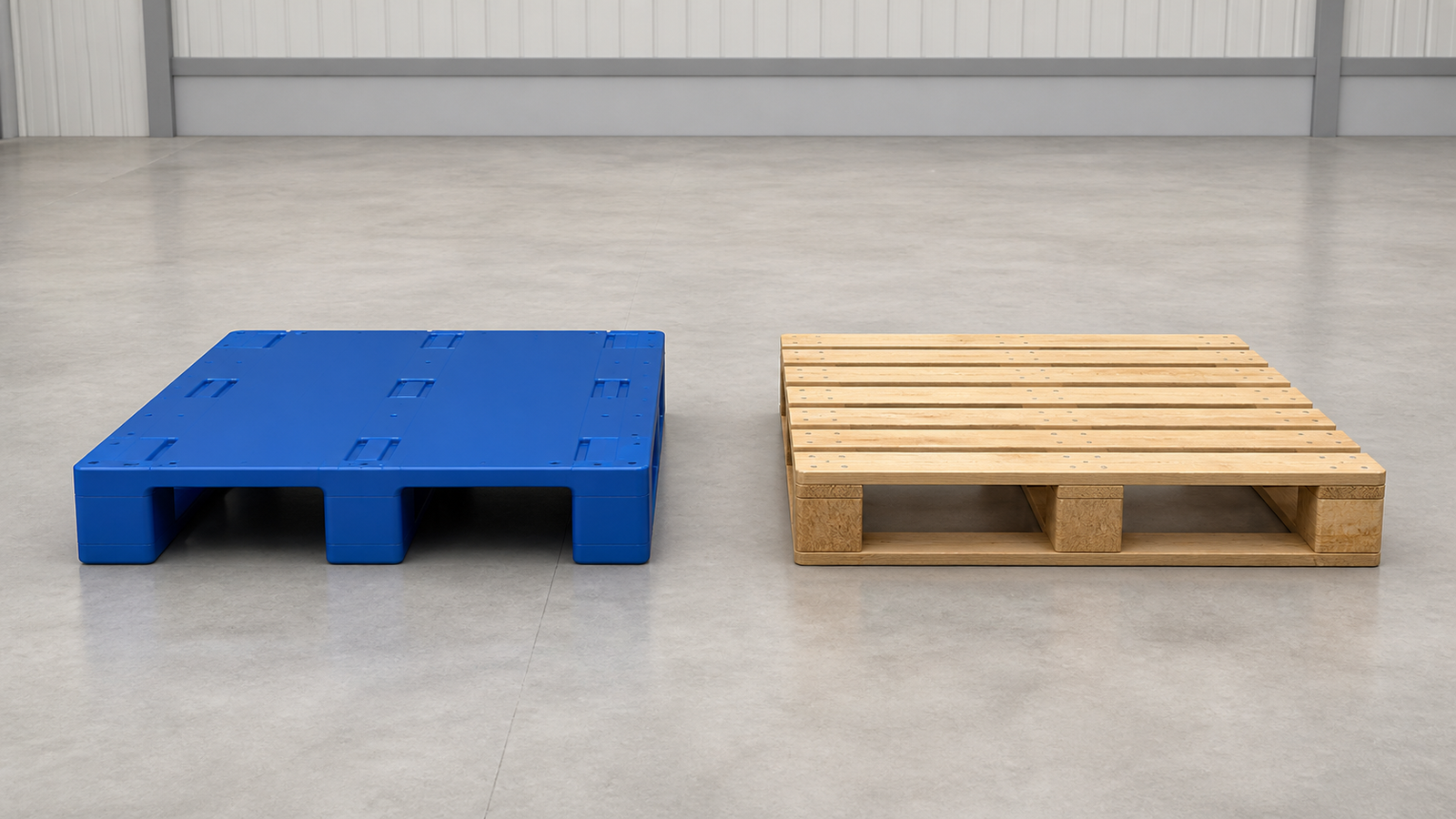
No Exposed Nails or Splinters
Molded construction eliminates protruding nails, loose boards and wood splinters that can affect goods or automated equipment.
More Consistent Dimensions
Repeatable deck, runner and fork-opening geometry can support compatible conveyors, palletizers and automated systems.
Resists Moisture Absorption
Plastic does not absorb water in the same way as untreated wood, helping maintain more consistent weight and condition.
Easier Routine Cleaning
Plastic surfaces can be washed without the same absorption concerns, although deck openings, cavities and drainage still matter.
Designed for Repeated Use
Virgin-material pallets can support repeated cycles in suitable closed-loop systems, allowing cost-per-trip evaluation.
No Wood-Treatment Process
Plastic pallets do not require the heat treatment or fumigation associated with regulated solid-wood packaging.
Virgin and Recycled Stackable Plastic Pallets
Material is selected around impact performance, stiffness, temperature, cleanliness, service life and the economics of the logistics route.
Virgin-Material Pallets
Repeat UseVirgin-material stackable pallets provide more controlled material properties and are generally selected for repeat-use programs, demanding handling conditions and projects requiring greater batch consistency.
Actual life depends on load, forklift impact, point loads, temperature, UV exposure, cleaning, storage conditions and asset recovery.
Recycled-Material Pallets
Cost-Controlled RoutesRecycled plastic stackable pallets are generally selected for one-way export and limited-return programs where initial purchasing cost is a greater priority. Material source and formulation affect impact, consistency, odor, color and temperature performance.
Recycled-material operating temperature should not be inferred from the virgin-material range. Confirm the selected product and formulation.
HDPE Stackable Plastic Pallets
HDPE is commonly selected for moisture resistance, impact performance and repeat handling. Actual chemical and temperature performance depends on resin grade, additives and pallet structure.
HDPE or PP?
HDPE is often considered for impact and lower-temperature handling; PP can provide greater stiffness and may suit higher-temperature conditions. Available options must be confirmed by model.
Match the Pallet to Forklifts, Pallet Jacks, Conveyors and AGVs
The pallet must fit the complete material-handling system. Fork openings, runner locations, bottom contact surfaces, dimensional tolerance and loaded deflection should be checked before an order is placed.
4-Way Forklift Entry
Allows forklift approach from both long and short sides. Fork tine width, thickness and entry height must still match the pallet openings.
Hand Pallet Truck
Four-way forklift access does not guarantee four-way pallet jack access. Load-wheel paths and runner geometry require separate confirmation.
Conveyor-Compatible Pallets
Confirm runner contact positions, roller or chain spacing, travel direction, bottom flatness, load distribution and allowable deflection.
AGV & AS/RS Pallets
Selected models can be matched to AGVs, AS/RS, palletizers and robotic handling after pickup geometry, sensors, tolerances and load centering are reviewed.
Explore AS/RS plastic pallets →Understand Stackable Plastic Pallet Load Ratings
Static, dynamic, stacking and rack capacities describe different support conditions. They are not interchangeable.
Load supported while the pallet rests on a flat, rigid floor. Because the base is fully supported and not moving, this is normally the highest published rating.
Load carried while an approved forklift or handling device lifts and moves the pallet. Fork position, acceleration, vibration, impact and load distribution affect performance.
Compression applied to the lower pallet and packaging during loaded stacking. It depends on the unit-load contact pattern, alignment, number of levels and storage environment.
Performance while spanning defined rack supports. Beam spacing, orientation, reinforcement, temperature, duration and allowable deflection must be specified.
Do Not Calculate Stack Levels from Static Load
A 6,000 kg static rating does not mean six 1,000 kg loaded pallets can be stacked. Packaging compression, pallet contact points, load height, eccentricity, duration and safety factors must also be evaluated.
Point Loads Behave Differently
A uniformly distributed 1,000 kg carton load is not equivalent to a 1,000 kg machine supported on four small feet. Provide the dimensions and positions of the load contact points for product selection.
How to Choose the Right Stackable Plastic Pallet
Pallet selection should begin with the complete unit load and handling process—not with size, static load or price alone.
Define the Unit Load
Confirm total weight, product footprint, packaging type, load height and contact points. Cartons, drums, bags and machines apply force differently.
Confirm the Pallet Footprint
Match the pallet to the packaging pattern, warehouse layout, rack, truck, container and destination-market handling standard.
Separate Every Load Condition
Define static, dynamic, stacking and rack requirements independently. Do not select forklift or rack performance from static load alone.
Define the Stacking Plan
State the load per pallet, expected levels, storage duration, floor condition, packaging compression strength and operating temperature.
List All Handling Equipment
Include forklifts, pallet trucks, stackers, roller or chain conveyors, racks, AGVs, AMRs, AS/RS and palletizers.
Select Material and Features
Choose material, reinforcement, deck, base, anti-slip, raised rims, color, logo and tracking options around the actual application.
Evaluate Cost per Trip, Not Pallet Price Alone
For reusable and returnable stackable plastic pallets, compare expected trips, pallet loss, replacements, return freight, cleaning, product damage and handling downtime. A higher initial price can only create value when the pallet is recovered and reused within a controlled system.
Stackable, Nestable or Rackable: Which Plastic Pallet Do You Need?
These terms describe different capabilities, not simple strength levels. One pallet may combine more than one capability, but each function requires verification.
Stackable Plastic Pallets
Best for loaded floor and block stacking
Runner, perimeter or double-sided bases support compatible loaded unit loads placed directly on top of one another on a flat floor.
Compare stackable pallets →Nestable Plastic Pallets
Best for saving empty return space
Feet or pods fit into the pallet below when empty, reducing empty storage and return transport volume.
Explore nestable pallets →Rackable Plastic Pallets
Best for unsupported warehouse racking
Designed to span defined rack beams while carrying a load. Deflection, creep, beam spacing, orientation and reinforcement are critical.
Explore rackable pallets →Related Plastic Pallet Ranges
Continue product selection by operating requirement.
From Material Control to Finished-Pallet Verification
Quality means reproducing the agreed material, weight, dimensions, structure and handling performance from one production batch to the next—not only checking appearance.
Raw-Material Control
Virgin and recycled materials are managed according to the agreed product specification and application requirements.
Controlled Injection Molding
Temperature, pressure, filling and cooling influence pallet weight, shrinkage, flatness and structural consistency.
Dimensional Inspection
Overall length, width, height, fork openings and runner geometry are checked; specified models are controlled to ±2 mm.
Weight and Appearance Checks
Unit weight, filling, flash, cracks, deformation, runners and surface condition are inspected.
Structural and Component Checks
Corners, fork entries, runner junctions, welds, steel bars and anti-slip parts are reviewed by configuration.
Pre-Shipment Verification
Model, quantity, identification, packaging and key specification points are confirmed before shipment.
Standard Pallets or a Solution Built Around Your Operation
We first compare your requirement with more than 600 existing pallet models. When no standard model fits, Preface Plast can adapt a configuration or evaluate new tooling for a custom-size stackable plastic pallet.
Whether the project requires adapting an existing product or developing a fully custom solution, we evaluate the pallet around the unit load, equipment and complete handling route.
Explore custom plastic pallet services →Dimensions & Footprint
Standard footprints or custom tooling for new length, width, height and fork-opening requirements.
Deck & Base
Open, grid, ventilated, closed or solid decks with runner, perimeter and double-sided bases.
Material Selection
Virgin, recycled, HDPE, PP or project-specific options according to the selected model and requirement.
Structural Reinforcement
Rib, runner and steel-reinforced options where additional stiffness or verified rack performance is required.
Color & Branding
Custom colors, molded-in logos, hot stamping and identification marks for branding and asset ownership.
Anti-Slip & Tracking
Deck grommets, fork pads, raised rims, RFID pockets and barcode areas according to the application.
A China Stackable Plastic Pallet Manufacturer Built for Volume Supply
Founded in 2000, Preface Plast supplies wholesale stackable plastic pallets to importers, distributors, manufacturers, 3PL providers and industrial operators. We support product selection, OEM projects, container orders and repeat procurement.
Employees
Manufacturing, engineering, quality, warehouse and commercial support.
Manufacturing Base
Production, mold, inspection, warehousing and order-handling capacity.
Production Lines
Support for multiple pallet structures, materials and purchasing volumes.
Injection Molds
A broad mold base for matching existing products before new-tool investment.
Pallet Models
Multiple footprints, decks, bases, weights and handling configurations.
Pallets in Stock
Standing inventory across selected products; availability is confirmed by model and color.
May vary by model, material, color, stock and customization.
Subject to model availability, freight and destination requirements.
After 50% deposit and final specification confirmation.
For qualifying products under agreed load, equipment and use conditions.
How Much Do Stackable Plastic Pallets Cost?
Stackable plastic pallet prices depend on size, material, unit weight, deck and base structure, static and dynamic requirements, steel reinforcement, anti-slip parts, color, logo, RFID, quantity and container loading. A lightweight export pallet and a reusable steel-reinforced pallet have different cost structures.
Stackable Plastic Pallet FAQs
Answers to common questions about block stacking, load ratings, pallet jacks, racking, materials, MOQ, price and delivery.
What is a stackable plastic pallet?
What is block stacking?
Can stackable plastic pallets be double stacked?
How many loaded plastic pallets can be stacked?
What is the difference between a 3-runner and 6-runner plastic pallet?
What is the difference between an open deck and a closed deck pallet?
What is the difference between stackable and rackable plastic pallets?
Are 4-way stackable pallets compatible with hand pallet trucks?
What are the common stackable plastic pallet sizes?
What is the difference between static and dynamic load?
Can stackable plastic pallets be used in warehouse racks?
Can plastic stackable pallets be used with conveyors or AGVs?
Are stackable plastic pallets suitable for food or pharmaceutical use?
Should I choose virgin or recycled plastic pallets?
What is the operating temperature of a stackable plastic pallet?
How long do stackable plastic pallets last?
Do plastic pallets need fumigation for export?
How much do stackable plastic pallets cost?
What is the MOQ for wholesale stackable plastic pallets?
How quickly can you ship an order?
How many stackable plastic pallets fit in a 40HQ container?
Can you manufacture custom-size stackable plastic pallets?
Tell Us What You Need to Stack
Share your pallet size, unit load, stacking plan and handling equipment. We will compare your requirements with 600+ existing models and recommend the closest standard product or evaluate a custom stackable plastic pallet.
Choose the Pallet Around the Load, Not the Label
The right stackable plastic pallet is determined by how the complete unit load will be stored, lifted, stacked, transported and returned. Pallet footprint, load distribution, packaging strength, stacking height, base support, handling equipment, temperature and duration all affect performance.
Preface Plast is a stackable plastic pallet manufacturer and supplier in China with 600+ pallet models, 700+ injection molds, 60 production lines and standing inventory of more than 300,000 pallets. We supply lightweight stackable pallets, 4 way stackable pallets, heavy-duty and steel-reinforced designs, reusable plastic stacking pallets and custom OEM solutions for bulk and wholesale orders.