
AS/RS Plastic Pallets Engineered for Reliable Automated Handling
Reduce pallet jams, excessive rack deflection and positioning errors with AS/RS plastic pallets configured around your conveyor, racking system, unit load and operating environment.
Choose from rackable, steel-reinforced, grid-deck, hygienic and AGV-compatible plastic pallets for roller conveyors, chain conveyors, stacker cranes, shuttle systems and high-bay automated warehouses.
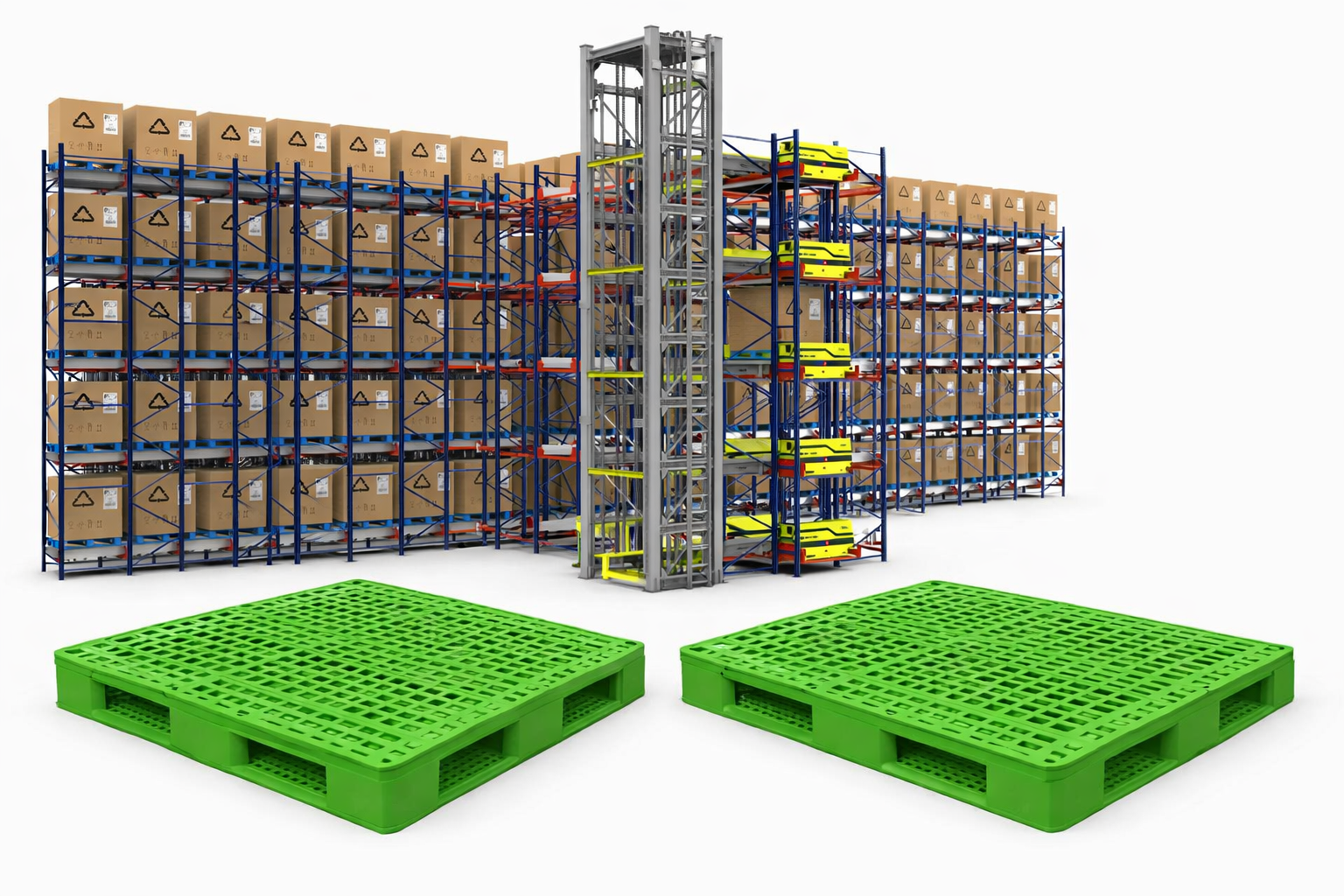
What Makes a Plastic Pallet Suitable for AS/RS?
An AS/RS plastic pallet is a reusable load carrier designed or validated for automated storage and retrieval. It must interact consistently with conveyors, sensors, stacker-crane forks, shuttle vehicles, AGVs, transfer stations and rack supports.
Unlike a general warehouse pallet, an automation-ready plastic pallet is selected by dimensional tolerance, deck flatness, runner geometry, fork-entry clearance, rack span, load distribution, operating temperature, long-term deflection and batch consistency—not by external size or static load alone.
“An AS/RS pallet is not simply a heavy-duty plastic pallet. It is a repeatable interface between the unit load and the automated handling system.”
Pallet Jams
Warpage or inconsistent dimensions can cause drift, guide collisions and transfer-point interruptions.
Rack Deflection
Unsupported spans can create sag that reduces fork, sensor or shuttle clearance during retrieval.
Wrong Base Interface
Runner positions must match roller pitch, chain centers, forks and shuttle lifting points.
Cold-Temperature Damage
Material and impact performance must be evaluated at the actual freezer temperature.
Batch Variation
Changes in resin, weight, molding or reinforcement can affect approved system performance.
Poor Traceability
Protected RFID, barcode and serialized areas support closed-loop pallet tracking.
AS/RS Plastic Pallets for Automated Storage Systems
Explore rackable plastic pallets for high-bay storage, conveyor transport, AGV handling, cold-chain logistics and hygiene-sensitive automated warehouses.
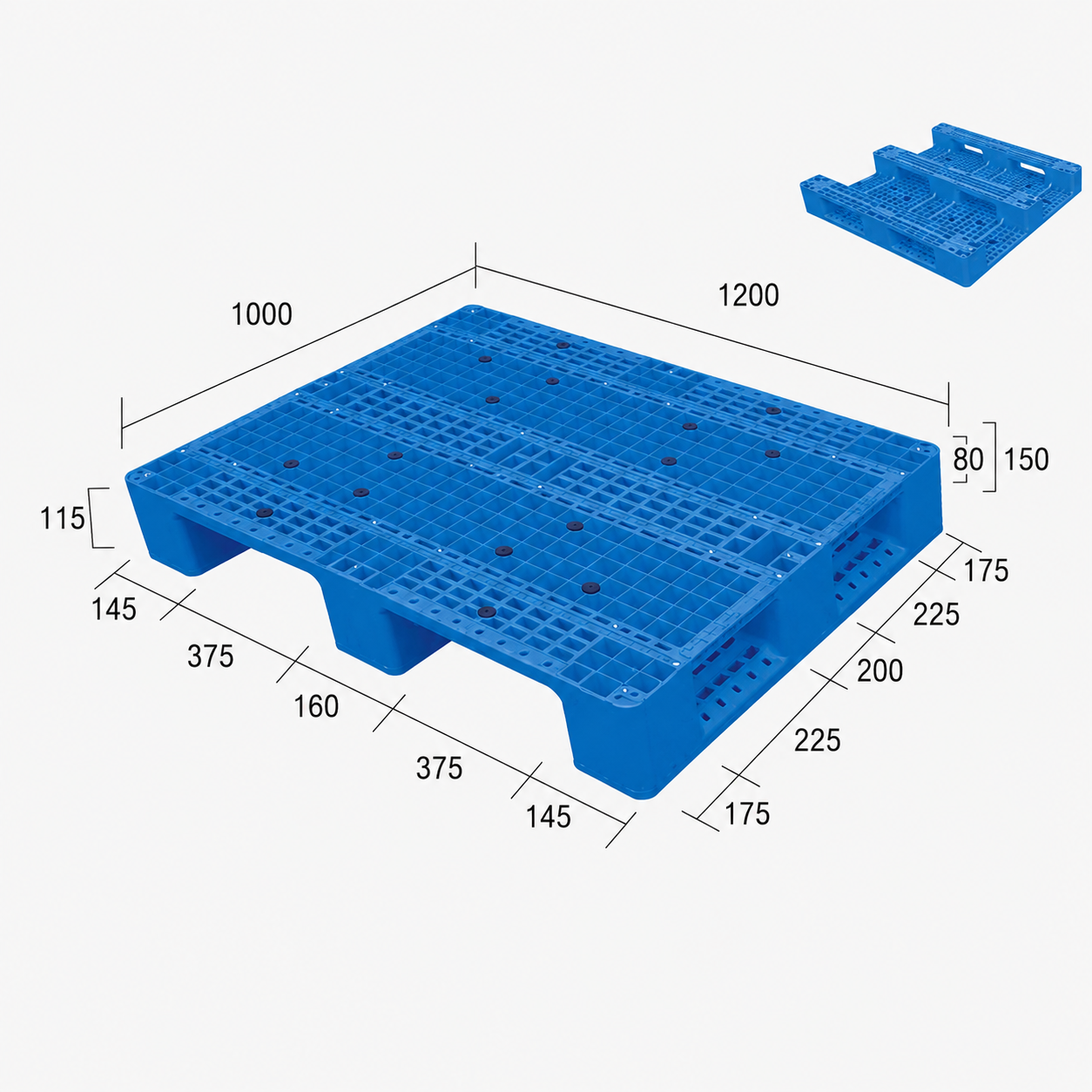
Steel-Reinforced Heavy-Rack AS/RS Pallet
Additional internal reinforcement supports demanding rack spans, heavy unit loads and deflection-sensitive automated retrieval.
- Configurable steel reinforcement
- Rack-load and deflection review
- High-bay warehouse application
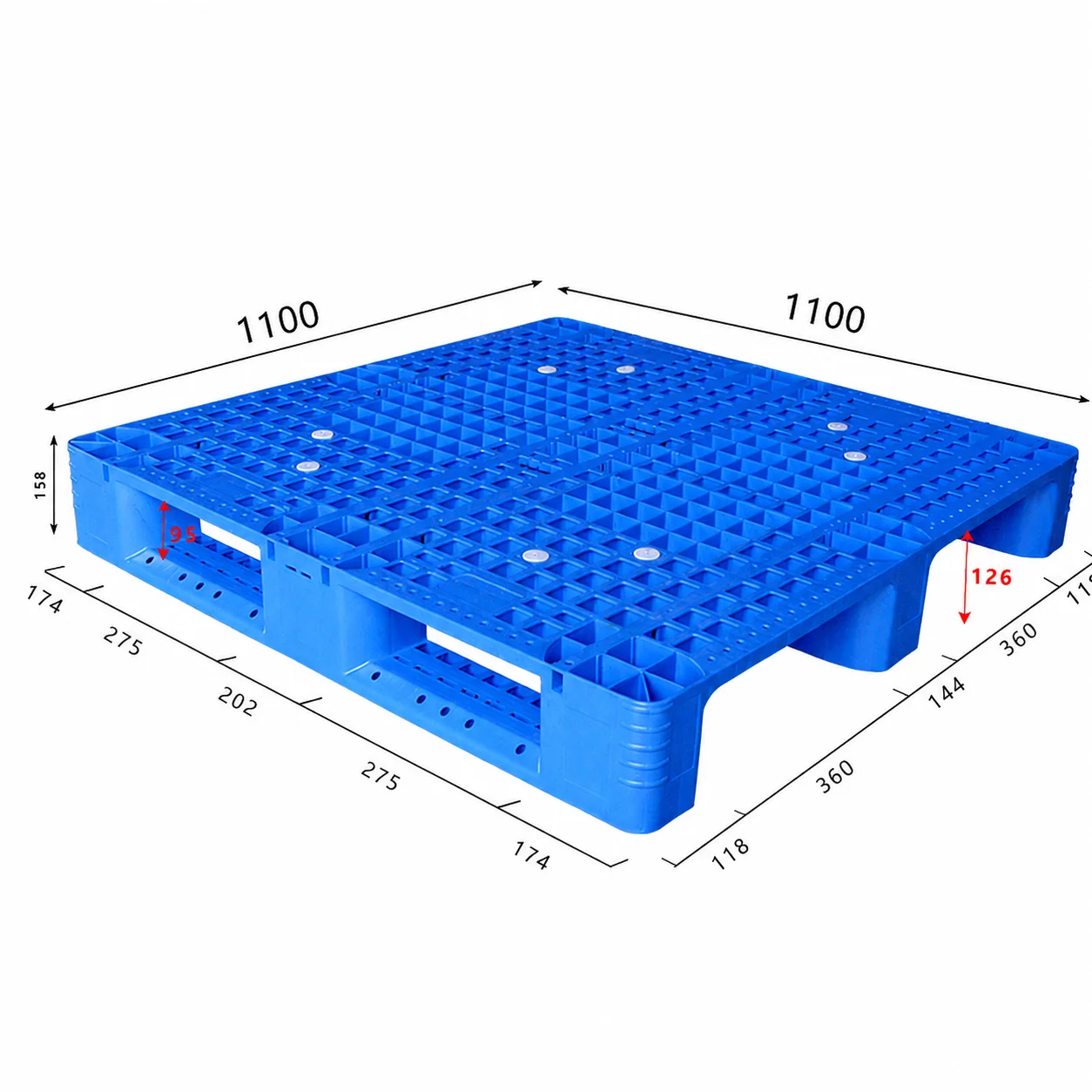
Rackable AS/RS Plastic Pallet
A stable reusable plastic pallet for beam-rack storage, stacker-crane handling and closed-loop automated logistics.
- Defined rack support surfaces
- Repeatable fork entry
- Optional RFID and anti-slip
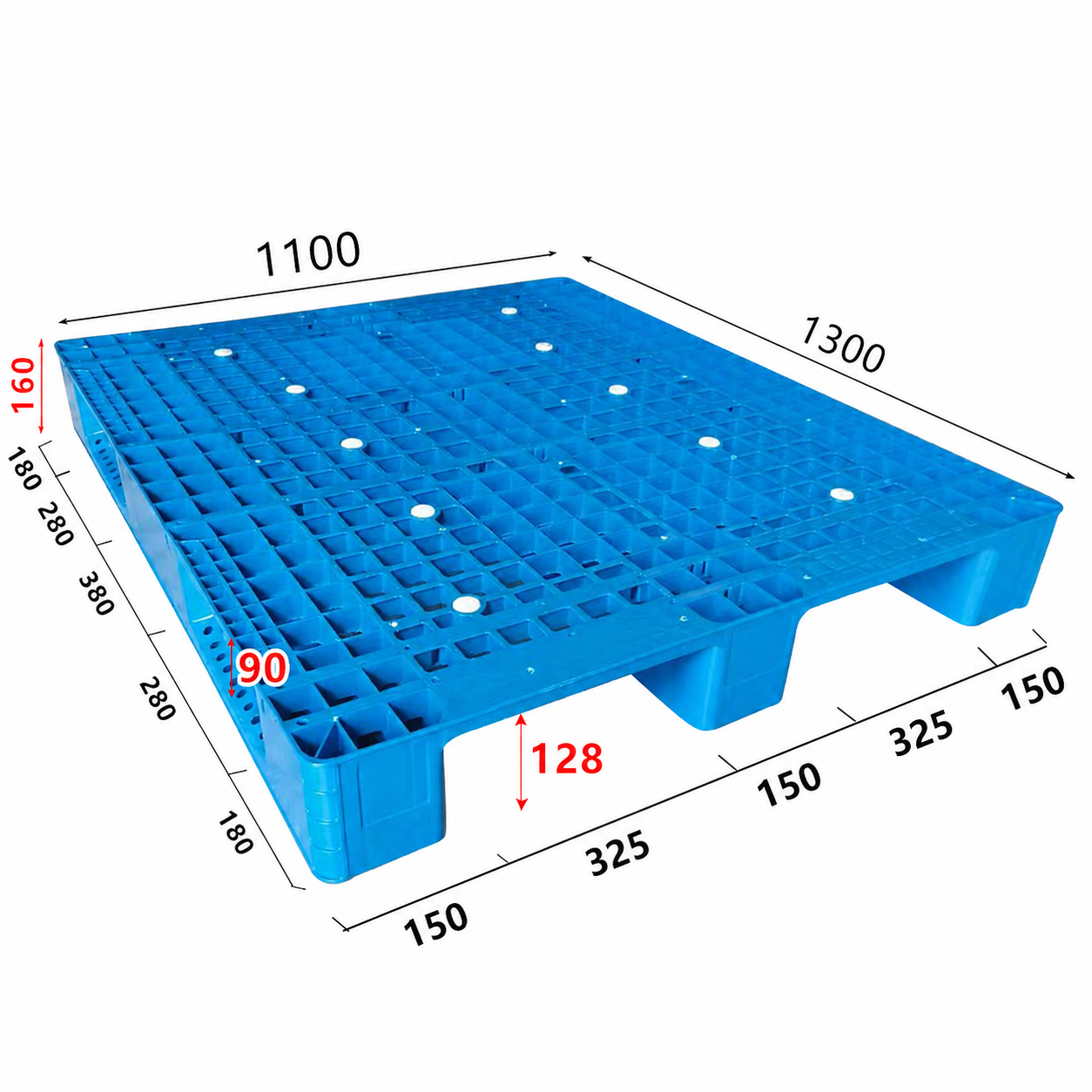
Heavy-Duty AS/RS Conveyor Plastic Pallet
Designed for stable support across compatible roller conveyors, chain conveyors, transfer stations and automated infeed lines.
- Runner-to-conveyor interface review
- Controlled contact surfaces
- High-throughput handling
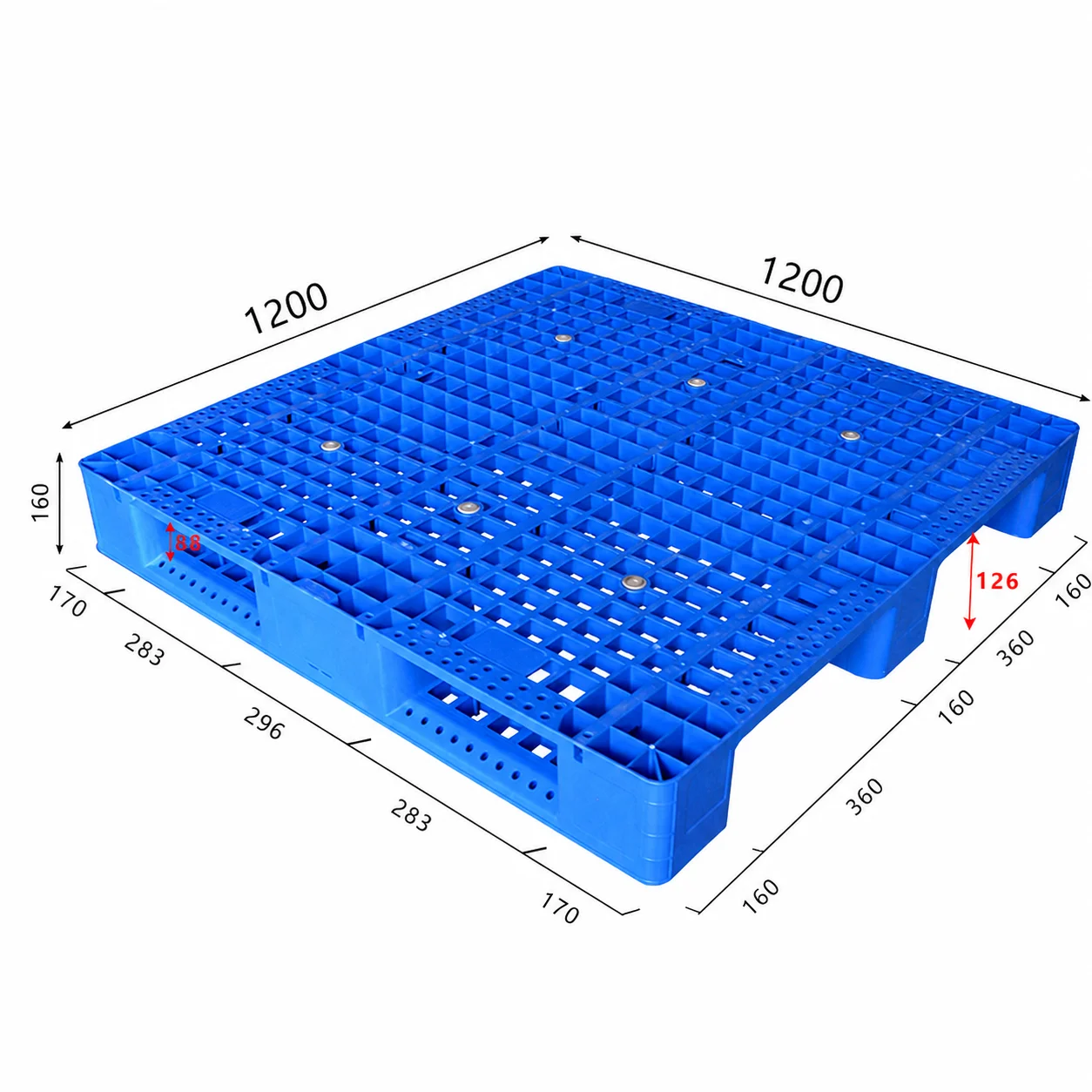
Automated-Storage Grid-Deck Plastic Pallet
An open-deck AS/RS pallet option for applications requiring airflow, drainage and reduced pallet weight.
- Open grid deck
- Washable construction
- Cold-chain configuration options
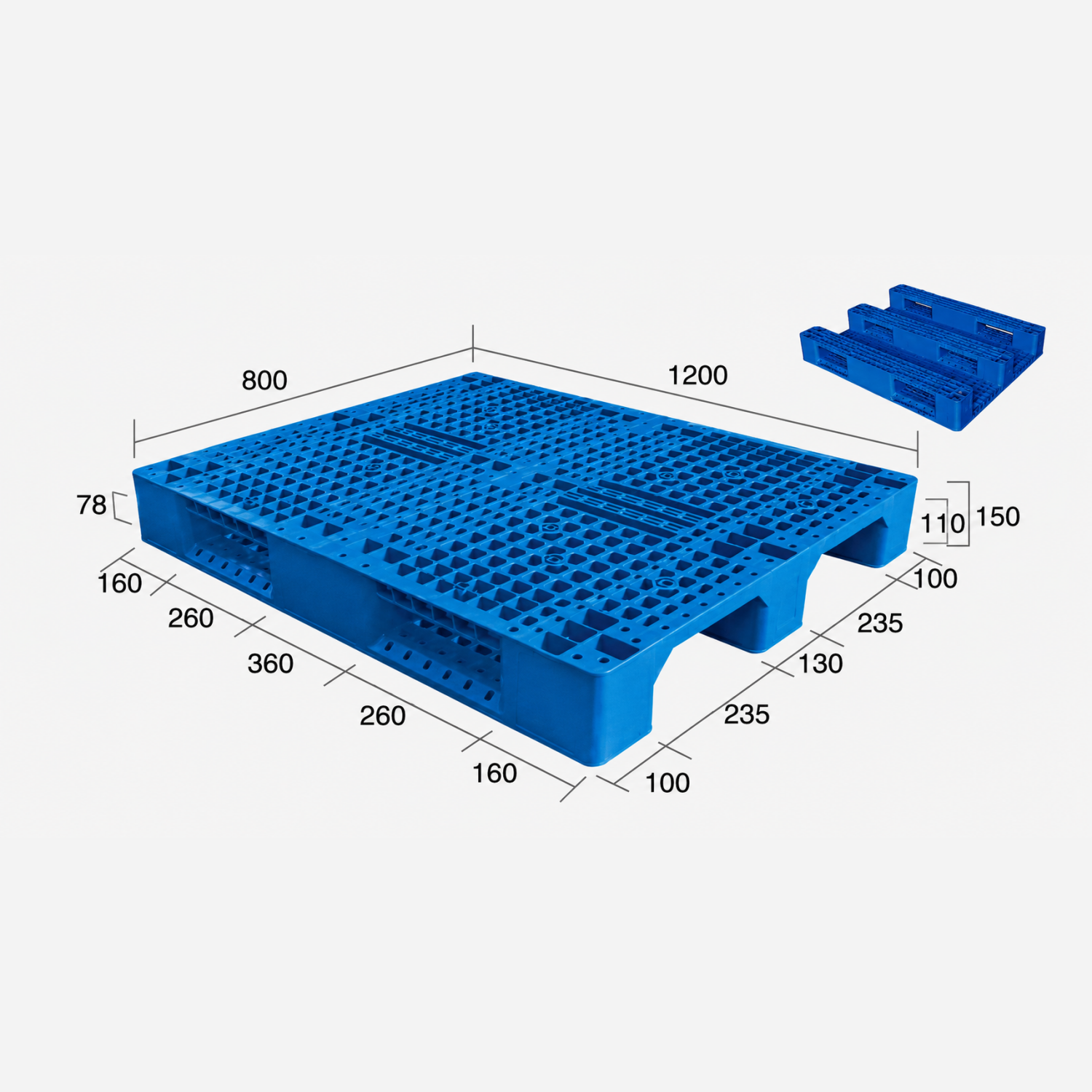
AGV-Compatible Plastic Pallet
Configured for repeatable automated pickup with suitable fork openings, clearance and support surfaces for AGV or AMR systems.
- Fork or lifting-interface review
- Repeatable positioning
- RFID-ready identification
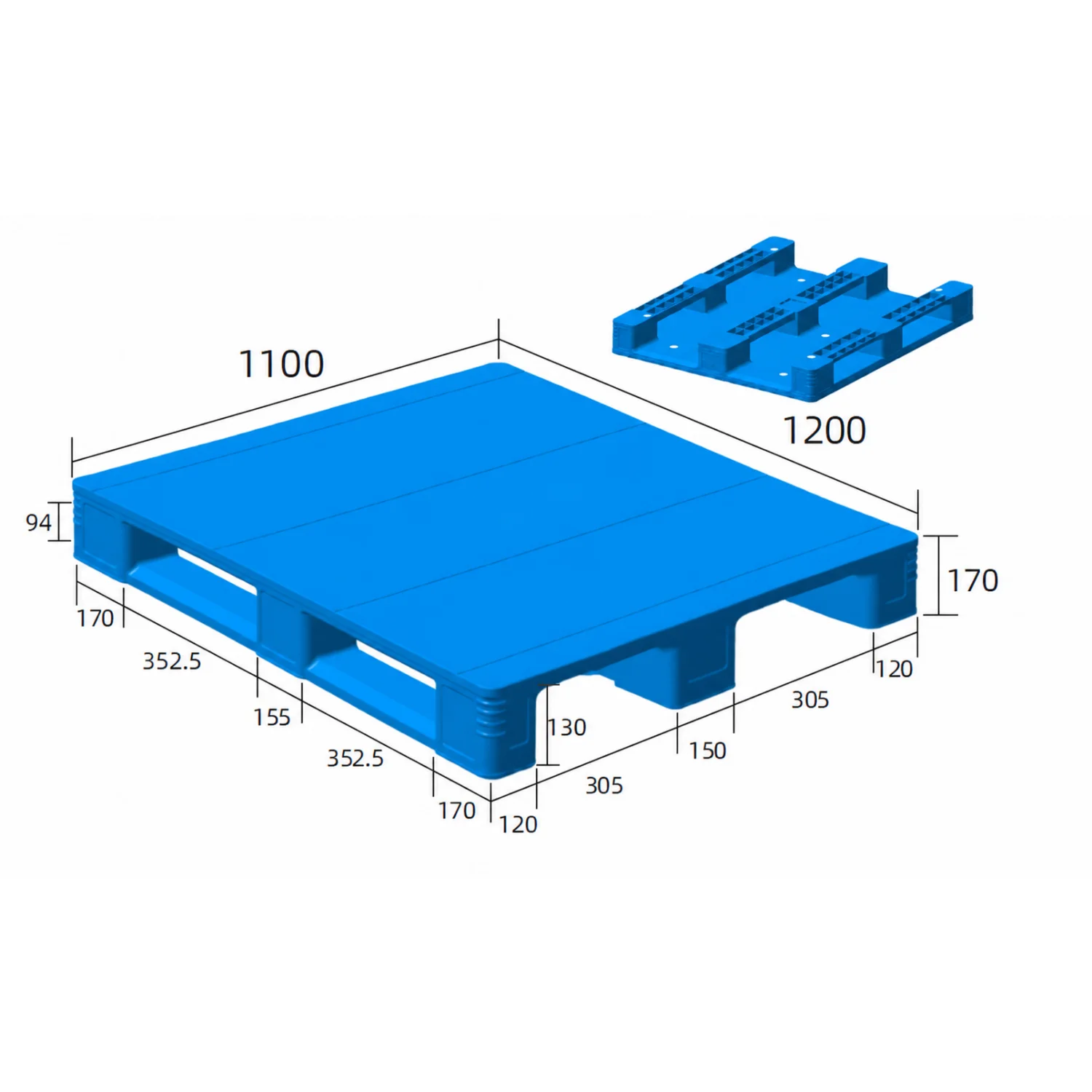
Hygienic Flat-Deck AS/RS Plastic Pallet
Smooth, washable pallet surfaces for food, beverage, pharmaceutical and clean automated warehouse applications.
- Closed flat deck
- Virgin resin options
- Easy cleaning and inspection
Need a Custom AS/RS Plastic Pallet?
Send your current pallet drawing, unit-load details and equipment layout. We can evaluate an existing model, configured standard pallet or custom-mold solution.
Explore Customized Services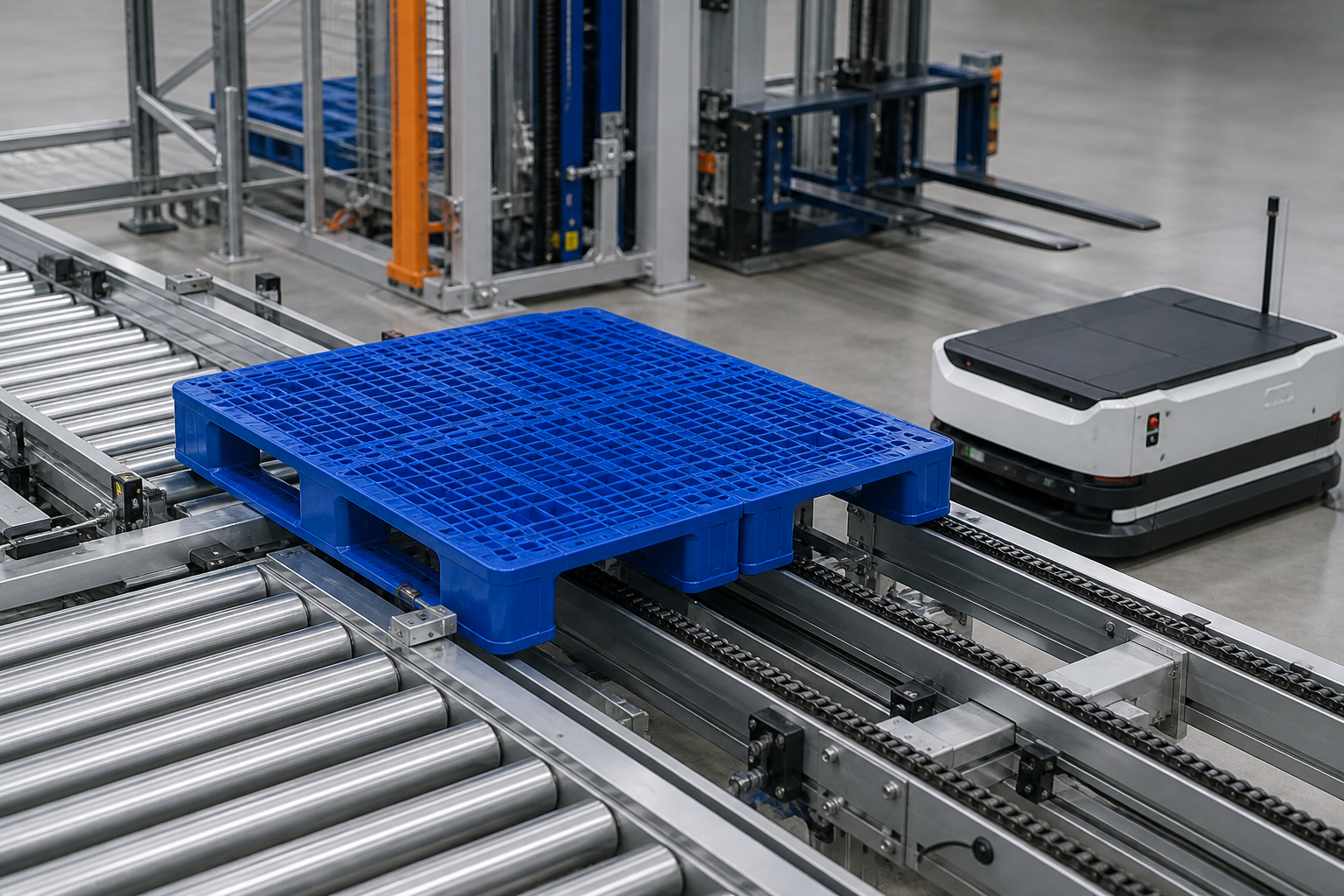
Built Around Your AS/RS Interface—not Just the Pallet Size
Two automated warehouse pallets with the same footprint may perform differently because their runners, fork openings, deck stiffness and support surfaces interact differently with the system.
Roller Conveyors
Roller pitch, transfer gaps, travel direction and minimum supporting rollers.
Chain Conveyors
Chain quantity, width, center distance and runner contact position.
Stacker Cranes
Fork thickness, spacing, entry clearance, pickup depth and loaded deflection.
Shuttle Systems
Bottom openings, lifting points, support rails and equipment clearance.
AGV and AMR
Fork entry, top-lift surfaces, ground clearance and positioning repeatability.
High-Bay Racking
Beam span, support direction, load distribution, dwell time and deflection.
Read Pallet Load Data in the Correct Context
A single capacity number cannot describe how a rackable plastic pallet will perform. Support, payload distribution, temperature and time all matter.
Payload supported while the pallet rests on a flat, rigid floor. This is usually the highest published figure and is not a substitute for rack load.
Payload carried while the pallet is lifted or transported. Fork position, speed, impact and load stability affect actual performance.
Payload supported on beams or rails with an unsupported span. Beam spacing, orientation, time and allowable deflection must be defined.
| Data to Confirm | Why It Matters | Recommended RFQ Wording |
|---|---|---|
| Unit-load distribution | Uniform, concentrated and eccentric loads stress the deck differently. | Provide package layout, footprint and center of gravity. |
| Rack beam span | A wider unsupported span normally increases pallet deflection. | State clear span, support direction and pallet overhang. |
| Temperature | Material stiffness and impact behavior change with temperature. | State minimum, maximum and temperature cycling. |
| Storage duration | Plastic can continue to deform under sustained load through creep. | State typical and maximum rack dwell time. |
| Allowable deflection | Clearance may be limited by forks, sensors or shuttle mechanisms. | Define the maximum acceptable deflection at the measurement point. |
Final load recommendations are model-specific and depend on the agreed payload, support configuration, operating environment and validation conditions.
Configure the Pallet for the Operating Environment
Material, deck, reinforcement and identification options should follow the actual temperature, hygiene, static-control and handling requirements.
HDPE Plastic Pallets
High-density polyethylene is commonly considered for repeated handling, washable operations and cold-storage plastic pallets because of its impact behavior. Rack stiffness and long-term creep must still be validated for the selected design.
PP Plastic Pallets
Polypropylene generally provides higher rigidity and heat resistance for suitable ambient-temperature applications. Freezer use requires an application-appropriate grade and low-temperature validation.
Food & Beverage
Hygienic, washable and food-industry plastic pallet configurations with open or closed decks and virgin resin options.
Cold Storage & Frozen Food
Freezer plastic pallets evaluated for low-temperature impact, condensation, anti-slip performance and loaded racking.
Pharmaceutical
Smooth hygienic decks, traceable material options and RFID-ready identification for controlled warehouse operations.
Automotive Parts
Heavy-duty plastic pallets for concentrated loads, repeated automated handling and reusable component flows.
Chemical Manufacturing
Material compatibility reviewed according to the chemical, concentration, temperature and contact duration.
Electronics & New Energy
Anti-static, conductive and flame-retardant options evaluated for the required resistance or fire-performance range.
Verify the Pallet Before It Enters Your Automated Warehouse
Validation should reproduce the risks that matter in the actual application. Depending on the selected model, the inspection plan can address dimensional consistency, loaded deflection, cold-temperature behavior, repeated handling and RFID performance.
Applicable ISO 8611 methods and customer-specific field trials can be considered according to the agreed project plan. Available documents depend on the selected pallet and test scope.
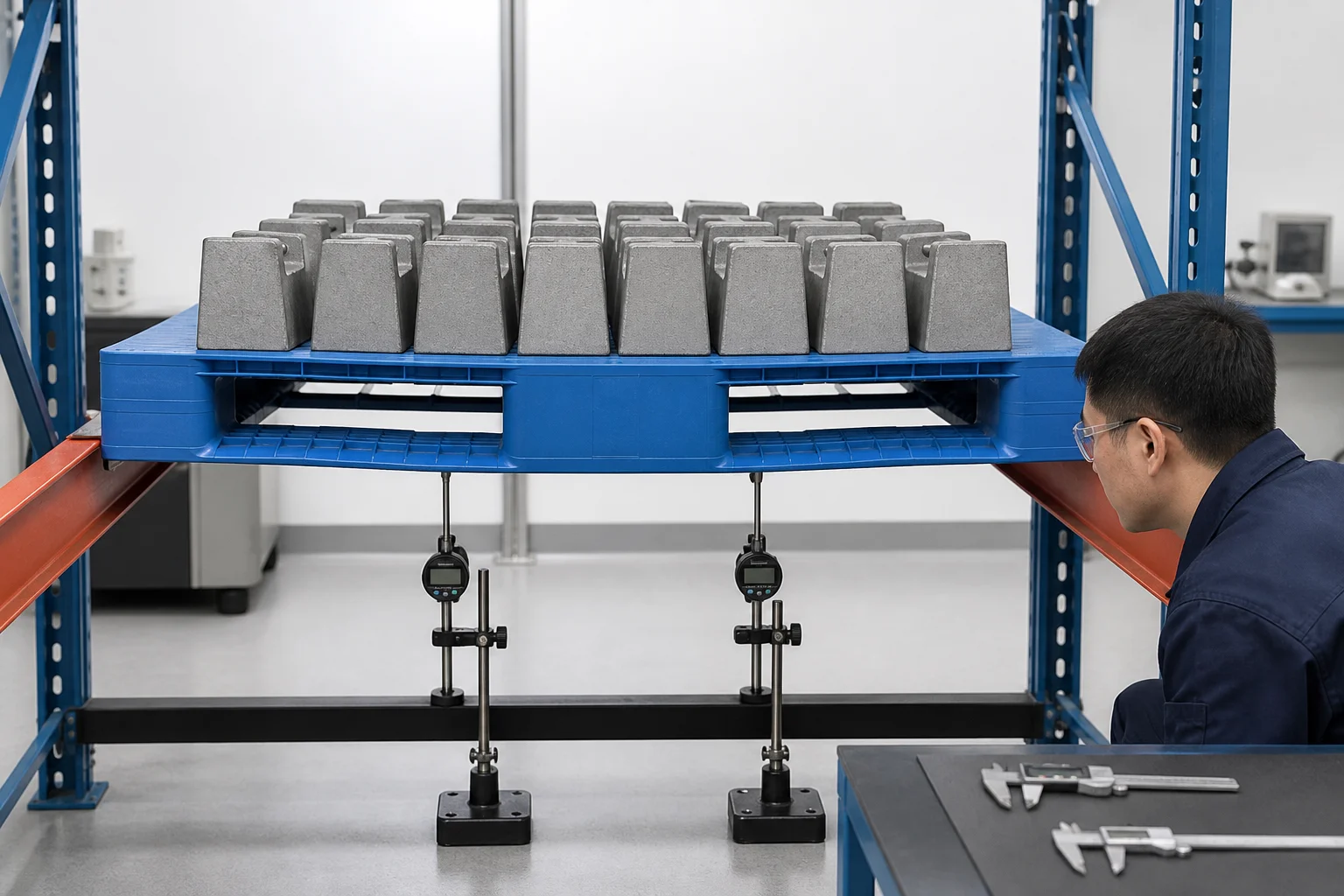
A Structured Process to Reduce AS/RS Pallet Procurement Risk
Move from system data to sample validation before releasing an automated warehouse pallet for volume production.
Application Review
Share pallet size, load, conveyor, rack, handling equipment and temperature.
Engineering Recommendation
Evaluate the base interface, material, reinforcement and identification needs.
Drawing Confirmation
Confirm dimensions, tolerances, material, weight, load conditions and components.
Sample Validation
Run samples on the actual conveyor, rack, stacker crane, shuttle or AGV.
Golden Sample
Approve the physical sample and frozen technical specification.
Pilot Production
Verify the first production batch before full release.
Volume Manufacturing
Produce against the approved specification and quality plan.
Inspection + Delivery
Complete batch inspection, packing, loading and export documentation.
Configure the AS/RS Pallet Around Your Project
Standard Pallet Selection
Select an existing plastic pallet by footprint, base, load, temperature and system interface. This is normally the fastest and most economical route.
- • Existing mold
- • Standard configuration
- • Lower development cost
Configured Standard Pallet
Adapt an existing model with steel reinforcement, anti-slip components, material, color, molded logo, barcode or RFID.
- • Reinforcement options
- • Identification and branding
- • Application-specific material
Custom-Molded AS/RS Pallet
Evaluate a new mold when existing products cannot meet the required dimensions, bottom geometry or equipment interface.
- • Custom dimensions
- • Custom runner and fork geometry
- • Project-based development plan
Source AS/RS Plastic Pallets from China with Better Project Control
Overseas buyers need more than a competitive plastic pallet price. The approved sample, resin configuration, pallet weight, steel reinforcement and critical dimensions must remain controlled during mass production and future replenishment.
Frequently Asked Questions About AS/RS Plastic Pallets
What is an AS/RS plastic pallet?+
It is a reusable plastic pallet designed or validated for automated storage and retrieval systems. It provides suitable dimensions, bottom support, fork clearance and load performance for conveyors, stacker cranes, shuttles, AGVs and high-bay racking.
Can one pallet run on both roller and chain conveyors?+
Possibly, but compatibility depends on roller pitch, transfer gaps, chain center distance, runner position and travel direction. The conveyor layout should be reviewed before the pallet is confirmed.
What is the difference between static, dynamic and rack load?+
Static load applies on a flat floor, dynamic load applies during lifting or transport, and rack load applies when the pallet is supported on beams or rails with an unsupported span. For AS/RS selection, rack conditions and deflection are especially important.
Why is pallet deflection important in an automated warehouse?+
Excessive deflection can reduce the clearance needed by stacker-crane forks, sensors and shuttle lifting devices. Long-term creep must also be considered when loaded pallets remain in racks for extended periods.
Can steel reinforcement be added?+
Selected pallet models can be configured with steel reinforcement. Quantity and position should follow the rack span, load distribution, pallet orientation and allowable deflection.
Which material is suitable for freezer warehouses?+
HDPE is commonly considered for low-temperature plastic pallets because of its impact behavior. The final grade and design should be selected according to minimum temperature, payload, impact conditions and test requirements.
Do you offer hygienic or food-industry plastic pallets?+
Hygienic flat-deck pallets and virgin resin options are available for selected models. Material documentation depends on the destination market, intended use and conditions of use.
Can RFID tags be integrated into the pallet?+
Yes. RFID, barcode, QR code and serialized identification can be placed in protected areas. Read range and orientation should be validated with the actual reader, antenna, pallet load and warehouse environment.
Can we test samples before a volume order?+
Yes. Sample validation is strongly recommended. The pallet can be tested for conveyor travel, automated pickup, rack storage, deflection, cold-room operation and RFID reading before mass production.
What information is required for an accurate quotation?+
Please provide pallet dimensions, unit-load weight and distribution, conveyor type, running direction, rack beam spacing, handling equipment, operating temperature, estimated quantity and any hygiene, reinforcement or RFID requirements.
Can you develop a custom AS/RS pallet mold?+
Yes. Custom molding can be evaluated when an existing product cannot meet the dimensions or equipment interface. Feasibility depends on structure, performance requirements, annual demand, schedule and mold budget.
How do you control the difference between samples and production?+
The approved drawing, resin configuration, pallet weight, reinforcement, critical dimensions and golden sample can be documented as the production and inspection reference.
Get an AS/RS Pallet Recommendation and Project Quote
Tell us how the pallet will be loaded, conveyed, stored and retrieved. Uploading a pallet or equipment drawing will help us prepare a more accurate recommendation.
What You Will Receive
Email Us
elaine@cnpreface.com
Call Us
+86 131 7320 7232
Response Time
24–48 Hours