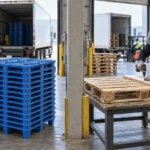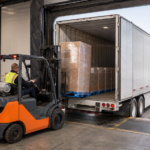
An unstable pallet stack can collapse onto employees, damage products, and strike forklifts or nearby equipment. In many verified floor-stacking applications, 3–5 loaded pallets is a typical range, but it is not a default limit for every load. The safe number depends on the pallet, the compression strength of the goods below it, load alignment, storage time, and warehouse conditions.
This guide shows how to set a practical stacking limit and identify loads that should not be stacked at all.
How High Can Loaded Pallets Be Stacked?
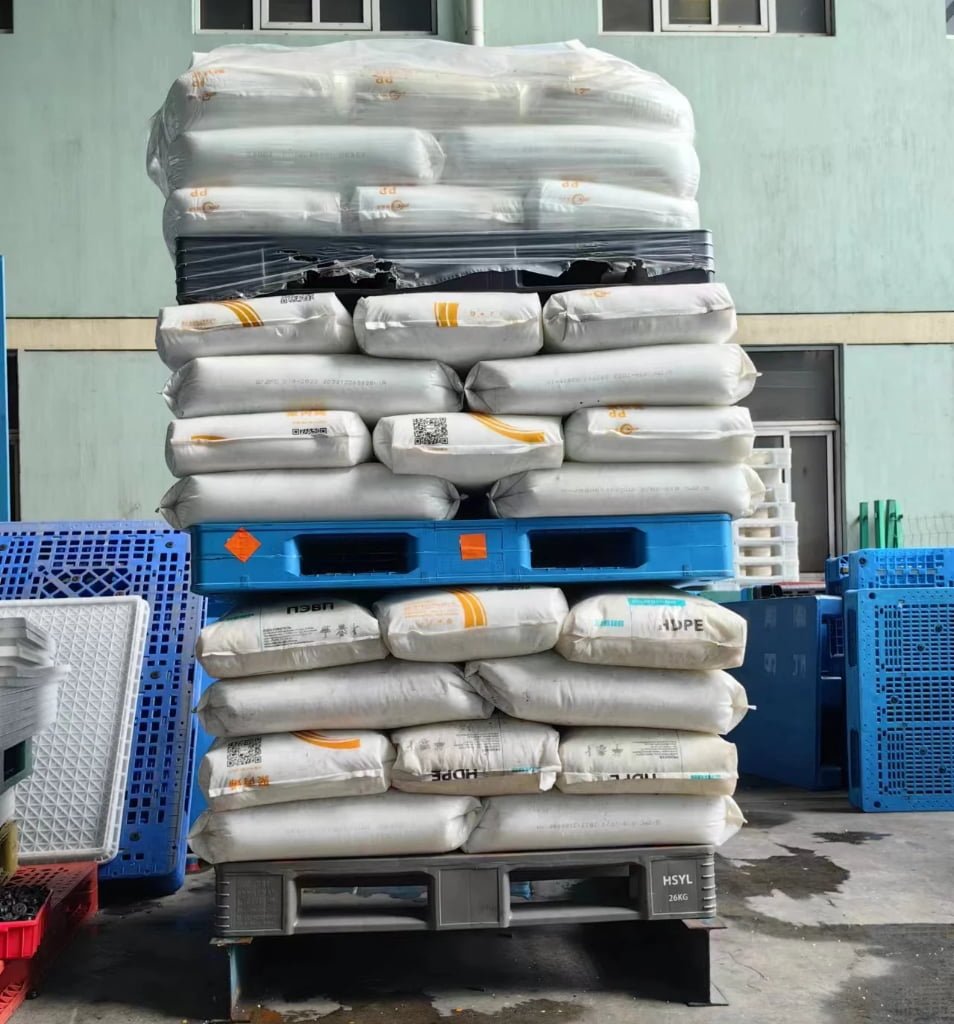
Loaded pallets are commonly stacked 3–5 tiers high when the complete unit load has been verified for that arrangement. A three-tier limit may be necessary for cartons that lose strength in humidity, while a stable rigid-container load may support more. The correct limit is the lowest safe value set by the pallet, packaging, stack geometry, building, and handling equipment.
OSHA 29 CFR 1910.176(b) does not specify one maximum height for all loaded pallet stacks. It requires materials stored in tiers to be stacked, blocked, interlocked, and limited in height so they remain stable and secure against sliding or collapse. Therefore, “OSHA allows five pallets” would be inaccurate; five tiers must still be justified for the actual load.
Where OSHA 29 CFR 1910.159(c)(10) applies, keep at least 18 in. (45.7 cm) between the sprinkler deflectors and the stored material below. Treat this as a minimum fire-protection clearance, not as approval of the stack itself. The sprinkler design, commodity, and local fire rules may require more space.
How To Set A Safe Stacking Limit
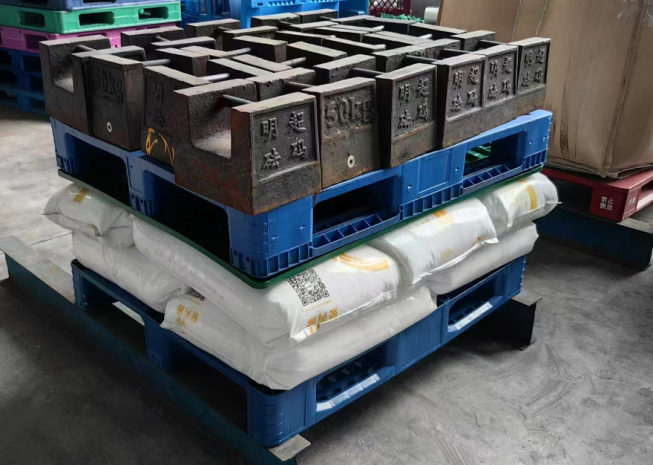
Do not calculate the number of tiers from pallet static load alone. Use these five checks before approving a 3–5-tier plan.
1. Calculate The Load Carried By The Bottom Unit
The bottom unit load carries every loaded pallet above it. If five identical 800 kg unit loads are stacked, the lowest load has 3,200 kg above it:
Upper load on the bottom unit = (number of tiers − 1) × gross weight per unit load
This calculation is only a starting point. It does not prove the bottom cartons, bags, pails, or pallet can support 3,200 kg, because the upper pallet may transfer that force through a small number of runners, feet, or contact points.
2. Find The Weakest Part Of The Unit Load
The pallet may remain intact while the packaging fails first. Check carton compression strength, container rigidity, bag settling, closures, layer pads, and the way the upper pallet contacts the load below.
Corrugated cases can lose compression strength in humid storage. Powder in bags may settle away from the upper pallet’s support points, and plastic packages can deform under sustained pressure. The UK HSE pallet safety guidance specifically warns that this time-dependent deformation can make a stack unstable.
3. Use The Correct Pallet Rating
Static, dynamic, racking, and loaded-stacking performance describe different support conditions.
| Rating Or Condition | What It Describes | What It Does Not Prove |
|---|---|---|
| Static load | A pallet resting on a flat, solid surface under a defined load pattern | How many loaded pallets can be stacked |
| Dynamic load | A pallet lifted or moved by compatible handling equipment | Long-term floor-stacking capacity |
| Racking load | A pallet bridging a defined unsupported rack span | Capacity on another palletized load |
| Loaded stacking | The complete unit load supporting compatible loads above it | Suitability for every product or environment |
A 6,000 kg static rating does not mean that six 1,000 kg loaded pallets may be stacked. Packaging strength, point loading, load eccentricity, temperature, storage duration, and an appropriate safety factor still control the result. If a rating does not state its test condition, ask for clarification before using it in a stacking calculation.
4. Check Stack Geometry And Available Clearance
Record the height and gross weight of one finished unit load, then calculate the proposed total stack. A narrow, tall or top-heavy unit can become unstable before the weight limit is reached.
HSE offers a conditional reference that a loaded-pallet stack should not exceed six times the narrowest dimension of the bottom pallet—but only after the pallet, block-stacking pattern, and payload compression strength have been assessed. This 6:1 reference is an outer limit, not a recommended target. Manufacturer instructions, visibility, sprinkler clearance, and site rules may require a much lower height.
5. Apply Real Storage And Handling Conditions
Approve the stack for the environment in which it will actually remain. The review should include:
- Storage duration and inspection frequency
- Temperature, humidity, UV exposure, and outdoor wind
- Floor condition and floor loading
- Forklift capacity at the required load center and lift height
- Mast, ceiling, lighting, door, and sprinkler clearance
- Pedestrian routes and protection from vehicle impact
- Vibration or repeated movement near the storage area
A short trial at room temperature cannot automatically approve months of storage in a hot warehouse or cold room.
What Safety Rules Prevent Pallet Stack Collapse?
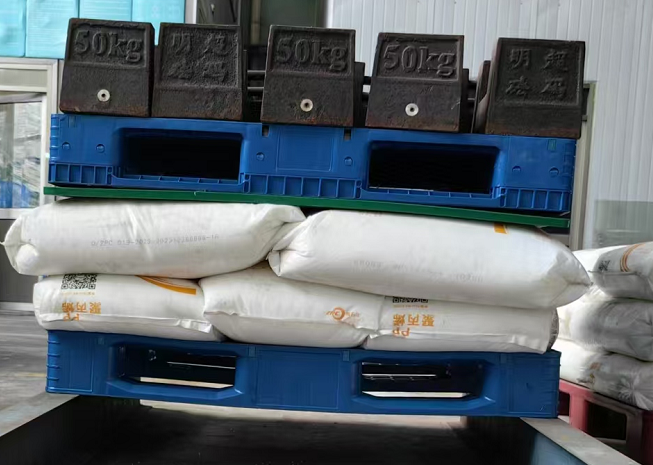
Once the tier limit has been established, the following rules keep each stack within the verified condition.
Inspect Every Pallet And Load
Remove pallets with cracks, broken welds or boards, bent components, missing blocks, severe deck deflection, exposed fasteners, or damaged anti-slip surfaces. Do not stack loads with crushed lower cartons, torn wrap, leaks, leaning sides, or visible product movement.
Keep Weight Low, Centered, And Evenly Distributed
Place dense products in the lower layers and distribute the load across the deck. A load can be within the weight rating and still be unsafe when it is concentrated on one side or supported on a few small feet.
Keep goods within the pallet footprint. Overhang exposes cartons to impact and weakens edge support; excessive underhang can leave deck areas unsupported and prevent consistent contact with the pallet above.
Choose The Case Pattern For The Actual Risk
Column stacking aligns carton corners and normally gives better vertical compression strength. It works well for uniform cartons when stretch film, straps, or corner boards provide adequate lateral containment.
Interlocking layers can improve lateral cohesion, but misaligned carton corners usually reduce vertical compression strength. Test the pattern with the actual carton grade, contents, pallet, and wrapping settings instead of choosing it only because it looks more stable.
Secure The Product To The Pallet
Stretch film, strapping, corner boards, top sheets, and anti-slip sheets can help the load move as one unit. The restraint should connect the product to the pallet; wrapping only around the cartons can allow the complete load to slide off the deck.
More film will not correct weak packaging or a poor load pattern. Validate the film gauge, pre-stretch, overlap, bottom connection, and containment force without crushing the product.
Put The Heaviest Compatible Load At The Bottom
When verified unit loads have different weights, position the heavier, more compression-resistant load at the base. Do not place a larger pallet on a smaller pallet, mix incompatible footprints, or use an uneven lower load as the support surface.
Lower each upper pallet vertically and align it with the pallet below. Do not push the top tier sideways to straighten a stack; side force can damage packaging and move the stack’s center of gravity.
Control Forklift Placement And The Storage Zone
Use only a level, sound floor and protect the stack from vehicle contact. Mark the approved tier count for the defined load, keep pedestrians outside the placement zone, and confirm that the forklift retains sufficient capacity and visibility at the required height.
After placement, the stack should be straight and stable. If it begins to lean, isolate the area and dismantle it from the top under an approved procedure rather than trying to push it upright.
When Should Loaded Pallets Not Be Stacked?
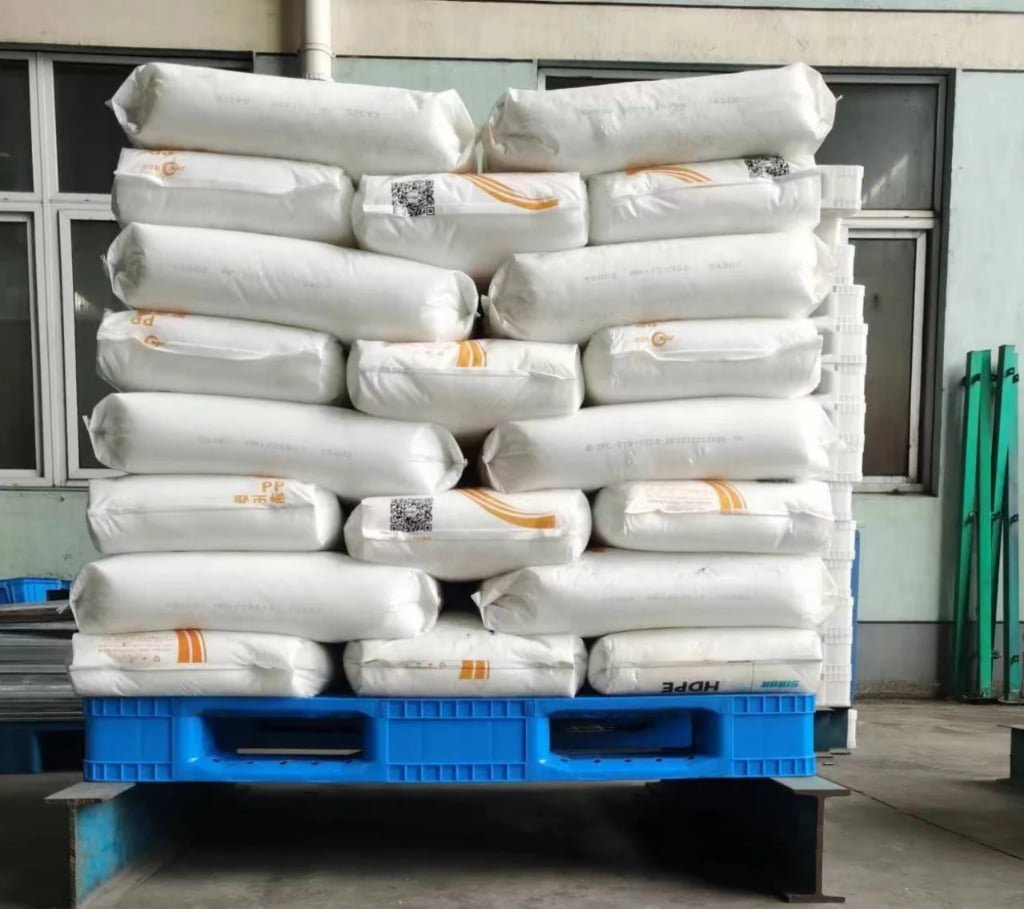
Stop and use racking, a stacking frame, or another engineered storage method when any of these conditions applies:
- The pallet is nestable, damaged, mismatched, or not approved for loaded floor stacking.
- The product or packaging has no verified compression performance.
- Cartons are crushed, damp, open, partially picked, or different in height.
- Bags can settle away from the upper pallet’s contact points.
- Drums, pails, or irregular products do not create a flat, stable top surface.
- Goods overhang the deck or the load already leans.
- The upper pallet cannot make full, repeatable contact with the lower load.
- Pallet sizes or base patterns do not align.
- The load is marked non-stackable by the shipper or product specification.
- Sprinkler clearance, site height limits, or forklift capability would be exceeded.
- The effect of temperature, humidity, wind, vibration, or storage duration is unknown.
Stretch-wrapping an unstable or leaning unit does not make it suitable for stacking.
How Do You Select A Pallet For Loaded Floor Stacking?
Start with the complete unit load, not a pallet size or a headline static capacity. A runner, full-perimeter, or double-sided base can create a consistent support path for floor stacking, while a lightweight nestable pallet is usually designed primarily to reduce empty return volume. Stackable also does not automatically mean rackable; open rack beams create a different unsupported span.
When comparing stackable plastic pallets, send the following application data:
- Pallet footprint and finished unit-load height
- Gross weight and weight distribution per pallet
- Product, packaging type, and known compression limits
- Target stack of 3, 4, or 5 tiers
- Storage duration, temperature, and humidity
- Upper-pallet runner or foot contact positions
- Forklift, pallet truck, conveyor, AGV, AS/RS, and palletizer interfaces
- Rack type, beam spacing, orientation, and support bars if racking is also required
- Order quantity, export route, and any color, logo, RFID, or anti-slip requirements
These details allow the pallet structure and test condition to be matched to the application. They also expose a weak package or unsupported point load before a bulk order reaches the warehouse.
Frequently Asked Questions
Does The Same 3–5-Tier Range Apply Inside A Truck?
No. Transport adds braking, cornering, vibration, trailer clearance, axle limits, and cargo-securement requirements, so a warehouse floor-stacking approval should not be reused automatically for shipping.
Can A Partially Picked Pallet Remain In A Stack?
Only if the altered load remains within a validated pattern and has a level, restrained top interface. In most operations, a partially picked pallet should be removed from the stack and rebuilt before restacking.
What Should Be Done With A Leaning Pallet Stack?
Keep people and vehicles away, isolate the area, and have trained personnel unload it from the top using an approved recovery procedure. Do not climb the stack or try to straighten it by pushing with a forklift.
Can A Stackable Pallet Be Placed In Racking?
Only when that model has a verified capacity for the actual rack type, beam spacing, orientation, load pattern, and storage duration. Floor support and open-beam support create different stresses.
Final Thoughts
Three to five tiers can be a practical loaded-stacking range, but the final limit must come from the weakest part of the complete system. Confirm the load above the bottom unit, packaging compression, pallet support condition, stack geometry, environment, and handling clearance before approving a number for routine use.
If your operation needs a pallet matched to a 3–5-tier stacking plan, Preface Plast can compare your unit load with existing stackable plastic pallet models or evaluate a custom configuration. Share the footprint, load weight and pattern, intended number of tiers, storage duration, operating temperature, and handling equipment to receive a more relevant specification, reduce trial-and-error, and plan stable repeat supply.