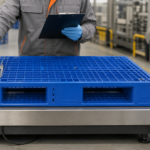
Choosing the wrong load platform can create more than a terminology problem. A pallet jack may become trapped, an unsupported base can deflect in racking, an unstable unit load may collapse, or a receiving warehouse may reject the shipment.
In the common technical distinction, a skid has no bottom deck boards, while a pallet has a defined bottom deck or base structure. The name alone is not enough: the correct choice depends on the load, handling equipment, storage method, and entire logistics route.
Skid vs. Pallet: What Is The Main Difference?
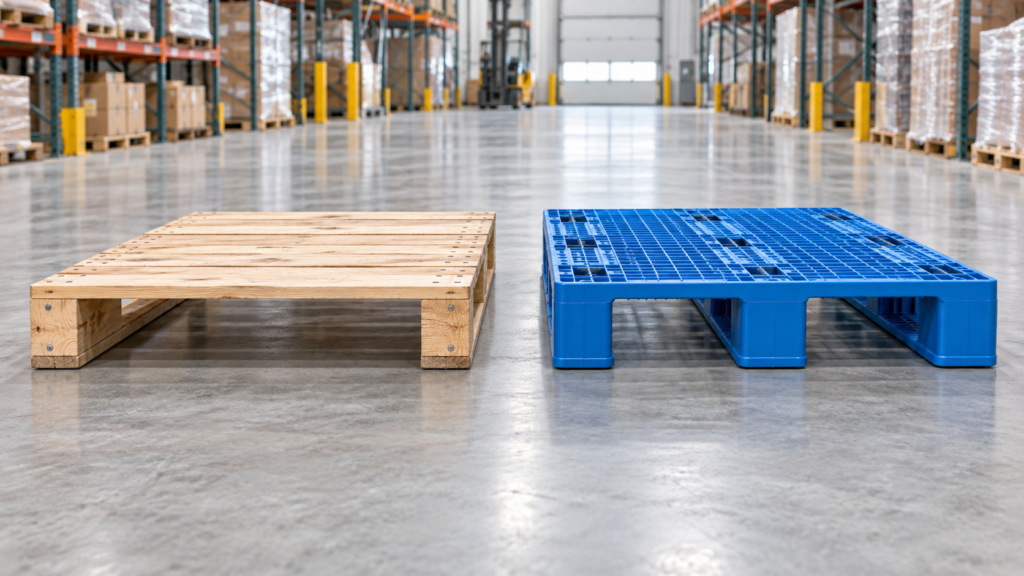
Skids are a practical starting point for machinery, permanent bases, and custom loads that remain close to floor level. Pallets are normally better for repeat distribution, pallet-jack handling, verified stacking, racking, and automated systems.
The terms are often used interchangeably in daily freight operations. The FedEx Freight Packaging Guidelines therefore distinguish them by structure: a skid has no bottom deck boards; a pallet does. Always confirm the underside drawing rather than relying on the name used in an email or quotation.
| Decision Factor | Skid | Pallet |
|---|---|---|
| Bottom structure | Top platform on runners, blocks, or feet, usually without bottom deck boards | Top deck plus bottom boards, runners, perimeter base, or another defined lower structure |
| Typical use | Machinery bases, fixed equipment, custom industrial loads | Freight, warehousing, distribution, and repeated handling |
| Forklift access | Commonly limited to defined directions | Two-way or four-way, depending on design |
| Pallet-jack access | Often restricted by runner and wheel paths | Usually easier, but still design-specific |
| Loaded stacking | Requires specific engineering and unit-load validation | Possible only with an approved stackable model and stable unit load |
| Open-beam racking | Normally unsuitable without engineered support | Selected rackable models only |
| Empty return efficiency | Lower profile, but not automatically nestable | Nestable designs are available for compact returns |
| Best selection basis | Equipment support and lifting plan | Complete handling and storage route |
When Should You Choose A Skid Or A Pallet?
| Operating Requirement | Better Starting Point | What Must Be Confirmed |
| Machine bolted to a permanent base | Engineered skid | Point loads, bolt positions, lifting method, and base stiffness |
| Oversized or unusual industrial equipment | Custom skid or pallet | Center of gravity, crane/fork access, restraint, and receiving method |
| Repeated warehouse distribution | Pallet | Footprint, entry direction, pallet-jack access, and reuse cycle |
| Loaded floor stacking | Stackable plastic pallet | Packaging compression, alignment, environment, and approved tier count |
| Open-beam rack storage | Verified rackable pallet | Beam span, orientation, reinforcement, load pattern, and duration |
| High empty-return cost | Nestable plastic pallet | Nest ratio, return quantity, dynamic load, and handling compatibility |
| Food or pharmaceutical handling | Hygienic plastic pallet | Cleanability, resin documentation, deck design, and sanitation process |
| One-way export freight | Export skid or pallet | Receiving equipment, total landed cost, and destination rules |
| Conveyor or automated warehouse | Equipment-compatible pallet | Contact points, tolerances, deflection, sensors, and trial results |
A skid should not be chosen only because it appears to use less material. Custom fabrication, mounting hardware, slower handling, limited reuse, and disposal may remove the initial saving.
A pallet should not be chosen only because it appears more versatile. A lightweight nestable pallet, three-runner pallet, full-perimeter pallet, and double-sided pallet have different support conditions and cannot be substituted without checking the application.
How Does The Base Structure Affect Safety And Handling?
Forklift Access Does Not Guarantee Pallet-Jack Access
A forklift only needs suitable openings for its tines. A pallet jack also needs its load wheels to pass through the base, reach the floor, and roll back out after placement. A cross-member or runner can block that wheel path even when forklift tines enter without difficulty.
Confirm tine spacing, lowered fork height, wheel position, entry width, and exit path. “Four-way forklift entry” should not be treated as “four-way pallet-jack entry” unless both have been verified.
Floor Stacking And Racking Need Different Ratings
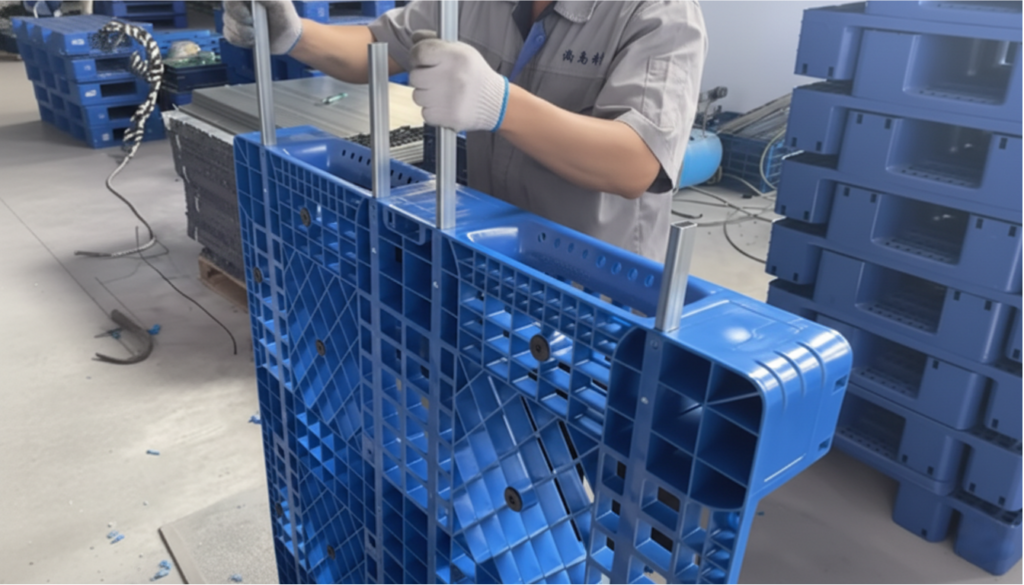
Floor support spreads load across the base. Open rack beams create an unsupported span and different bending forces. A skid—or a pallet designed only for floor use—can sag, crack, or lose load stability when placed across incompatible beams.
For open-beam storage, select rackable plastic pallets against the actual beam spacing, pallet orientation, load distribution, storage duration, and permitted deflection. A static floor-load figure is not a rack rating.
Loaded stacking also needs separate approval. The lower cartons, bags, drums, or containers must carry the unit loads above them; the pallet’s static capacity does not prove that the packaged goods can resist that compression.
Automation Requires Repeatable Contact Points
Conveyors, palletizers, AGVs, shuttles, sensors, and stacker cranes depend on consistent dimensions and known support surfaces. A base that can be moved manually may still jam, rotate, or deflect in an automated line.
AS/RS plastic pallets should be checked against roller or chain positions, fork interfaces, rack span, sensor surfaces, flatness, and loaded deflection. Test the selected model with the actual unit load before volume approval.
“3-Skid Plastic Pallet” Usually Means Three Runners
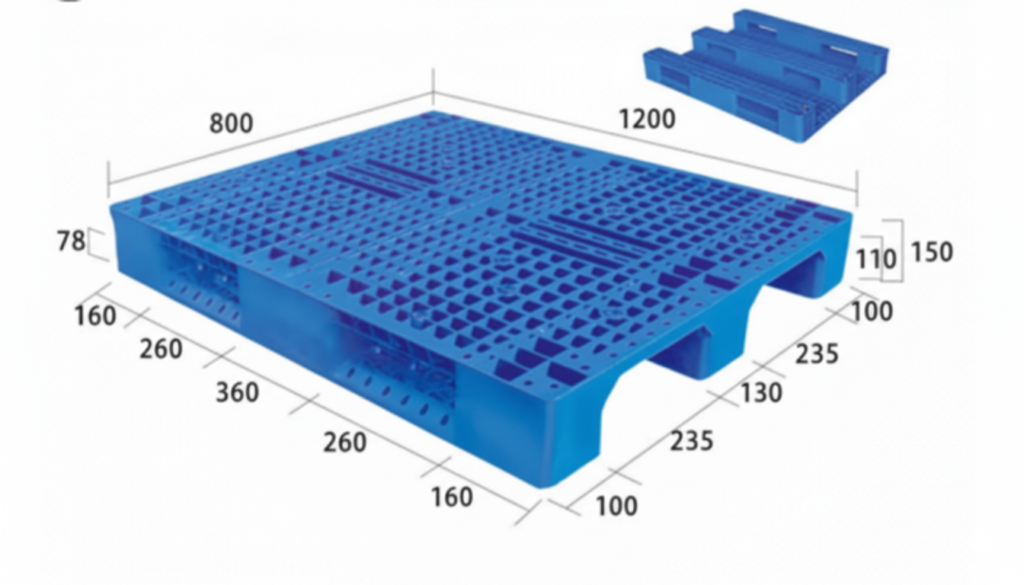
In plastic pallet catalogs, “3-skid” commonly describes three longitudinal runners under the deck. It does not automatically mean a traditional deckless skid.
When this term appears, request the bottom-view drawing and confirm runner layout, fork openings, pallet-jack paths, stacking approval, and rack conditions. This avoids purchasing a product based on a regional naming convention.
How Do You Specify The Right Option?
Use the following five-step process before requesting quotations.
1. Define The Complete Unit Load
Record gross weight, dimensions, center of gravity, packaging, overhang, and every contact point between the cargo and platform. The same 1,000 kg behaves differently when spread across cartons than when concentrated through four machine feet.
For equipment loads, provide the mounting and lifting-point drawing. For cartons, bags, drums, or pails, provide the layer pattern, restraint method, and any available compression information.
2. List Every Handling Device
Include forklifts, pallet jacks, stackers, cranes, conveyors, AGVs, palletizers, and customer equipment. Record tine dimensions, required entry direction, pallet-jack wheel paths, conveyor contacts, and available clearance.
This step often decides skid versus pallet immediately. A machine base lifted twice by a crane and forklift has different requirements from a unit load passing through three warehouses.
3. Separate The Load Conditions
Specify each requirement independently:
- Static floor storage
- Forklift or pallet-jack movement
- Loaded floor stacking
- Open-beam racking
- Conveyor or AS/RS handling
- Transport restraint
Static, dynamic, stacking, and racking capacities are not interchangeable. ISO 8611-1:2025 separates nominal-load, maximum-working-load, and durability tests and notes that test results do not replace field trials for a specific pallet design.
4. Confirm The Entire Logistics Route
Check carrier, 3PL, warehouse, retailer, and destination requirements before approving the base. Confirm:
- Required footprint and maximum loaded height
- Maximum unit-load weight
- Forklift and pallet-jack entry
- Stackability and overhang limits
- Rack or conveyor interfaces
- Label and barcode locations
- Export packaging requirements
The shipper may use “skid” and “pallet” as synonyms, but the receiving facility still has to handle the structure delivered.
5. Compare Process Cost, Not Only Unit Price
Include loading time, storage density, damage risk, empty returns, repairs, rejected deliveries, disposal, and expected reuse cycles. A custom skid may be economical when it stays under one machine; a reusable pallet may cost less per trip in a controlled distribution loop.
What Purchasing Mistakes Cause The Most Problems?
Ordering By Name Instead Of Structure
Put the bottom view, footprint, height, entry directions, support points, and storage method on the specification. “Skid” or “pallet” alone is not precise enough.
Comparing Headline Load Numbers
Ask how the test load was distributed, where the base was supported, how long the test lasted, and what temperature applied. A large static number can be irrelevant to an open-rack application.
Treating Nestable, Stackable, And Rackable As Synonyms
Nestable describes empty-volume reduction, stackable concerns approved loaded stacking, and rackable concerns support across a defined rack span. One feature does not prove the others.
Ignoring Point Loads
A machine supported on four small feet can overstress the deck even when its total weight is below the published capacity. Provide the size and location of every contact point.
Approving Only The Shipping Site
A base can work at the factory and fail at the destination because the pallet jack cannot exit, rack beams miss the runners, or conveyor chains do not support the correct areas. Validation should cover every handoff.
Frequently Asked Questions
Are Skid And Pallet The Same On A Freight Quote?
They may be used interchangeably. Add dimensions, gross weight, bottom structure, entry direction, and handling-equipment requirements so the physical platform is clear.
Is There A Standard Skid Size?
There is no single universal skid size. True machinery skids are often built around the equipment, while some carriers use “skid” to describe freight on a standard pallet footprint.
Does ISPM 15 Apply To Plastic Pallets?
ISPM 15 regulates qualifying wood packaging used in international trade, including wooden pallets and dunnage. Plastic pallets are outside that wood-treatment scope, although destination-specific import, material, and hygiene requirements still need confirmation under the IPPC standard.
Is A Skid Always Cheaper?
No. Less material may reduce the initial price, but custom engineering, mounting, slower handling, limited reuse, or disposal can increase total cost.
Final Thoughts
Do not choose between a skid and pallet by name or headline load capacity. Approve the base around the cargo contact pattern, handling equipment, storage support, environment, and receiving requirements. That is what prevents equipment conflicts, unstable storage, damaged freight, and avoidable replacement costs.
If the application requires a plastic pallet matched to a specific load, forklift, pallet jack, stacking plan, rack, conveyor, or export route, Preface Plast can compare the requirement with existing pallet configurations or evaluate a custom solution. Share the footprint, weight distribution, handling equipment, storage method, operating environment, and projected quantity to narrow the specification, reduce compatibility errors, and support repeat supply.