
How many boxes fit on a pallet? There is no fixed number. Your usable answer is cartons per layer multiplied by safe stacking layers, then reduced if carton weight, carton strength, or the approved pallet load condition becomes the limit.
For a shipment, the goal is not to force the highest possible box count. You need a repeatable pallet loading pattern that fits your cartons, handling equipment, warehouse rules, and delivery route without creating avoidable freight waste or load damage.
How Do You Calculate Boxes Per Pallet?
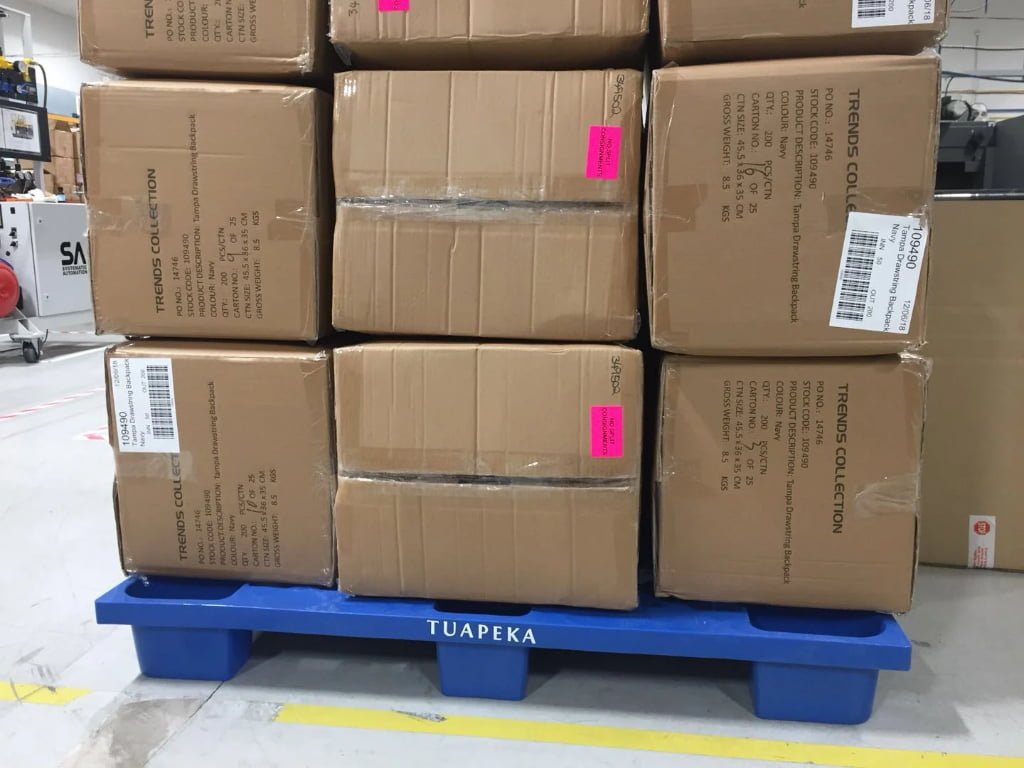
The basic pallet loading formula is:
Boxes per pallet = cartons per layer (TI) × layers high (HI)
TI is the number of cartons in one layer. HI is the number of complete, safe layers. In warehouse language, this is often called the TI-HI pallet pattern or cases per pallet calculation.
Use your finished shipping carton dimensions, not the product dimensions. A carton with flaps, protective corners, shrink film, or protruding handles can take up more space than its nominal size suggests.
For a reliable boxes-per-pallet calculation, collect these inputs before you choose the pallet:
- Finished carton length, width, height, and gross weight
- Actual usable pallet length and width, plus pallet height
- Maximum allowed loaded height
- Approved cargo-weight or gross-weight limit
- Handling method: floor storage, forklift movement, pallet racking, conveyor, or export shipment
This small data set is enough to calculate a starting load plan. It also gives a pallet supplier the information needed to recommend a suitable footprint and structure instead of quoting a generic model.
Step 1: Find How Many Cartons Fit in One Layer
Start with the pallet footprint. Divide the usable pallet length and width by the carton base dimensions, round each result down, and multiply the whole-number results.
Then rotate the carton 90 degrees and calculate it again. The best orientation is not always obvious. One layout may leave a long strip of unused deck space, while the rotated layout can add a carton row.
Do not use pallet area divided by carton area as your final answer. Area gives a theoretical maximum, but it does not show whether the carton dimensions form complete rows. A pallet can have enough total area for ten cartons while only fitting nine in a stable, repeatable pattern.
Use the usable support area rather than the outside pallet dimension when possible. Raised edges, rounded corners, deck ribs, and open-deck geometry can reduce the area where a carton sits flat. This matters most for cartons with small bases or when the planned layout uses nearly all of the deck.
Count only cartons that sit fully inside the pallet footprint. Planned overhang may look efficient in a spreadsheet, but it exposes carton edges to fork impact and reduces corner support during transport.
If two straight layouts leave significant gaps, a mixed-orientation layer may improve the count. Treat that as a loading pattern to test, not an automatic improvement. The team loading the pallet must be able to repeat it, and the cartons still need stable vertical support.
Step 2: Calculate the Safe Number of Layers
After finding cartons per layer, calculate the maximum number of complete layers that fit below the approved height.
Layers high = floor((maximum total height − pallet height) ÷ carton height)
Use the same unit throughout the calculation. If the carton is measured in millimeters, the pallet height and maximum loaded height must also be in millimeters.
The most common height error is forgetting to ask whether the limit includes the pallet. A warehouse may state a 1650 mm floor-to-top limit, while a carrier or retail receiver may refer only to the carton stack. Those are different loading envelopes.
The tallest pallet is not always the best pallet. You may stop below the theoretical height because the bottom cartons will be compressed for too long, the load is top-heavy, or the site requires clearance for stretch wrapping, sprinklers, or rack beams.
For U.S. operations, OSHA’s material-handling standard requires materials stored in tiers to be stacked and limited in height so they remain stable and secure. It is a safety principle, not a universal stack-height number; your approved load plan still depends on the actual carton, pallet, and operating conditions.
Step 3: Check Weight Before You Approve the Load
Weight can become the limiting factor before height does. Multiply the carton count by the carton weight, then compare the result with the permitted payload for the way the pallet will be handled.
Maximum cartons by weight = floor(allowed cargo weight ÷ carton weight)
If the stated limit is a gross pallet weight, subtract the empty pallet weight first. Otherwise, a load that looks acceptable in a carton-only calculation can exceed the transport or equipment limit once the pallet is added.
Check the rating that matches the application. Static load applies when a pallet rests on a level floor. Dynamic load applies when a forklift or pallet jack moves it. Racking load applies when it spans rack beams without continuous support below.
These are not interchangeable numbers. If the load will go into beam racking, do not use the static-load rating as the selection basis. Review the actual racking condition and the relevant static, dynamic, and racking load guidance before approving the pallet.
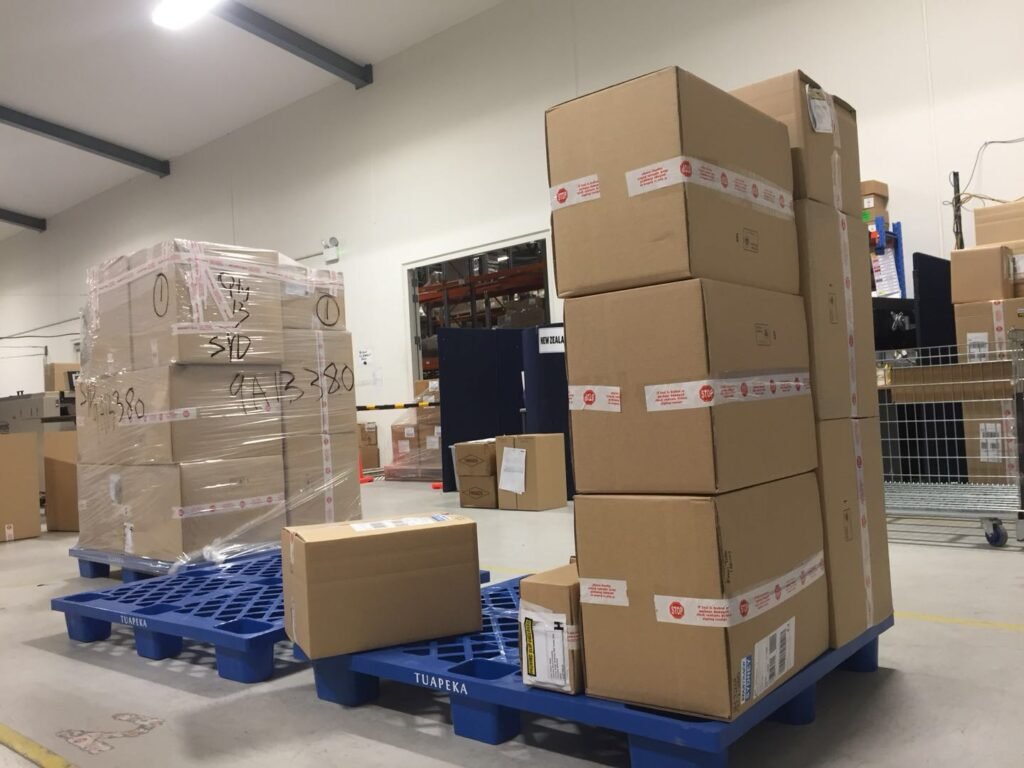
Worked Example: 400 × 300 × 250 mm Cartons on a 1200 × 1000 mm Pallet
Assume your finished cartons measure 400 × 300 × 250 mm and weigh 12 kg each. The pallet has a 1200 × 1000 mm usable loading surface, is 150 mm high, and has an approved cargo-weight limit of 1000 kg.
The maximum loaded height is 1650 mm, including the pallet. With the carton placed 400 mm along the pallet length and 300 mm along the pallet width, the layout is 3 cartons by 3 cartons. That gives you 9 cartons per layer.
Turn the cartons 90 degrees and the result is 4 cartons in one direction and 2 in the other, or 8 cartons per layer. The 3 by 3 arrangement is the better straight layout, so TI is 9.
The available carton height is 1500 mm after the pallet height is deducted. At 250 mm per carton, six complete layers fit. The geometric result is 9 × 6 = 54 cartons per pallet.
The cargo weight is 54 × 12 kg, or 648 kg. It is below the 1000 kg cargo limit, so height is the limiting factor in this example. Your planning result is 54 boxes per pallet, with a 9 TI × 6 HI pattern.
This is a calculation example, not a blanket capacity claim. Before you apply the result to a purchase order, confirm carton compression strength, load distribution, stretch-wrap method, and the pallet rating for your actual handling condition.
What Can Change Your Final Boxes Per Pallet Result?
The Pallet Footprint
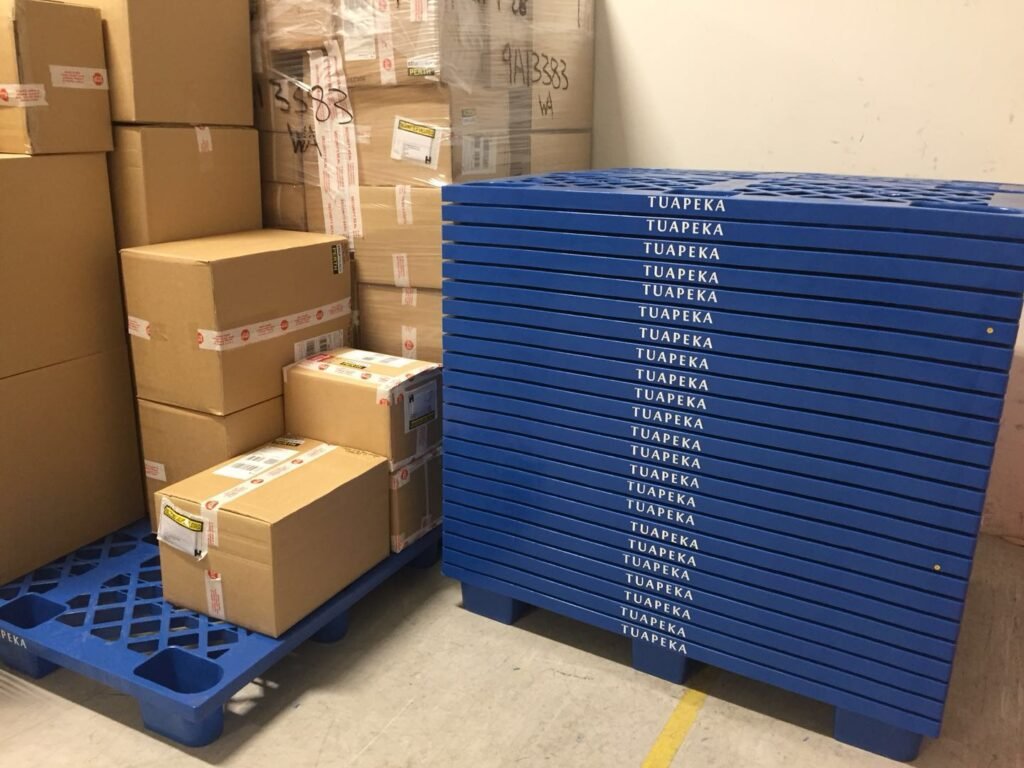
The same carton can produce different cases-per-pallet results on a 1200 × 800 mm, 1200 × 1000 mm, 1100 × 1100 mm, or 48 × 40 in pallet. A different footprint may add a row, remove a row, or reduce empty deck space enough to lower the number of pallets in the shipment.
Do not assume every 1200 × 800 mm pallet is the same physical product. For reference, an EPAL 1 Euro pallet has a 1200 × 800 mm footprint, but a plastic pallet must be evaluated by its own deck design, height, support geometry, and published load data.
Carton Orientation and Layer Pattern
One carton orientation may maximize the count, while another may create a stronger load. A simple column stack is often easier to reproduce and can give more direct carton-to-carton support. A mixed or interlocked pattern may fit more cartons, but it must remain stable after wrapping, forklift movement, and transport.
For cartons with fragile contents or limited compression strength, do not treat a higher TI as the only success measure. The better plan is the one that reaches the destination without crushed lower cartons, shifting layers, or manual rework.
Height, Weight, and Carton Strength
Your final count is always governed by the tightest limit. A light but bulky carton will usually reach its height limit first. A dense carton may hit the permitted payload first. A weak carton may require fewer layers even when both height and weight remain available.
This is why “how high can I stack a pallet?” cannot be answered from the pallet height alone. The finished carton, the storage duration, and the handling process determine whether a theoretical extra layer is a safe one.
The Storage and Handling Method
Floor storage, block stacking, rack storage, and automated handling place different demands on the pallet. If empty-pallet return efficiency matters, nestable plastic pallets can reduce empty-storage and return volume for suitable applications.
If the loaded pallet must sit on rack beams, choose a rackable plastic pallet that is approved for the actual beam span and unit load. Do not assume a nestable or general-purpose pallet is suitable for beam racking because its floor rating looks high.
When Should You Change the Pallet Size or Structure?
Reconsider the pallet when the layer layout creates large gaps, cartons overhang the edge, the load exceeds the applicable rating, or the pallet does not match the receiving site’s equipment.
The first test is usually carton orientation. If that does not fix the layout, compare another footprint before redesigning your whole package. A pallet that matches the carton module can raise cartons per layer and reduce recurring freight waste without adding complexity to packing.
Where the shipment goes by container, do not choose the tallest possible unit load before checking the full loading plan. Pallet footprint, total height, payload, door opening, and the actual equipment assignment all matter. Hapag-Lloyd notes that container dimensions can vary by manufacturer, so verify the assigned equipment rather than relying on a generic container-size chart.
For a wider landed-cost check, see how pallet size affects container utilization and landed cost. That analysis starts after you know cartons per pallet: it compares how the selected pallet footprint affects pallet positions, return logistics, and transport cost per saleable unit.
FAQ
How Many Boxes Fit on a Standard 48 × 40 Pallet?
There is no fixed number. Measure the finished carton, test both carton orientations on the usable 48 × 40 in footprint, calculate the safe layer count, and then check the applicable weight and carton-strength limits.
How Many Boxes Fit on a Euro Pallet?
A Euro pallet is commonly 1200 × 800 mm, but the carton count still depends on the carton footprint, pallet deck, and permitted load height. Use a 1200 × 800 mm layout calculation instead of applying a standard carton count to every Euro-pallet shipment.
Should Pallet Height Be Included in the Maximum Stack Height?
Include it whenever the limit is measured from the floor to the top of the loaded pallet. If the limit refers only to the carton stack, confirm that the pallet, top cap, and stretch wrap are excluded before you calculate layers.
Can Cartons Overhang a Plastic Pallet?
Avoid planned overhang where possible. It leaves cartons more exposed to impact and reduces edge support, which can increase damage risk during handling, transport, and racking.
Plan the Pallet Load Before You Place the Order
The most useful answer is not simply a number of boxes per pallet. You need to know whether the carton pattern, total height, gross weight, pallet footprint, and handling method work together on the actual route.
Preface Plast manufactures plastic pallets for export, warehousing, racking, and reusable distribution. Send us your finished carton dimensions, carton weight, maximum loaded height, destination, and handling method. We will help you compare pallet footprints and structures, then provide a practical loading recommendation that supports stable handling, lower trial-and-error cost, and long-term supply.