How to Connect Plastic Pallets?
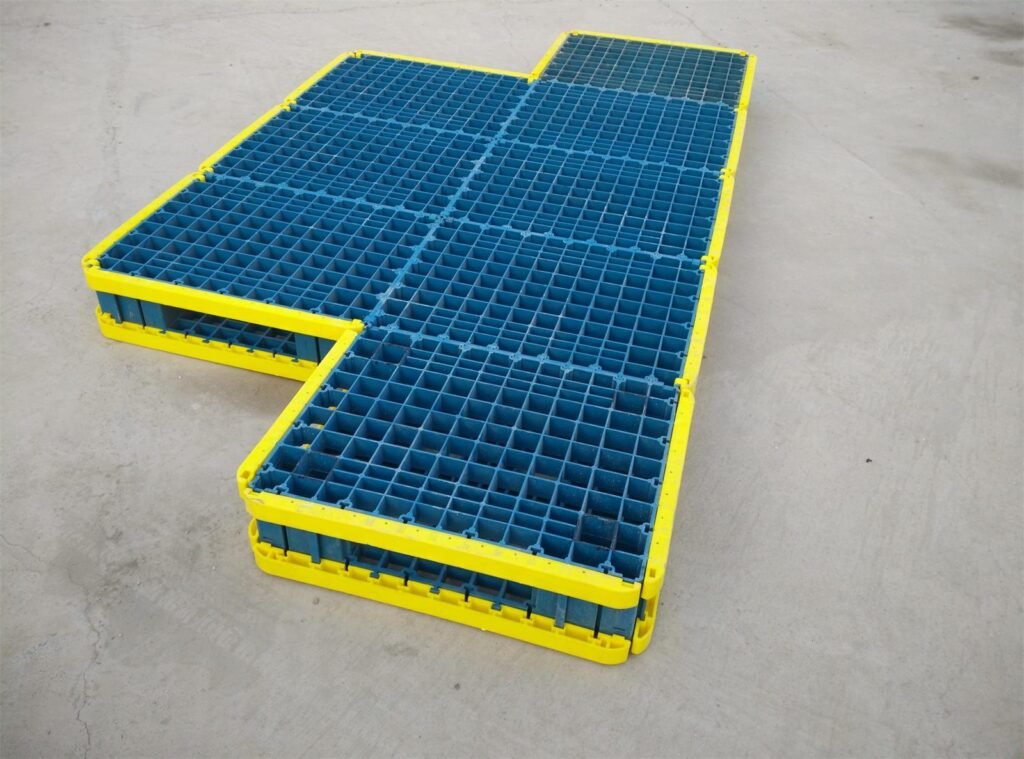
To allow connected pallets to carry loads, be handled by forklifts, or be stored on racks, you must use the same set of modular pallets and manufacturer-specified connectors. Zip ties, straps, glue, or arbitrary drilling can only hold ordinary pallets temporarily together. They cannot turn them into a connected platform with dynamic-load, racking-load, or long-term load-bearing capacity.
This article explains how to use connectable modular plastic pallets to enlarge the load-bearing surface for pipes, panels, doors, equipment, and other extra-long or extra-wide cargo. If you are building a shed base, moisture-proof floor, or DIY pallet flooring, you can read the Plastic Pallet Shed Base Guide; the load-bearing methods for these two uses are different.
What Type of “Connection” Do You Need?
| Your Actual Use | More Suitable Connection Method | Key Point |
| Lengthening or widening the load-bearing surface for pipes, panels, or equipment | The same set of modular pallets and manufacturer-specified connectors | Modules, joints, and reinforcement parts carry the cargo weight together |
| Temporary floor layout, moisture isolation, or positioning | Zip ties or straps for auxiliary position fixing | Keeps the layout tidy and reduces movement between adjacent pallets |
| Forklift handling of connected cargo | A modular structure with dynamic-load and forklift-direction data | The connection method, fork-entry direction, and cargo center of gravity need to match |
| Rack storage | A configuration with racking-load and steel-tube reinforcement data | Rack span, support direction, and cargo distribution need to match |
| Shed base or outdoor flooring | A dedicated base structure or complete flooring solution | Focus on ground support, drainage, anchoring, and load distribution |
The real meaning of how to connect plastic pallets together is not tying two ready-made pallets together. It is allowing modules, connectors, steel-tube reinforcement, and support conditions to form one reusable whole.
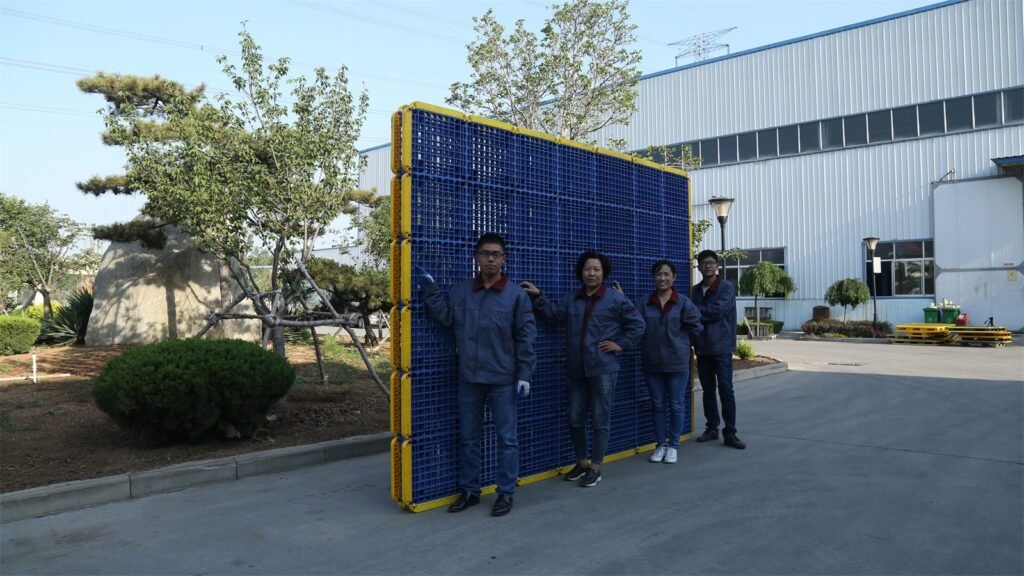
What Four Things Should You Confirm Before Connecting?
First, write down the final length, width, maximum cargo weight, and whether the cargo is eccentrically loaded. For example, a bundle of pipes may concentrate pressure near two joints; a piece of equipment may contact the pallets through only four feet. When the total cargo weight is the same but the load positions differ, the module layout will also differ.
Second, distinguish between floor storage, forklift handling, and rack storage. Static load, dynamic load, and racking load are not the same number. ASTM D1185 clearly states that the safe working load of a pallet is related to specific load and support conditions; special-purpose pallets should be tested under actual use conditions, and field validation is recommended. ASTM D1185 Pallet Test Methods
Third, connect only modules from the same system. Ordinary pallets with different sizes, molds, or bottom structures may appear to fit together, but they do not share common connection tolerances or load paths. Do not mix old pallets, modules of different models, or connectors from unknown sources.
Fourth, confirm the bottom support method. A floor platform requires continuous, level support beneath all modules and joints; rack use requires clear rack span, support direction, and allowable deflection. ISO 8611-1:2025 also states that rated-load testing cannot replace field testing for a specific pallet design. ISO 8611-1:2025
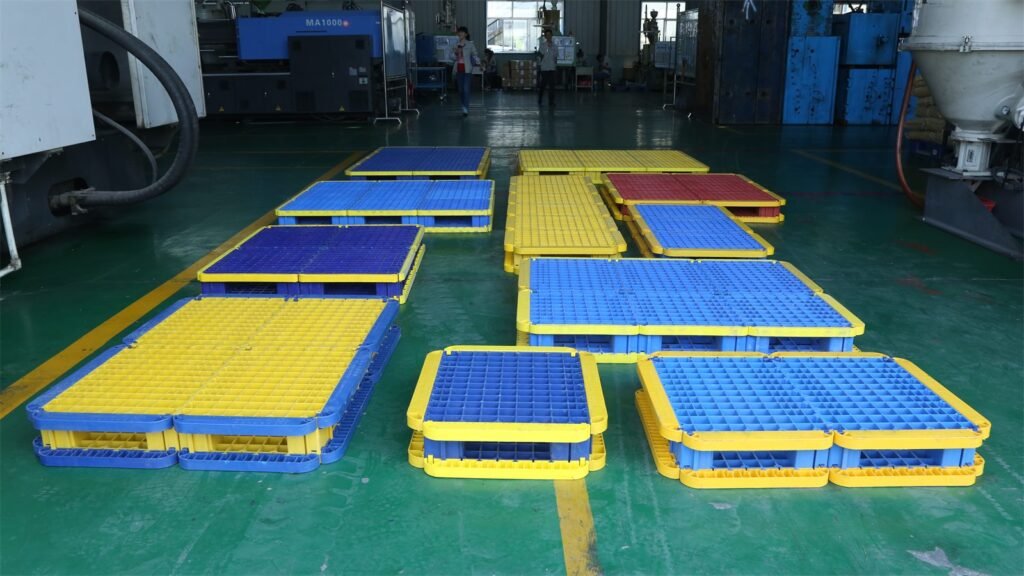
How Do You Correctly Connect Modular Plastic Pallets?
- Determine the final footprint. Arrange modules according to the actual projected dimensions of the cargo, avoiding the placement of pipes, panels, or equipment centers of gravity on unsupported edges and joints.
- Use the same model of modules. Choose components from the same module system, with the same connection structure and height. Do not mix ordinary nine-leg pallets, three-runner pallets, or damaged pallets into a modular array.
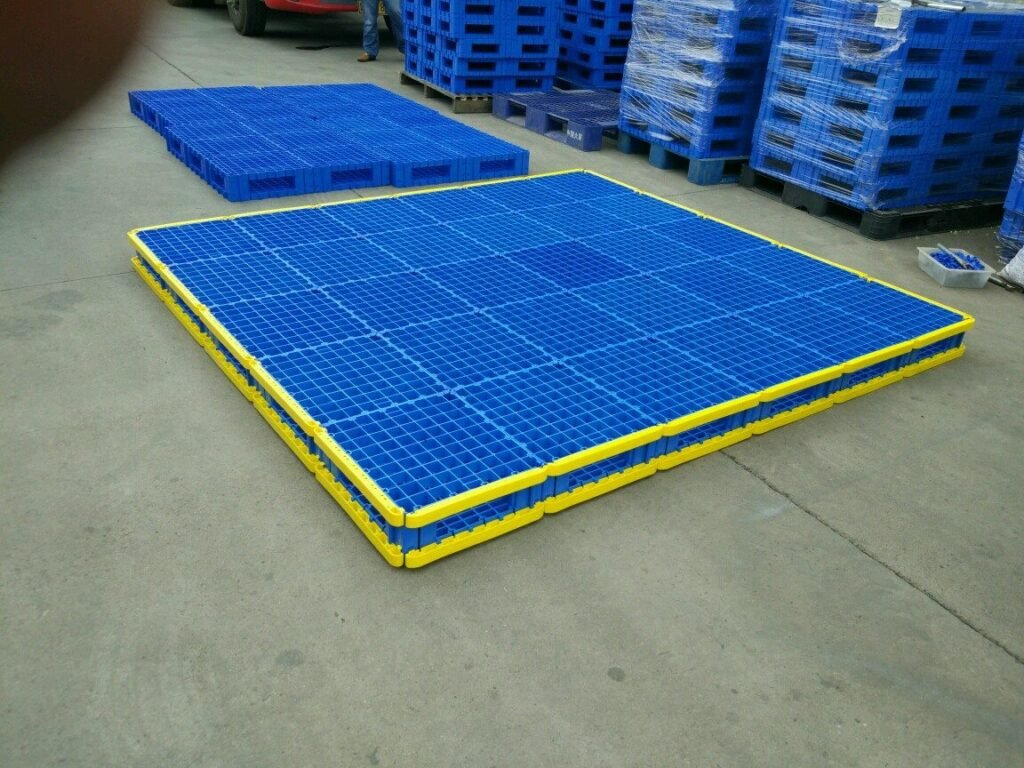
- Pre-assemble on a level, fully supported floor. Place all modules in their final positions first, and check that there is no unsupported area, rocking, or height difference underneath. Connectors cannot compensate for an uneven floor or an unsupported pallet bottom.
- Clean the joints and align the connection positions. Remove sand, film, debris, and deformed parts from the module connection areas so that adjacent modules remain level.
- Install only manufacturer-specified connectors. Secure the connectors in the direction and quantity specified for the product; after installation, check each one to ensure that the joints are level, the connectors are fully seated, and there is no local lifting or obvious gap.
- Add reinforcement according to the approved configuration. If the platform will be forklift-handled, carry eccentrically loaded cargo, or be used on racks, add the specified number of steel tubes or other reinforcement parts according to the relevant configuration, rather than adding angle steel, screws, or timber blocks afterward at random.
- Conduct an initial ground load check. Place the actual cargo on the connected pallets while they are fully supported on the floor, and check the module joints, edges, deflection, and cargo center of gravity. After confirming that there is no abnormal condition, use the pallets under the approved forklift-handling or rack-storage conditions.
Why Are Drilling, Zip Ties, and Glue Not Recommended?
Drilling, screws, or bolts change the original structure and load-bearing positions of the pallet. You cannot assume that two pallets retain their original static-load, dynamic-load, or racking-load capacity simply because they are locked together with bolts. ASTM D1185 defines pallet performance based on specified loading and support conditions.
Zip ties, ratchet straps, and ropes can organize cargo or temporarily limit movement between adjacent pallets, but they should not carry dynamic forces between modules or serve as the basis for forklift handling or rack use. Glue likewise cannot provide a connection structure that is inspectable, replaceable, and supported by clear load data.
A connected pallet array also cannot be used as an elevated work platform, and personnel must not stand on a pallet lifted by a forklift. OSHA documented a case in which a warehouse worker fell 7 feet from a pallet raised by a forklift and died, and clearly states that pallets are not designed for standing on or for lifting personnel by forklift. OSHA Incident Alert
Frequently Asked Questions
Can ordinary plastic pallets be connected directly?
They can be placed side by side or positioned temporarily, but this does not create new load-bearing, forklift-handling, or racking capacity. For industrial load bearing, use specially designed interlocking plastic pallets.
Can connected pallets be handled by forklift?
Only when the complete modular-pallet configuration clearly specifies the dynamic load, forklift-entry direction, and reinforcement method. Pallets connected with zip ties, glue, or random bolts should not be forklift-handled.
Can connected pallets be stored on racks?
Only when the product documentation clearly provides racking-load data for that connected size, steel-tube reinforcement, rack span, and support direction. Static floor load cannot replace racking load.
Does a damaged module require the entire platform to be scrapped?
One advantage of a modular system is that an individual damaged module can be replaced. However, the replacement part must remain consistent with the original module, connector, and reinforcement configuration, and old pallets with different structures cannot be mixed in.
Conclusion
The key to the Preface Plast 1100 × 1100 mm Modular Plastic Pallet is not “how to tie two pallets tightly together,” but “how to use modules with a designed connection system to form a load-bearing surface with clear support conditions.” For oversized cargo, modular pallets can bring size, connection, reinforcement, and subsequent maintenance into one product system; ordinary pallet connections made with straps, bolts, or glue should not be treated as solutions for forklift handling, rack storage, or long-term load bearing.
Share this article
Help others discover this content