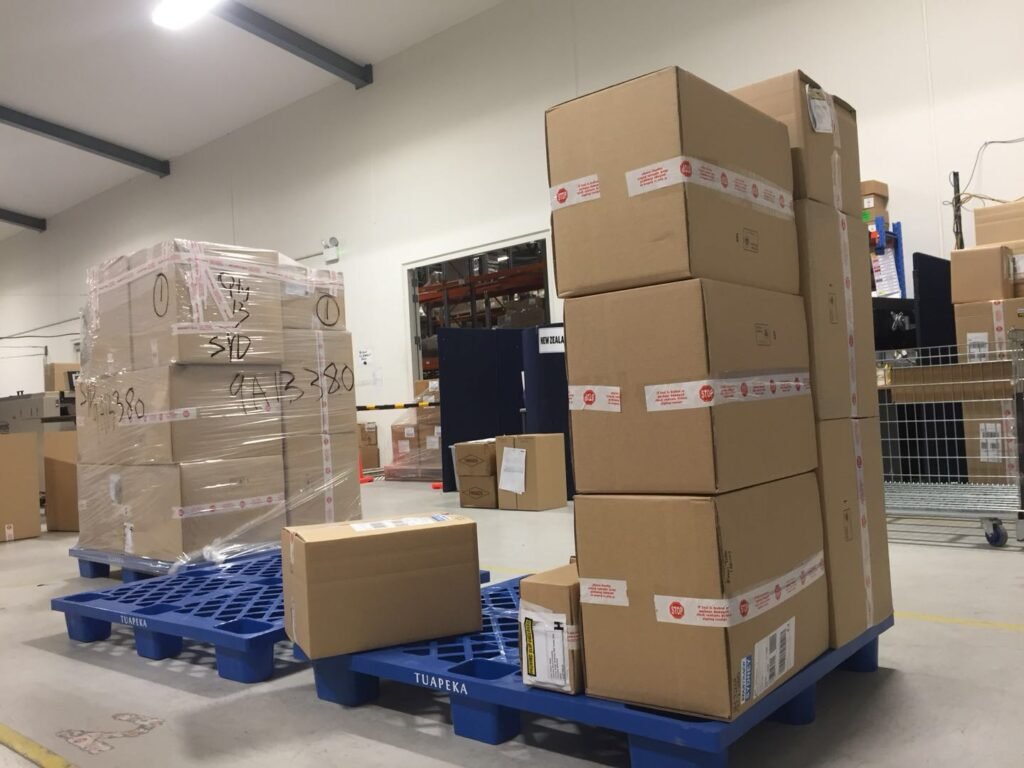
Just because a load fits on a pallet does not mean the pallet can safely support, handle, and store it on a rack. To calculate how much weight each pallet can carry, you do not need to memorize dozens of specifications. Start by measuring the goods and pallet, then check the load ratings that match the actual handling and storage conditions.
The most common mistake is treating static load capacity as the maximum weight a pallet can carry in every situation. A pallet resting on the floor, being moved by a forklift, or spanning warehouse rack beams faces different loading conditions. This guide walks you through the measurements and calculations step by step.
What Measurements Do You Need?
Start by recording four key pieces of information. Once you have them, the calculations become straightforward.
| Measurement | What to Record | Why It Matters |
|---|---|---|
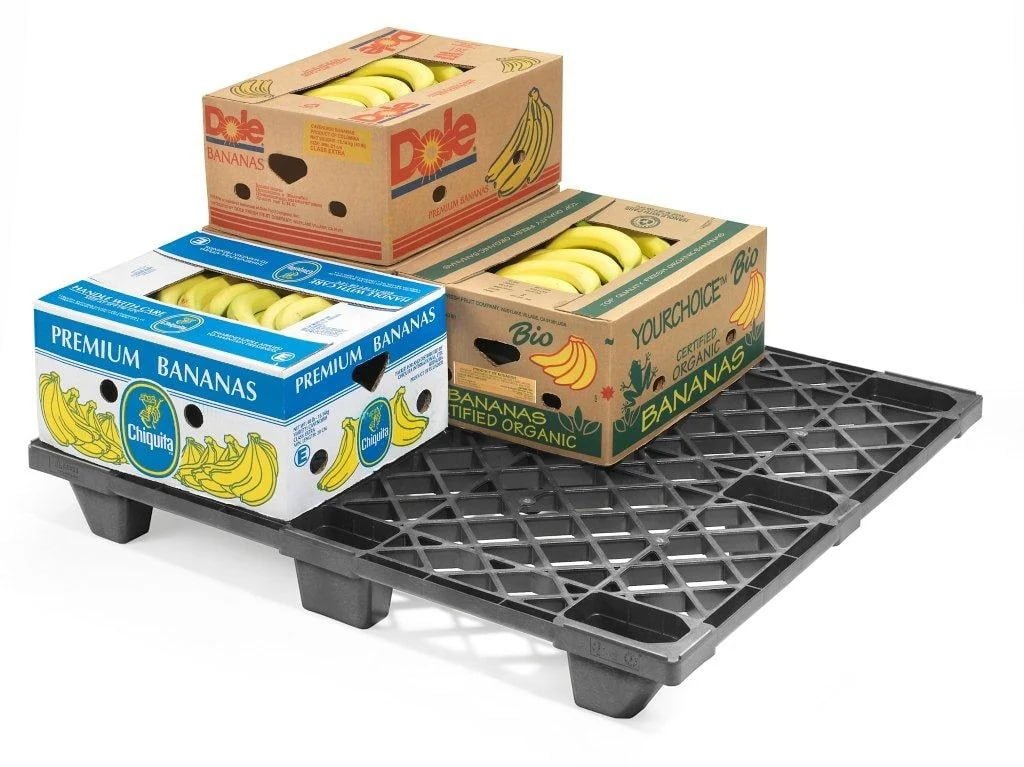
| Pallet dimensions | Length × width × height, such as 1200 × 1000 × 150 mm | Determines how many cartons fit per layer and whether the total load height is suitable |
| Carton dimensions | External length × width × height | Helps calculate cartons per layer and identify potential overhang |
| Gross weight per carton | Total weight of the product, inner packaging, and outer carton | Determines the total cargo weight per pallet |
| Pallet handling conditions | Stationary floor storage, forklift or pallet jack handling, or rack storage | Determines whether static, dynamic, or racking load capacity applies |
Pallet measurements involve more than measuring the pallet’s length and width. You also need the outer dimensions of the cartons, the number of stacking layers, and the total loaded height.
For reference, see our Standard Plastic Pallet Sizes Guide. Always base your calculations on the actual pallet and packaging dimensions used in your operation.
How Many Cartons Fit on Each Pallet Layer?
First, arrange the cartons across the pallet surface. Calculate how many fit along the pallet’s length and width.
Cartons per layer = Cartons along the length × Cartons along the width

For example, suppose you use a 1200 × 1000 mm plastic pallet with cartons measuring 400 × 250 × 220 mm.
- Along the 1200 mm side, you can fit 3 cartons: 1200 ÷ 400 = 3.
- Along the 1000 mm side, you can fit 4 cartons: 1000 ÷ 250 = 4.
- Total per layer: 3 × 4 = 12 cartons.
If the cartons can be rotated 90 degrees, calculate that arrangement as well. Choose a layout that fits the most cartons without extending beyond the pallet edges.
Do not add extra cartons simply to increase capacity if they overhang the pallet. Overhang can compromise load stability, stretch-wrap containment, and forklift handling.
How to Calculate the Total Cargo Weight per Pallet
The formula is straightforward:
Cargo weight per pallet = Cartons per layer × Number of layers × Gross weight per carton + Packaging materials
Continue with the previous example. Assume each carton weighs 16 kg, the load has four layers, and the stretch wrap, separators, and corner protectors weigh approximately 7 kg in total.
12 cartons × 4 layers × 16 kg + 7 kg = 775 kg
This is the weight of the cargo and its packaging supported by the pallet. If the pallet itself weighs 15 kg, the total loaded pallet weight is 790 kg.
Include the pallet’s tare weight when calculating the total weight for trucks, shipping containers, and manual handling. However, pallet load ratings typically refer to the supported cargo load, so do not count the pallet’s own weight twice.
You can also calculate the total loaded height:
150 mm pallet height + 4 layers × 220 mm carton height = 1030 mm
Add the thickness of any top cap, separator sheets, or cover if applicable.
Should You Use Static, Dynamic, or Racking Load Capacity?
You do not need to overcomplicate these terms. Choose the load rating according to how the pallet will actually be used.
| Actual Application | Applicable Load Rating | What It Means |
|---|---|---|
| Fully loaded pallet resting on a level floor | Static Load | The pallet base is continuously supported by the floor |
| Pallet lifted and moved by a forklift or pallet jack | Dynamic Load | The pallet is supported by forks or lifting equipment while being moved, with additional forces from starting, stopping, and turning |
| Pallet stored across rack beams or rails | Racking Load | The pallet spans a gap and must support the load under the specified rack-support conditions |
If your pallet will be moved by a forklift and then stored on warehouse racking, both the dynamic load rating and the racking load rating must be sufficient. Use the lower applicable rating as the initial limit for the cargo weight, subject to the manufacturer’s specified test conditions and any operational safety requirements.
Also, check whether the forklift, rack position, or vehicle has a maximum gross load limit. If that limit includes the pallet itself, subtract the pallet’s tare weight to determine the maximum permitted cargo weight.
For example, suppose a pallet has the following ratings:
- Static load: 4000 kg
- Dynamic load: 1000 kg
- Racking load: 800 kg
For the previous example, the cargo weighs 775 kg.
- Floor storage: 775 kg is below the 4000 kg static load rating.
- Forklift handling: 775 kg is below the 1000 kg dynamic load rating.
- Rack storage: 775 kg is below the 800 kg racking load rating.
The four-layer configuration is within all three stated ratings, assuming the actual operating conditions match the manufacturer’s specifications.
Now increase the load to five layers:
12 cartons × 5 layers × 16 kg + 7 kg = 967 kg
The cargo weight remains below the static and dynamic ratings, but exceeds the 800 kg racking rating. Therefore, the five-layer configuration cannot be used under the same racking conditions.
For a more detailed explanation, see our guide to Static Load vs. Dynamic Load for Plastic Pallets.
How to Calculate Loads When Stacking Pallets

When stacking loaded pallets on the floor, do not consider only the 775 kg of cargo on each pallet. The bottom pallet must also support the weight transferred from the loaded pallets above it, including the tare weight of those upper pallets.
Assume each pallet carries 775 kg of cargo and weighs 15 kg.
- Two pallets stacked: The bottom pallet supports approximately 775 + 790 = 1565 kg.
- Three pallets stacked: The bottom pallet supports approximately 775 + (790 × 2) = 2355 kg.
- Total weight of a three-pallet stack: 790 × 3 = 2370 kg.
These calculations provide an initial estimate of the load acting on the bottom pallet. Actual stacking suitability also depends on carton compression strength, load alignment, contact between pallets, and the stability of the entire stack.
A high static load rating does not mean that any product can be stacked indefinitely. Bagged goods, drums, and products with a high center of gravity require particular attention to load distribution and stack stability.
Why Might a Pallet Be Unsuitable Even When the Load Is Below Its Rated Capacity?
Calculating the weight addresses only one question: whether the pallet can support the load under a specified condition. You must also consider how that weight is distributed.
Four common factors can affect pallet performance:
- Concentrated loads: Machinery, metal components, drums, and products with small contact areas can create high local stresses.
- Load overhang: Goods extending beyond the pallet edges can reduce stability and complicate forklift and rack handling.
- Rack storage: A high static load rating does not establish that a pallet is suitable for rack storage.
- Temperature and long-term loading: Plastic pallet deflection and long-term performance can vary with temperature, load distribution, and the duration of loading.
Maximum pallet capacity is not simply a matter of choosing the largest number on a specification sheet. The actual cargo weight must remain within every applicable load limit along the handling and storage route.
ISO 8611 addresses flat pallet testing and the evaluation of load capacity under specified conditions. However, standardized test results do not eliminate the need to assess the actual load configuration and operating environment.
References:
How to Determine the Maximum Cargo Weight per Pallet
Use this checklist to review your calculations:
- Check carton placement: Ensure all cartons fit securely on the pallet without excessive overhang.
- Check dynamic load capacity: Confirm that the cargo weight is within the rating for forklift or pallet jack handling.
- Check racking load capacity: If the pallet will be rack-stored, verify that the cargo weight is within the applicable racking rating.
- Check stacking conditions: For floor stacking, assess the cumulative load on the bottom pallet and the compression strength of the cartons.
- Check total height and gross weight: Make sure the loaded pallet meets warehouse, vehicle, and shipping restrictions.
If these checks are satisfied, you have a practical basis for determining the maximum cargo weight per pallet for your intended operation.
Do not estimate dynamic or racking capacity by applying a fixed conversion factor to static load capacity. There is no universal conversion ratio between these ratings. If the manufacturer’s specifications provide a maximum working load for your particular application, follow that rating and its stated test conditions.
Choose the Right Plastic Pallet Based on Your Measurements
Once you have recorded the pallet dimensions, carton dimensions, gross weight per carton, cartons per layer, stacking height, and handling conditions, you can identify the type of pallet that best fits your requirements.
Depending on your application, you may need a lightweight export pallet, a stackable plastic pallet, or a heavy-duty rackable plastic pallet with a specified racking load rating.
For more information about pallet load ratings, read our Plastic Pallet Load Capacity Guide.
Need help selecting the right model? Visit Preface Plast to explore our plastic pallet range. Share your cargo weight, pallet dimensions, and handling or storage requirements so we can help identify a suitable pallet solution.