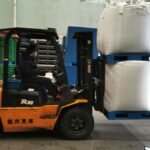
Using the wrong pallet weight in your freight plan can lead to unexpected costs and handling problems. For example, if you budget 15 kg for every full-size plastic pallet but later choose a reinforced rackable model weighing more than 25 kg, the difference across a full shipment can affect freight charges, payload calculations, and warehouse handling.
So, how much does a pallet actually weigh? Most full-size plastic pallets fall around 10–25 kg (22–55 lb), while lightweight export models may weigh less than 10 kg and reinforced designs can exceed 30 kg (66 lb). In this article, we will explain what changes pallet weight and how to choose the right tare figure for your operation.
How Much Does A Pallet Weigh?
The average pallet weight depends first on the pallet type. A nestable export pallet is designed to minimize material and empty-shipping cost, while a rackable or hygienic pallet may need runners, a closed deck, or reinforcement that adds tare weight.
| Pallet Type | Typical Empty Weight | Best Use Of The Range |
|---|---|---|
| Lightweight plastic export or nestable pallet | 5–10 kg / 11–22 lb | Early freight estimates for one-way or cost-controlled routes |
| General-purpose plastic pallet | 10–18 kg / 22–40 lb | Warehouse, distribution, and repeated handling estimates |
| Hygienic or closed-deck plastic pallet | 15–23 kg / 33–51 lb | Food, beverage, pharmaceutical, and wash-down applications |
| Rackable or reinforced plastic pallet | 17–30+ kg / 37–66+ lb | Beam racking, automation, or demanding reusable loops |
| North American 48 × 40 in wood pallet | 14–22 kg / 30–48 lb | General comparison only; moisture and construction change tare |
| EPAL Euro wood pallet | Approx. 25 kg / 55 lb | Official weight for the controlled EPAL 1 design |
These are planning ranges, not standard weights. The EPAL Euro pallet specification, for example, gives an approximate 25 kg tare for its controlled 1200 × 800 × 144 mm wood design. A plastic pallet with the same footprint can be much lighter or may approach that weight when its structure serves a different purpose.
The Preface Plast plastic pallet range includes lightweight, stackable, hygienic, and rackable configurations. Compare the exact model and application rather than assuming every plastic pallet sits at the low end of the table.
What Is The Standard Pallet Weight?
There is no single standard pallet weight. “Standard pallet” usually identifies a familiar footprint or a controlled construction, but it does not assign the same tare to every pallet made in that size.
Published Preface Plast examples show how wide the difference can be even among full-size plastic pallets:
| Plastic Pallet Example | Dimensions | Published Tare | Main Design Difference |
|---|---|---|---|
| Nine-leg bulk bag pallet | 1100 × 1100 × 100 mm | 6 kg / 13.2 lb | Lightweight grid deck and nine-leg base |
| Three-runner 40 × 48 class pallet | 1200 × 1000 × 165 mm | 13.8 kg / 30.4 lb | Grid deck and runner base |
| Euro plastic pallet | 1200 × 800 × 160 mm | 15.6 kg / 34.4 lb | Three-runner warehouse design |
| Rackable plastic pallet | 1200 × 1000 × 135 mm | 17.5 kg / 38.6 lb | Rack-oriented structure with reinforcement options |
For an average plastic pallet weight in a budget model, 15 kg can be a useful placeholder for a full-size general-purpose unit. Before booking a shipment, use the model data sheet and confirm whether the stated weight includes steel tubes, anti-slip components, RFID, or other fitted parts.
What Changes Plastic Pallet Weight?
Plastic pallet weight is mainly determined by how much material the design uses and where that material is placed. Resin type matters, but “HDPE” or “PP” alone cannot predict the finished weight.
| Design Factor | Usual Effect On Tare | Why It Matters When Comparing Quotations |
|---|---|---|
| Open versus closed deck | Closed surfaces often use more material | Cleaning, drainage, package support, and tare may all change |
| Nine feet versus runners or perimeter base | More continuous bottom support often adds mass | Empty nesting, pallet-jack access, stacking, and rack support differ |
| Rib depth and distribution | Adds material where stiffness or impact resistance is required | Two pallets with the same outer size may perform differently |
| Steel or other reinforcement | Adds both component and assembly weight | Racking stiffness may improve, but freight, cleaning, and recycling change |
| Pallet height and entry clearance | Taller feet or runners can add material | Equipment fit and total loaded height must still be approved |
| Anti-slip parts, lips, RFID, and accessories | Adds small but cumulative weight | The quoted tare must identify which options are included |
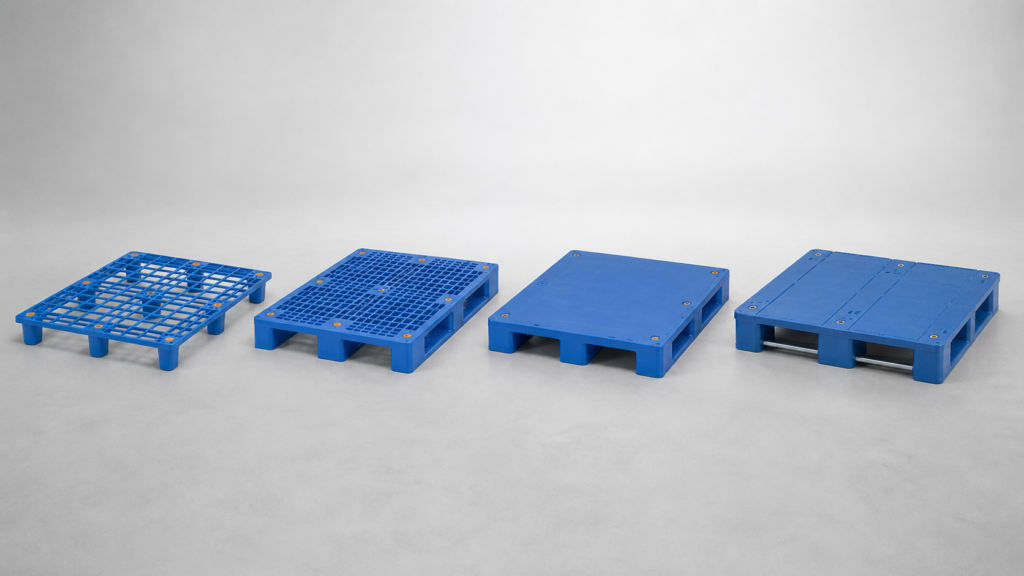
Removing kilograms is not a simple purchasing discount. Thinner ribs, shorter sections, or less material can change impact behavior, stiffness, molding consistency, and service life together. When two quotations differ sharply in weight, compare their drawings and operating conditions before comparing price.
Does A Heavier Plastic Pallet Carry More Weight?
Not necessarily. Pallet tare weight and pallet load capacity are different specifications. A heavier model may contain more material or reinforcement, but capacity also depends on rib geometry, base design, load distribution, support, span, temperature, and storage time.
Static, dynamic, and racking ratings must remain separate. ISO 8611-1:2025 provides test methods for new flat pallets and notes that model-specific field trials still have value. The correct comparison is performance under the actual route—not kilograms of pallet alone.
If capacity is the main decision, use the dedicated plastic pallet load capacity guide. It explains the three support conditions without turning this pallet-weight article into a competing capacity page.
How Does Pallet Weight Affect Freight And Handling?
Pallet tare counts toward the shipment’s gross weight. DHL Global Forwarding’s chargeable-weight guidance defines actual gross weight as the total physical shipment weight, including packaging and pallets.
A freight declaration based only on product net weight is therefore incomplete.
Gross Loaded Weight = Product Net Weight + Pallet Tare + Cartons, Film, Straps, And Other Packaging
A 6 kg difference may look small in a quotation. Across 26 pallets, however, it adds 156 kg (344 lb) to the shipment before any product changes. That difference can affect airfreight cost, road payload, LTL declarations, and the amount of saleable product that fits within a weight-limited route.
Empty logistics matter as well. A lightweight nestable plastic pallet can reduce both tare and return volume, while a heavier runner-based design may justify its weight in a controlled reusable loop. The useful comparison is total route cost, not pallet weight in isolation.
Empty pallets can also create manual-handling risk. Some reinforced models approach or exceed 50 lb, and OSHA heavy-lifting guidance recommends mechanical means or team handling for heavier loads. Your site’s task frequency, grip, posture, lifting height, and safety procedure must control the final method.
How Big Is A Pallet, And How Wide Is It?
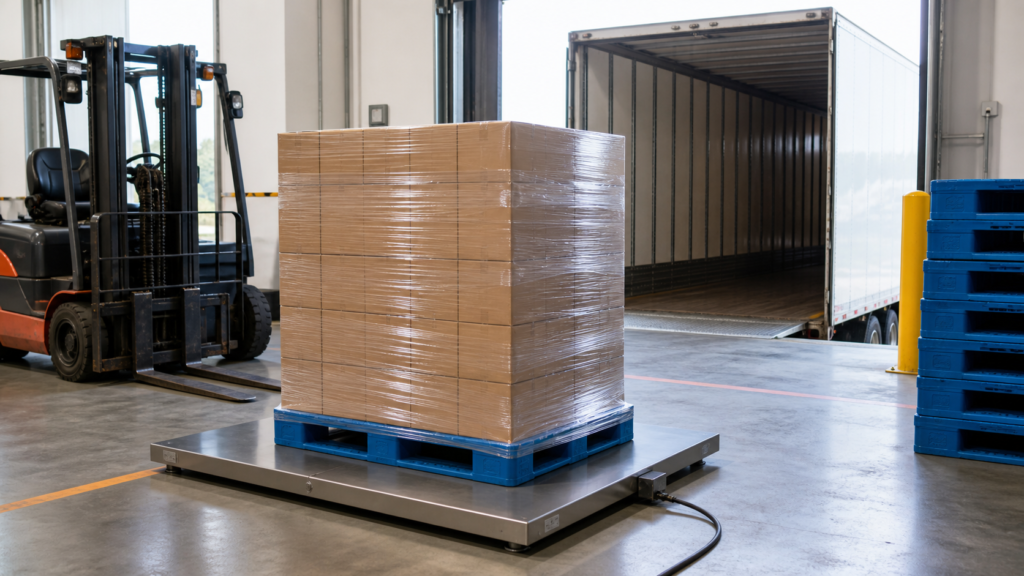
Pallet size and pallet weight are separate specifications. A common North American pallet is 48 × 40 in, so its nominal width is 40 in when the 48 in side is defined as its length. A Euro pallet is 1200 × 800 mm, with a nominal width of 800 mm under the same convention.
There is no universal global footprint, and length/width labels can be reversed in everyday use. The detailed standard plastic pallet sizes and dimensions guide compares regional footprints, measurement methods, equipment fit, and tolerances without duplicating that material here.
How High Are Plastic Pallets?
Plastic pallet height is model-specific. The official EPAL 1 wood pallet is 144 mm high, while many full-size plastic pallets are roughly 135–165 mm high; lightweight, hygienic, and special-purpose designs can fall outside that range. Always use the drawing’s maximum outside height and stated tolerance for automation or loaded-height planning.
How Do You Choose The Right Plastic Pallet Weight?
Choose the lightest configuration that is validated for the complete operation. Selecting the lowest tare first can save freight but create a larger cost if the pallet cannot support the package, handling cycle, rack, temperature, or cleaning process.
| Application | Weight Priority | What Must Be Verified Before Approval |
|---|---|---|
| One-way export | Minimize tare and delivered cost | Dynamic handling, deck support, entry, destination acceptance, and disposal route |
| Empty-return network | Balance low tare with nestability | Nesting ratio, stack stability, separation, damage rate, and completed return cycles |
| Reusable floor-stacking loop | Balance tare with impact durability | Fork impacts, loaded stacking, payload distribution, temperature, and inspection criteria |
| Food or pharmaceutical operation | Treat tare as secondary to hygiene fit | Surface design, drainage, cleaning, drying, resin documents, and traceability |
| Beam racking | Accept justified structure or reinforcement | Beam span, runner direction, payload pattern, temperature, time, and deflection |
| Conveyor or AS/RS | Prioritize dimensional and structural consistency | Contact points, flatness, tolerance, sensors, loaded deflection, and trial results |
A light pallet is valuable only when it completes the required job. For beam racks, start with a model-specific rackable plastic pallet rather than adding a generic safety margin to a lightweight pallet’s tare.
When an existing design contains unnecessary mass for a high-volume closed loop, custom plastic pallet services can evaluate the deck, ribs, runners, reinforcement, material, and tooling together. Any reduction still needs production-intent testing with the real unit load and equipment.
What Pallet Weight Data Belongs In An RFQ?
A useful RFQ asks for a controlled tare value, not “lightweight plastic pallet.” Include enough application data to make different quotations technically comparable:
- Exact model and drawing revision: Tie the weight to one footprint, height, deck, base, and configuration.
- Nominal pallet tare: State kg and lb, then identify which unit controls the order.
- Acceptable weight tolerance: Clarify the allowed production range and how it will be checked.
- Included components: List steel tubes, plugs, anti-slip parts, RFID, labels, and removable accessories.
- Material configuration: Identify HDPE or PP, virgin or controlled recycled content, and any required additives.
- Loaded gross weight: Add product, pallet, packaging, restraint, and any moisture or process allowance that genuinely applies.
- Operating conditions: Define floor, forklift, pallet-jack, conveyor, rack, temperature, cleaning, and storage duration.
- Commercial route: Provide quantity, destination, freight mode, reuse plan, and target budget.
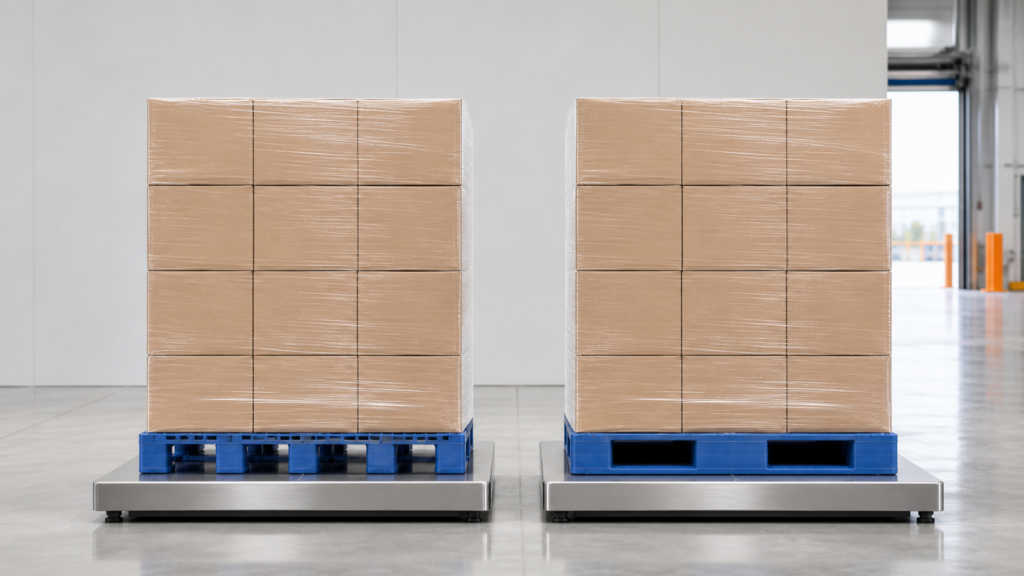
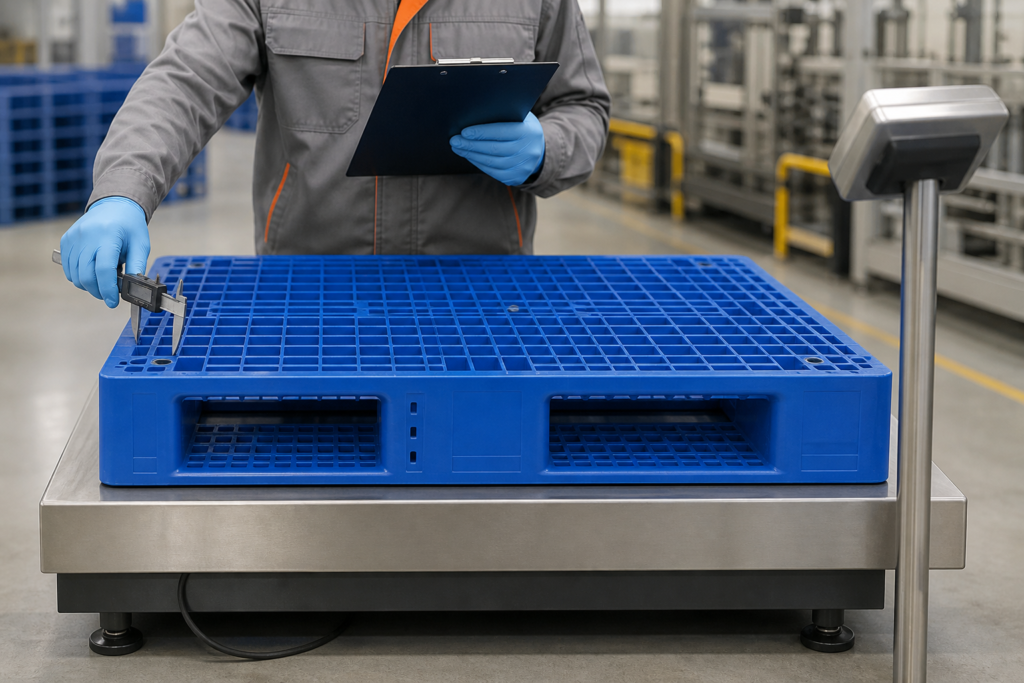
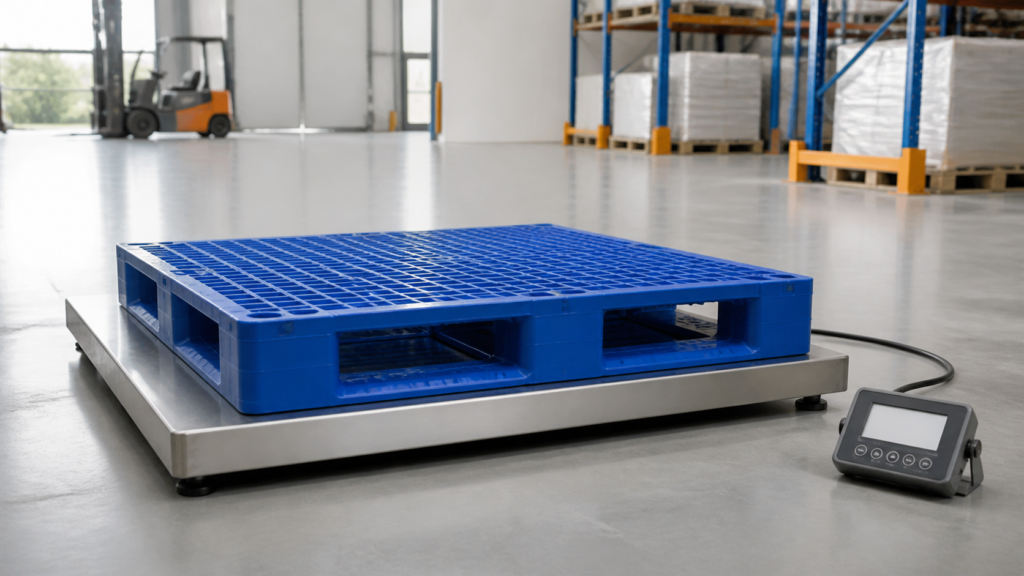
Before volume approval, weigh a production-intent sample on a suitable calibrated scale and compare it with the drawing, configuration, and data sheet. A pallet that matches the target tare but not the required performance is not an acceptable substitute.
Frequently Asked Questions
Can Washing Make A Plastic Pallet Temporarily Heavier?
Yes. Plastic does not absorb water like wood, but water can remain on surfaces, in ribs, or inside cavities, so use the agreed clean and dry condition when checking tare.
Do Steel Tubes And Anti-Slip Parts Count In Pallet Tare?
They should. Request the complete ready-to-use weight and identify every removable component so freight and receiving checks use the same configuration.
Should Pallet Weight Be Specified In Kilograms Or Pounds?
Either can be shown, but one unit should control the purchase specification to prevent rounding differences. Keep the original model value and treat the second unit as a conversion.
Can Recycled Plastic Change Pallet Weight?
It can affect the finished specification when resin formulation, additives, or processing requirements change. Approve the material and tare range together instead of assuming a color or recycled-content label guarantees the same result.
Is An Empty Plastic Pallet Safe To Lift By Hand?
That depends on its actual weight and the task’s grip, posture, height, and frequency. Follow the site risk assessment and use team or mechanical handling when the model or task exceeds the approved limit.
Final Thoughts
The real decision is not “How little can a pallet weigh?” It is “What is the lightest pallet that can complete this route without compromising the load, equipment, storage method, environment, or expected number of trips?”
Preface Plast manufactures plastic pallets for export, warehouse, hygienic, rackable, and automated applications. Share your target footprint and tare, product load, handling and support conditions, destination, quantity, and budget through our plastic pallet inquiry page.
Our team can compare existing molds with an OEM/ODM design and prepare a production-intent specification that reduces freight weight without creating an under-specified pallet.