
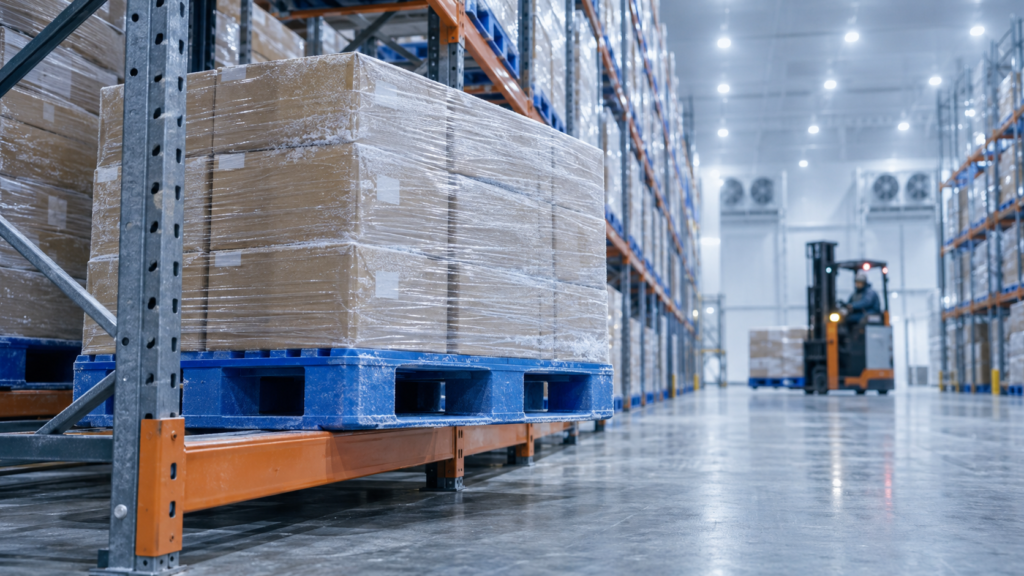
Common freezer-pallet failures include fork-impact cracks, deflection across unsupported rack spans and load slip on frost. Low temperature is only one part of the problem; material formulation, pallet structure, support, load and handling determine the result.
For a −25°C freezer carrying an 875 kg carton payload on selective racks, a practical starting point is a 1200 × 1000 mm low-temperature HDPE pallet with a closed deck, four-way entry, a rackable runner base and a 1,000 kg rack rating for the actual beam span. This guide shows how to build the same clear specification for your operation.
1. Choose The Material For The Coldest Handling Point
Start with the lowest temperature at which the pallet is lifted or struck. A pallet stored at −25°C and moved immediately by a forklift receives impact while the plastic is fully cold. That is a harder duty than storage followed by a warm-dock handling period.
−18°C is a common frozen-food storage setpoint, but it is not a material pass line. When comparing plastic pallets for freezer warehouses, use these operating bands as a direct starting point:
| Lowest Handling Temperature | Practical Material Direction | Best-Fit Situation |
|---|---|---|
| +2°C to +8°C | HDPE or PP | Choose HDPE for repeated impact and wet handling; choose PP where stiffness and lower tare weight control the job. |
| −18°C to −25°C | Low-temperature HDPE as the first choice | Frozen meat, seafood, dairy, ready meals and ice cream with regular forklift movement. Use PP only when the finished pallet is designed for that temperature. |
| −30°C to −40°C | A finished pallet or box with a stated service minimum at or below the coldest handling point | Deep-freeze and blast-freeze routes. Do not decide from “HDPE” or “PP” alone. |
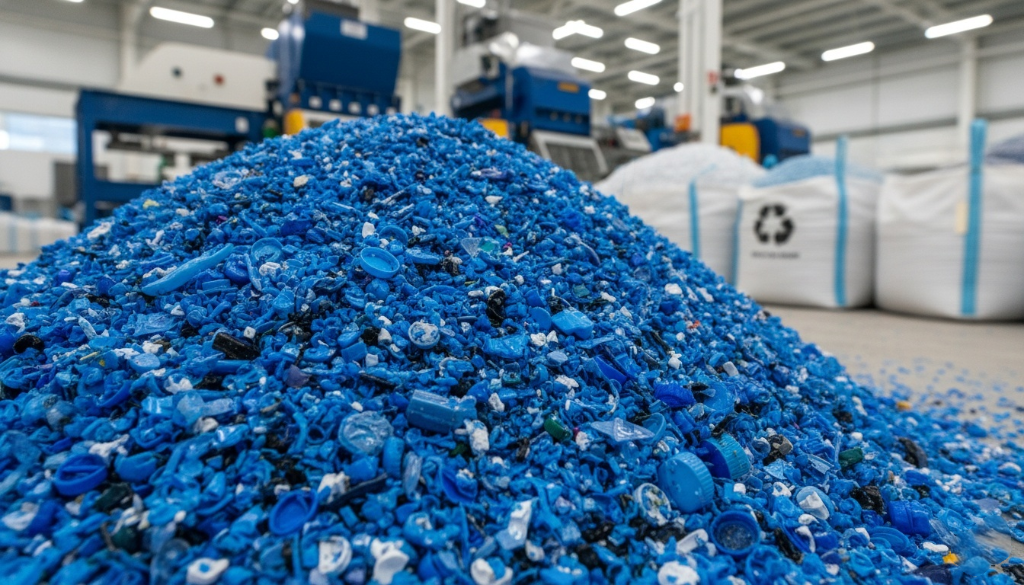
“Low-temperature HDPE” is not a universal resin grade. It means the formulation and finished pallet configuration cover the stated operating temperature. Wall thickness, rib layout, recycled content and welded joints all change cold-impact behavior.
Selected cold storage plastic pallets and pallet boxes for frozen industries publish service minima down to −40°C. Use that page to compare flat pallets, solid-wall boxes and vented bins without applying one temperature claim to the full catalogue.
2. Calculate The Maximum Payload, Not The Average Load
Use the heaviest production batch. Average shipment weight hides the exact load that bends a pallet or overloads a rack.
Three Load Ratings: Static load applies on a flat floor. Dynamic load applies while the pallet is lifted and moved. Racking load applies when the pallet bridges specified beams or rails. A 4,000 kg static rating does not establish any rack capacity because open beams create a different load path.
A Worked Cold-Storage Load Calculation
Assume one frozen seafood load contains:
- 32 cartons × 25 kg = 800 kg
- Ice or frozen gel packs = 60 kg
- Liners, dividers, stretch film and straps = 15 kg
- Plastic pallet tare weight = 25 kg
The pallet payload is 875 kg. Start with the next practical capacity tier: a pallet rated for at least 1,000 kg dynamic and, for beam storage, 1,000 kg racking at the actual support span.
The gross handled unit load is 900 kg after the 25 kg pallet is added. Use 900 kg when checking the forklift, rack, conveyor and truck. This distinction prevents both under-sizing equipment and counting pallet weight twice.
Bagged ice needs the same calculation. Sixty 20 kg bags already create 1,200 kg of product before film, straps and corner boards are added. Rigid crates also create concentrated contact at their feet; select a deck and runner structure that supports the actual footprint instead of treating the load as evenly distributed.
3. Match The Base To Your Cold Storage Racking System
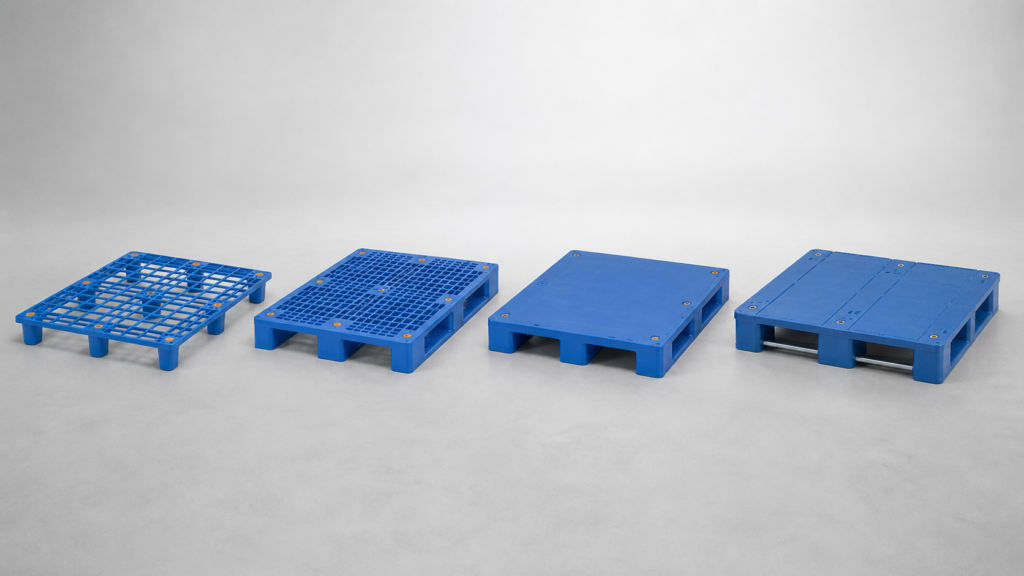
Rackable plastic pallets for cold storage must follow the support below the pallet. The same load produces a different result on a flat floor, two beams, side rails or a roller lane.
| Storage Or Handling System | Practical Starting Base | Practical Adjustment |
|---|---|---|
| Flat-floor staging | Nine-leg nestable or full-perimeter base | A nine-leg pallet reduces empty storage volume when the full route remains floor-supported. Add reinforcement only when handling or point loads require it. |
| Selective beam racking | Rack-rated three-runner, perimeter or suitable double-sided base | Match the rating to beam spacing and pallet orientation. Use rack decking if the chosen pallet needs continuous support. |
| Drive-in or drive-through racking | Continuous bearing surfaces aligned with both side rails | Match runner width and direction to the rail spacing so the pallet sits fully on both supports. |
| Pallet flow rack | Underside contact matched to rollers or wheel tracks | Keep runner contact continuous through slopes, brakes and transfer points; remove ice before lane entry. |
| Chain or roller conveyor | Flat runner contact at the conveyor centers | Match runner centers to chain lines or roller pitch and keep transfer gaps below unsupported deck areas. |
| Shuttle or AS/RS freezer | Pallet geometry approved for the actual support and sensing system | Match underside openings, stiffness, support points, tolerances and sensor surfaces to the equipment. |
A simple drawing exposes rack risk quickly. With beam centerlines 900 mm apart and a pallet depth of 1200 mm, a centered pallet has 150 mm from each support centerline to the nearest deck edge, before beam width is considered. The pallet structure and reinforcement must bridge that geometry in the storage direction.
Steel reinforcement reduces deflection when the tube section, position and direction follow the unsupported span. Tubes outside the critical bending path add weight without providing the same stiffness. The reinforced base must still leave clear paths for forklift tines, pallet-jack wheels, chains and shuttle pads.
4. Match The Deck Or Box To The Frozen Product
Choose the load carrier from the physical form of the goods. Frozen food pallets for stable cartons need deck support; loose or iced goods need sidewalls; products requiring airflow need controlled openings.
| Frozen Product | Direct Solution | Detail That Makes It Work |
|---|---|---|
| Sealed meat, poultry, seafood or ice-cream cartons | Closed or fine-grid pallet; rackable runner base for beam storage | Support the entire carton pattern and keep every carton inside the deck edge. |
| IQF vegetables or packaged produce | Vented pallet or vented bulk bin | Use openings where cold air or meltwater must move through the load, while keeping flexible packs supported. |
| Bagged ice and frozen ingredient sacks | Closed or fine-grid deck with a perimeter or double-sided base | A broad deck supports the bags; stretch film and straps control the dense, slippery load. |
| Loose seafood, iced product or lined ingredients | Solid-wall pallet box | Sidewalls contain irregular goods; add the drain, plug or liner arrangement required for meltwater. Solid walls alone are not liquid-tight. |
| Bulk product requiring airflow | Vented pallet box | Vents combine sidewall containment with airflow and drainage through the batch. |
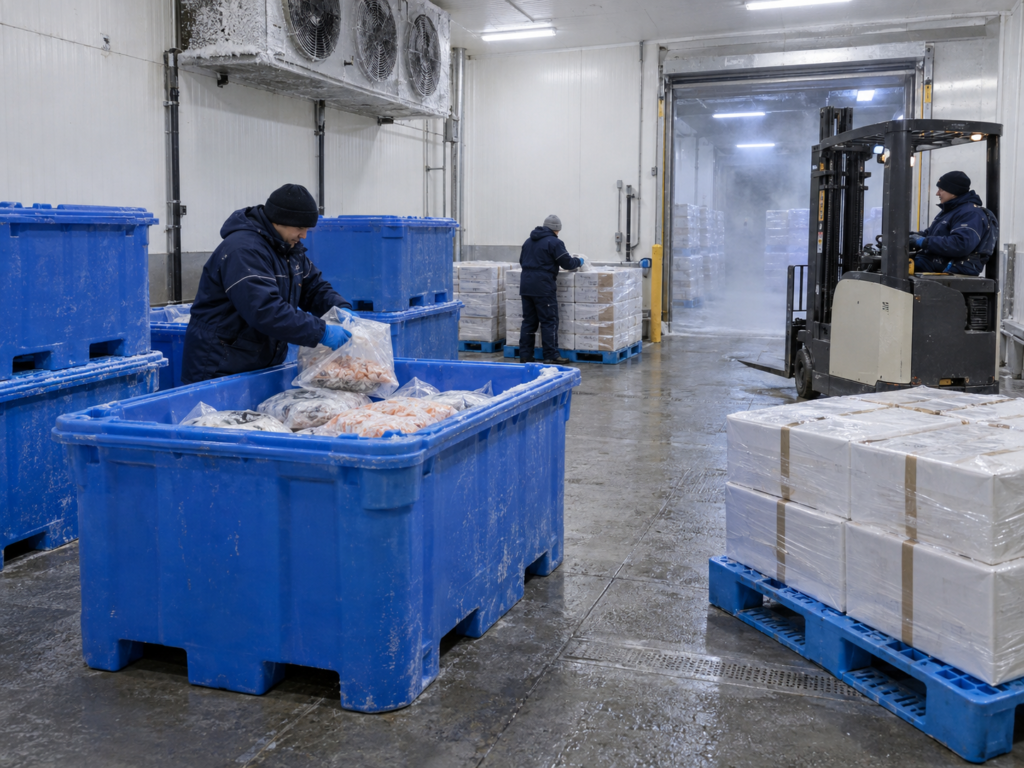
Deck texture is not enough to restrain a frozen load. Frost covers molded ribs and rubber inserts with a hard film. Keep the load within the pallet footprint and add stretch film, straps, corner boards or a perimeter lip for smooth cartons and bagged ice.
If sealed seafood cartons become loose product with ice and meltwater, move directly from a flat pallet to a solid-wall pallet box. If the same process needs cold air to pass through bulk product, use a vented bin. The frozen-industry application page compares these formats in detail.
5. Fit The Pallet To Your Packaging And Handling Equipment
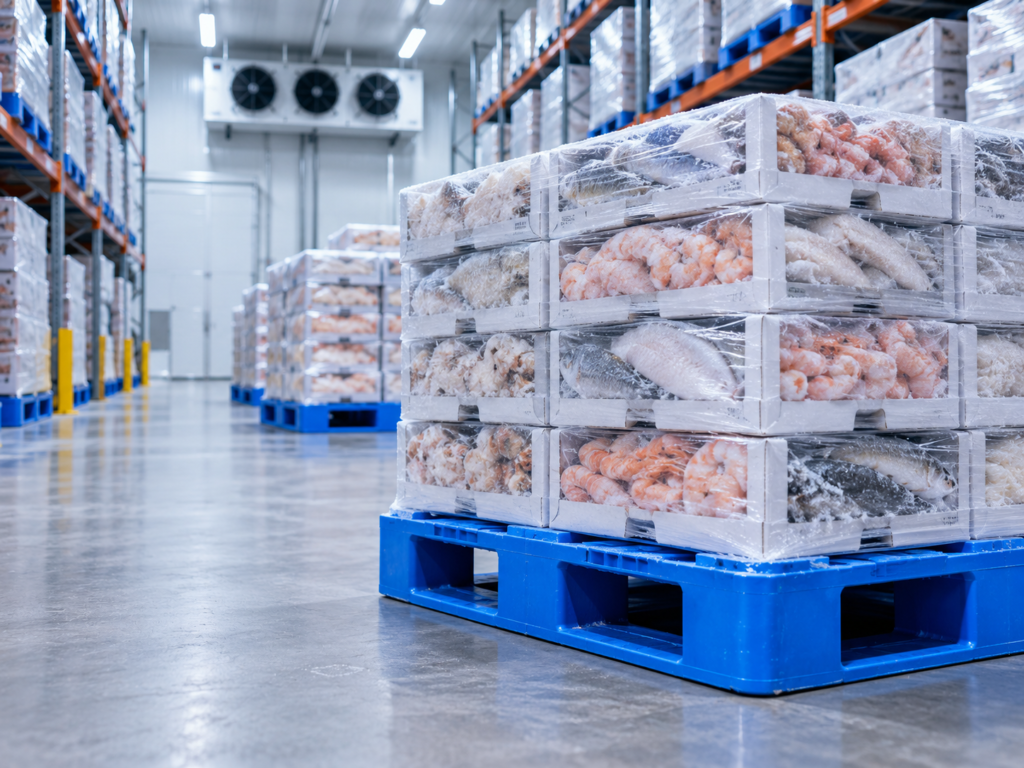
Start pallet size selection with the carton pattern. In nominal geometry, a 400 × 200 mm carton gives 15 cartons per layer on a 1200 × 1000 mm pallet in a 3 × 5 layout. The same carton gives 12 per layer on a 1200 × 800 mm pallet in a 3 × 4 layout. Use the filled-carton dimensions and leave the placement clearance required by your packing line.
| Pallet Footprint | Best Starting Network |
|---|---|
| 1200 × 1000 mm | Industrial frozen food, seafood and international logistics |
| 1200 × 800 mm | Euro-format distribution and equipment designed around EUR dimensions |
| 1219.2 × 1016 mm / 48 × 40 in | North American grocery, foodservice and warehouse networks |
| 1100 × 1100 mm | Square load patterns and Asian logistics networks |
Do not treat 48 × 40 in and 1200 × 1000 mm as the same footprint. The inch-based pallet is 19.2 mm longer and 16 mm wider. That difference affects conveyor guides, rack clearances, centering devices and automatic pallet dispensers.
If your route uses a hand pallet jack, match fork-opening height and width to the tines, then check where the load wheels enter, roll and exit. Blocks and transverse runners must stay outside that wheel path.
For conveyors, shuttles or AS/RS, match runner centers, transfer gaps, underside openings and loaded height. A pallet that works perfectly on forklift tines still fails in automation when it rocks between rollers or bows into a sensor window.
6. Fix The Five Problems That Damage Freezer Pallets
Most freezer-pallet damage has a visible operating cause. Fix the material, support or handling interface instead of replacing the pallet with another general warehouse model.
| Problem In The Freezer | Cause | Direct Solution |
|---|---|---|
| Corners or fork openings crack | A cold pallet receives a fork impact at a thin or unsupported area | Use a low-temperature formulation with reinforced entry zones; make the forks enter squarely to the intended depth before lifting. |
| Pallet sags between rack beams | The base, orientation or rack rating does not match the open span | Use a rack-rated base and place reinforcement across the unsupported direction. |
| Cartons or bags slide | Frost covers the deck texture and smooth packaging provides little friction | Dry the deck, keep the load inside the footprint and add stretch film, straps or corner boards. |
| Pallet stops on a flow rack or conveyor | Runner gaps, loaded bow or ice buildup interrupt continuous contact | Use flat contact surfaces at the correct centers and remove ice before entering the lane. |
| Water freezes inside the pallet | Wash water remains in cavities, plugs, damaged joints or blocked drainage points | Drain and dry the pallet in the wash area before it returns below 0°C. Treat wash temperature, pressure and chemicals separately from freezer temperature. |
Good fork handling and prompt removal of damaged pallets reduce preventable damage. Never strike ice from a cold pallet with a metal tool; concentrated impact damages corners, ribs and welded joints. Remove ice through the site’s defrost and sanitation process.
7. Start From These Three Frozen-Operation Setups
These worked setups turn temperature, load and support into a usable starting specification.
| Operating Setup | Starting Specification |
|---|---|
| Frozen seafood cartons at −25°C; 875 kg payload; selective rack | 1200 × 1000 mm low-temperature HDPE pallet, closed deck, four-way entry and rackable runner base. Start at the 1,000 kg dynamic and 1,000 kg rack tier for the actual beam span. |
| Ice-cream cartons at −18°C; 700 kg payload; AS/RS | Closed-deck low-temperature pallet approved for the integrator’s underside and support geometry, with capacity of at least 700 kg under that support condition. Use a fixed label or RFID position only when the system reads it. |
| Bagged ice at −20°C; 60 × 20 kg bags; forklift and floor storage | The ice weighs 1,200 kg. If film, straps and corner boards add 20 kg, select a dynamic rating of at least 1,220 kg; a 1,500 kg-class low-temperature pallet gives a practical next tier. Use a closed or fine-grid deck, perimeter or double-sided base, wrap and straps. |
The decision sequence is now clear: use the coldest handling temperature, calculate maximum payload, map the support, choose the deck or box around the product, and fit the handling equipment. That is the specification—not the words “freezer safe” on their own.
Frequently Asked Questions
Does A Plastic Pallet Carry More Weight In A Freezer?
No. Cold increases stiffness and reduces impact toughness in some formulations, but neither effect raises the published capacity. Keep the stated dynamic and rack ratings unchanged.
What Does “Ice Pallet” Mean?
In purchasing and logistics, “ice pallet” means one palletized quantity of bagged ice, not a pallet engineering category. Calculate the total weight of ice, packaging and restraint, then choose a freezer pallet with full bag support and the correct dynamic or rack rating.
Is A Cold Shelf The Same As Cold Storage Pallet Racking?
No. A cold shelf describes refrigerated display equipment or hand-loaded shelving. Palletized unit loads require a cold storage racking system built around beams, rails, flow lanes or automated supports.
Choose A Cold Storage Pallet For Your Actual Route
Preface Plast supplies cold storage plastic pallets, rackable pallets, hygienic pallets and pallet boxes in standard and project-specific configurations. Selected cold-chain options publish service minima down to −40°C, while rackable designs cover beam, rail, conveyor and automated-storage applications.
Compare cold-storage pallets and pallet boxes for frozen industries or browse the full plastic pallet range. Send your lowest handling temperature, product and packaging, maximum payload, required size, rack or conveyor arrangement, quantity and destination. Preface Plast will match the closest standard configuration, explain the recommended deck and base, and prepare a model-specific quotation.