Choosing a pallet rack is only half of the decision. The plastic pallet must also match the exact support surfaces, unsupported span, unit load, storage time, temperature and handling equipment. A pallet that works on the floor can still deflect on beams, jam on rollers or miss a shuttle lifting point.
This guide compares 10 types of pallet racking, explains how pallet rack beams and rails support plastic pallets, and shows how to specify and test Rackable, AS/RS and food-grade pallet options before requesting a quotation.
What Is Pallet Racking And Why Does Plastic Pallet Support Matter?
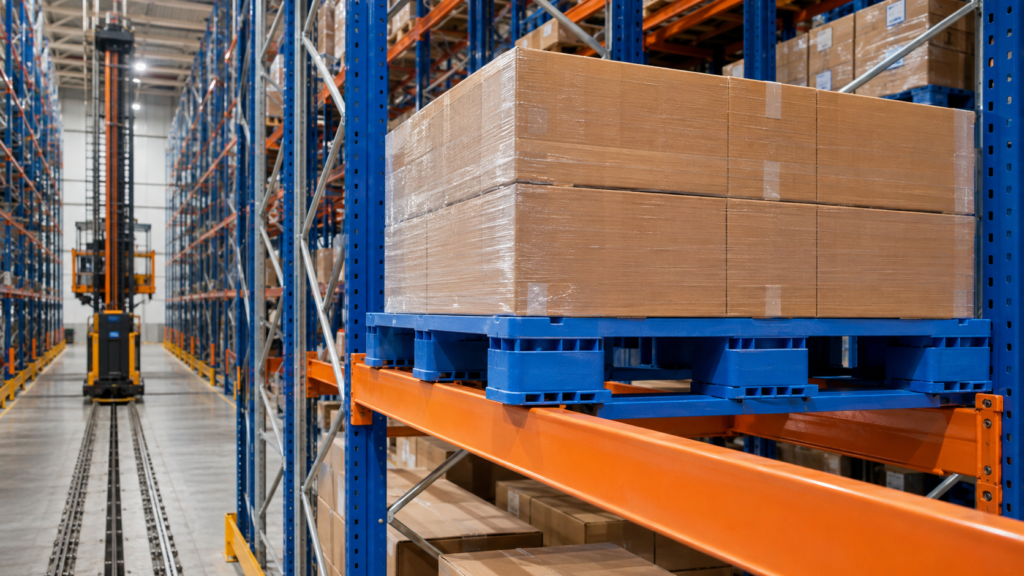
Pallet racking is an engineered storage structure that holds palletized unit loads at multiple levels. In a conventional pallet storage rack, horizontal beams connect upright frames, and the pallet bridges the open space between supports. High-density and automated systems may support the pallet on side rails, carts, rollers, or shuttle interfaces instead.
That support condition changes the pallet requirement. Static load describes a pallet on a flat, rigid floor; dynamic load describes lifting and transport; racking load describes a pallet spanning defined supports. A high static rating therefore does not prove that a plastic pallet is suitable for elevated rack storage.
Which 10 Types Of Pallet Racking Fit Plastic Pallets?
The right system depends on SKU count, inventory rotation, throughput, and available space, but the plastic pallet decision depends on one more question: where does the rack or machine actually touch the pallet? The table below compares ten common configurations from that interface-first perspective.
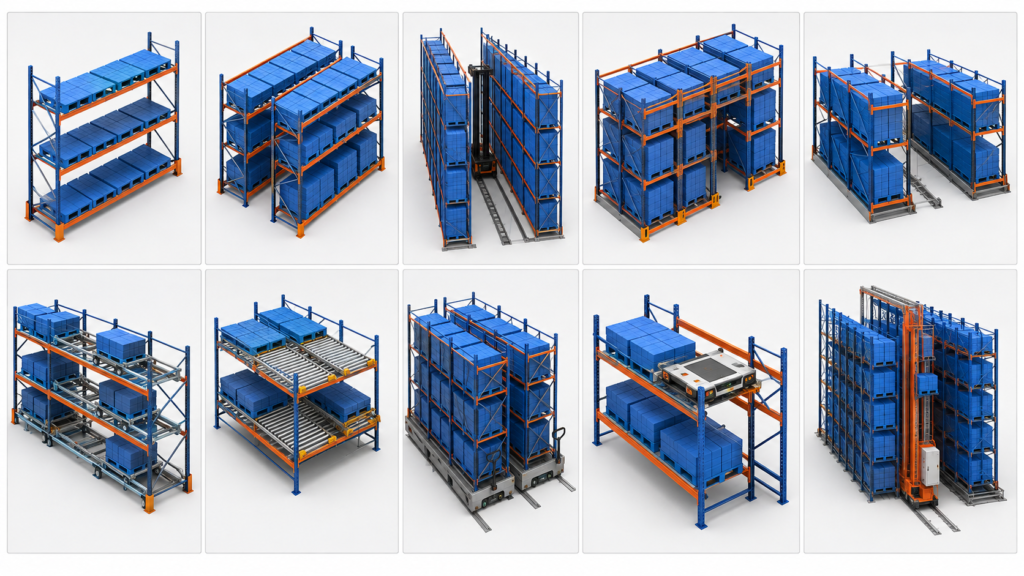
| Racking System | Inventory And Access | How The Pallet Is Supported | Plastic Pallet Approval Focus |
|---|---|---|---|
| 1. Selective single-deep racking | Direct access to every pallet; strong fit for many SKUs | Usually front and rear pallet rack beams, sometimes with approved crossbars or decking | Beam span, pallet overhang, runner direction, deflection and forklift clearance |
| 2. Double-deep racking | Two pallets deep; the front load must move before the rear load | Beam support similar to selective rack, with deeper handling by telescopic equipment | All selective-rack checks plus rear-position accuracy and loaded fork-entry stability |
| 3. Very narrow aisle racking | Direct access with less aisle space and specialized guided trucks | Front and rear beams in a tightly controlled operating envelope | Dimensional tolerance, pallet orientation, overhang and precise fork-entry clearance |
| 4. Drive-in racking | High density for many pallets of one SKU; normally LIFO | Side rails support defined pallet edges or bottom members along the lane | Rail-bearing zones, entry direction, load stability and forklift-impact exposure |
| 5. Drive-through racking | High-density lanes with separate loading and unloading sides; commonly FIFO | Side rails support the pallet through the lane | Consistent support on both directions, rotation control and two-sided handling clearance |
| 6. Push-back racking | Several pallets deep; normally LIFO | Pallets rest on inclined carts or rollers and move when another load is inserted or removed | Bottom-deck contact, runner orientation, cart or roller transitions, braking and skew resistance |
| 7. Pallet flow racking | Gravity movement from loading to retrieval side; FIFO | Rollers support and move the pallet along an inclined lane | Runner continuity, roller pitch, friction, bottom damage and load stability during travel |
| 8. Mobile pallet racking | Racks move to open one working aisle; high density with direct access | Commonly the same beam interface as selective racking | Rack-load validation plus low-temperature behavior where mobile racks serve cold stores |
| 9. Shuttle pallet racking | Semi- or fully automated high-density channel storage; FIFO or LIFO by layout | Channel rails carry the pallet while shuttle pads lift it from below | Bottom openings, rail seats, lifting points, sag clearance, centering and repeatability |
| 10. Stacker-crane AS/RS racking | Automated single-, double- or multi-deep storage | Beams or rails, combined with conveyors and telescopic forks or shuttle transfer | Dimensional consistency, runner geometry, flatness, sensor surfaces, long-term deflection and batch control |
Selective racks provide direct pallet access, while drive-in, push-back, pallet flow and shuttle systems exchange some selectivity for storage density. Mecalux describes these high-density systems as separate operating concepts, each with its own load path and inventory logic. This is why a quotation that says only “for warehouse racking” is incomplete.
How Do Pallet Rack Beams Support A Plastic Pallet?
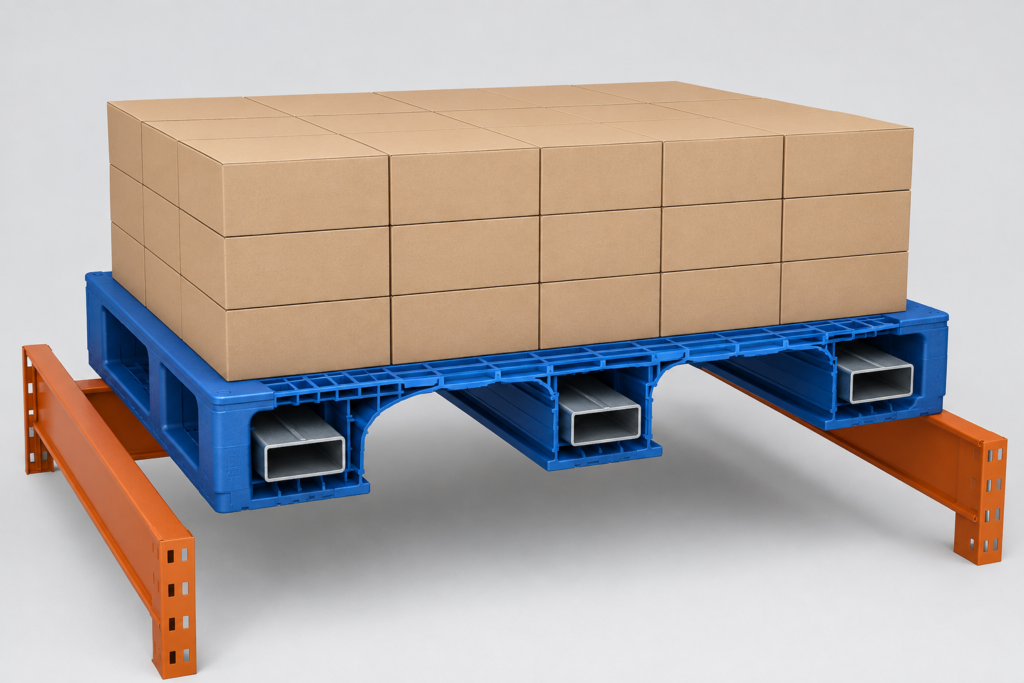
For conventional beam racking, the front and rear beams carry the unit load through the pallet’s bottom structure. The clear distance between those supports is the unsupported span. As the span, load duration or temperature increases, a thermoplastic pallet may continue to deflect, so rack capacity must be tied to the exact beam layout rather than quoted as one universal number.
Support accessories can change the load path, but their presence should never be assumed. Interlake Mecalux identifies crossbars as components placed between beams to assist pallet-load support. Wire decking, crossbars and safety bars have different designs and ratings; an accessory intended to reduce fall-through risk is not automatically a structural center support for the pallet.
| Support Interface | What To Put On The RFQ | Why It Changes The Pallet Decision |
|---|---|---|
| Front and rear beams | Clear span, beam width, support direction and permitted overhang | Determines bending direction and unsupported distance |
| Side rails in drive-in or drive-through lanes | Rail spacing, bearing width, lane clearance and entry orientation | Requires strong, repeatable bearing zones along the pallet edges or base |
| Push-back carts or rollers | Contact drawing, slope, pallet orientation and transition gaps | Bottom geometry must move without catching, twisting or uncontrolled acceleration |
| Pallet-flow rollers | Roller diameter, pitch, lane width, brake rollers and stops | Runner spacing and continuity determine travel stability |
| Shuttle rails and lifting pads | Rail profile, rail centers, pad size, lift stroke and required underside clearance | A pallet may fit the lane yet still interfere with the shuttle or lose retrieval clearance under load |
| AS/RS conveyors and forks | Roller pitch, chain centers, transfer gaps, fork geometry and sensor positions | Repeatable contact and dimensions are as important as nominal load capacity |
When the support drawing is unavailable, request it before pallet approval. Adding a center bar later may appear to solve deflection, but it also changes fork clearance, cleaning access and the rack’s engineered configuration.
How Do You Choose A Rackable Plastic Pallet?
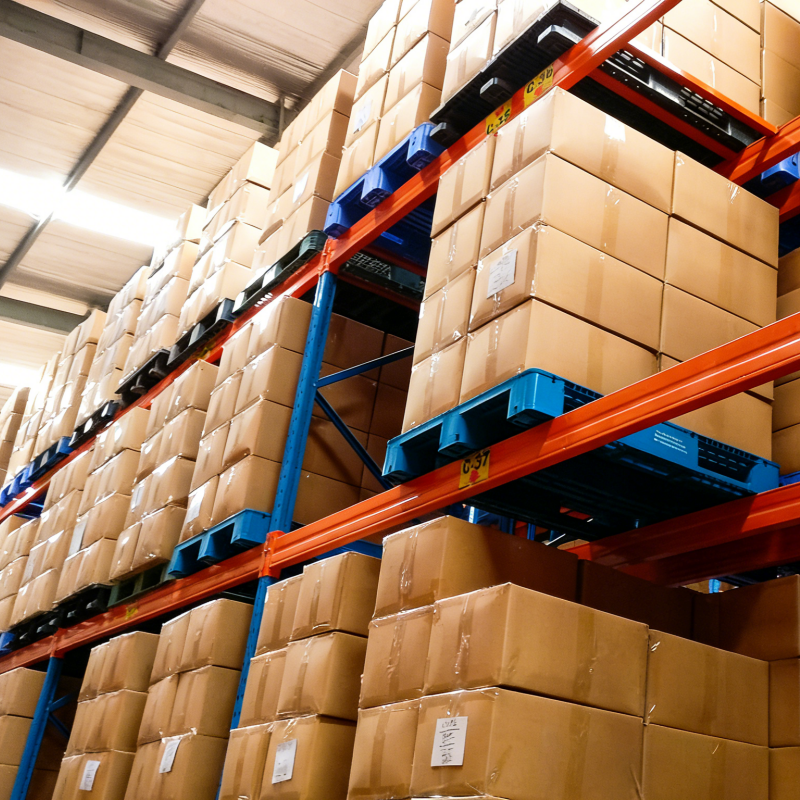
Choose the pallet from the complete unit-load and equipment route, not from footprint or maximum load alone. A practical evaluation uses the following seven inputs.
- Footprint and orientation. Confirm pallet length, width, height, entry direction and loaded overhang. A 1200 x 1000 mm pallet can be racked across either axis, but the two orientations do not create the same span or load path.
- Actual unit load. State the maximum gross load, packaging pattern, center of gravity and any drum feet, bag corners, crate legs or other concentrated contact points. A uniformly distributed test load may not represent the application.
- Rack support. Provide beam or rail spacing, bearing width, support direction, overhang, storage level and allowable loaded deflection. For flow, push-back and shuttle systems, include the moving contact surfaces.
- Time and temperature. State normal and worst-case storage duration, ambient range, freezer temperature, wash temperature and heat sources. Plastic stiffness and impact behavior change with material and temperature, while sustained loading can create time-dependent deflection.
- Deck, base and reinforcement. Three-runner, full-perimeter, double-sided and reinforced designs create different support paths. Steel tubes can increase stiffness, but their number and location must match the bending direction.
- Handling interfaces. Check reach-truck forks, pallet jacks, conveyors, palletizers, stretch wrappers, stacker cranes, AGVs and shuttle lifting points. Four-way forklift entry does not automatically mean four-way pallet-jack or shuttle compatibility.
- Hygiene and documentation. A rackable food or pharmaceutical pallet must satisfy both structural and hygiene requirements. Smooth surfaces, controlled resin, cleaning limits, traceability and application-specific documents must be approved together.
A useful starting point is a purpose-designed rackable plastic pallet, followed by application testing. If the route also includes conveyors, stacker cranes, AGVs or shuttle vehicles, use the tighter AS/RS plastic pallet interface requirements from the beginning.
What Pallet Racking Safety Checks Prevent The Most Expensive Failures?
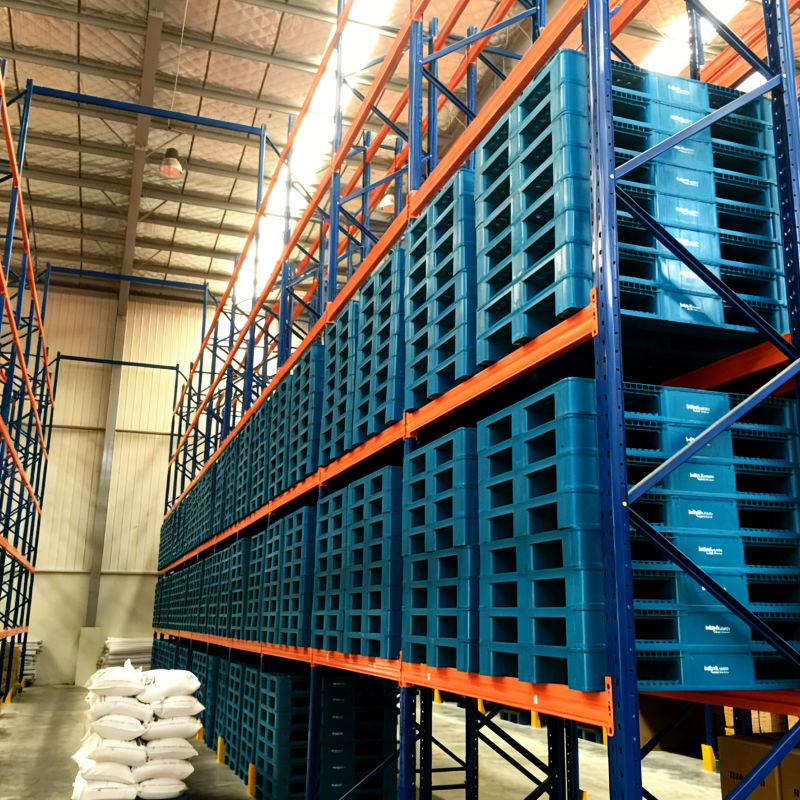
Pallet racking safety depends on the rack, pallet and unit load remaining compatible as one system. A safe rack rating cannot compensate for a damaged or unsupported pallet, and a tested pallet cannot compensate for bent beams, missing locks, incorrect clearances or an overloaded bay.
Before a pallet enters service, compare its rack-load condition with the warehouse drawing and load notice. SafeWork NSW distinguishes the maximum unit load from the total rated capacity of each bay and recommends making both limits visible. The gross unit load includes the product, pallet and all packaging or restraint materials.
During use, inspect the interface rather than looking only for a collapsed part. WorkSafe Victoria recommends checking unit-load size, shape, weight, stability and clearance, as well as beam damage, permanent set, connectors, safety clips, braces and floor fixings. OSHA’s warehousing guidance also calls for rack inspection, capacity control and isolation of damaged areas.
Remove a plastic pallet from rack service when inspection finds a cracked or split runner, permanent distortion, a crushed bearing zone, exposed or displaced reinforcement, severe gouging, missing welded components, an unstable load or deflection that interferes with retrieval clearance. The disposition should follow the approved pallet and rack procedure rather than an improvised on-floor repair.
How Should Rackable And AS/RS Plastic Pallets Be Tested?
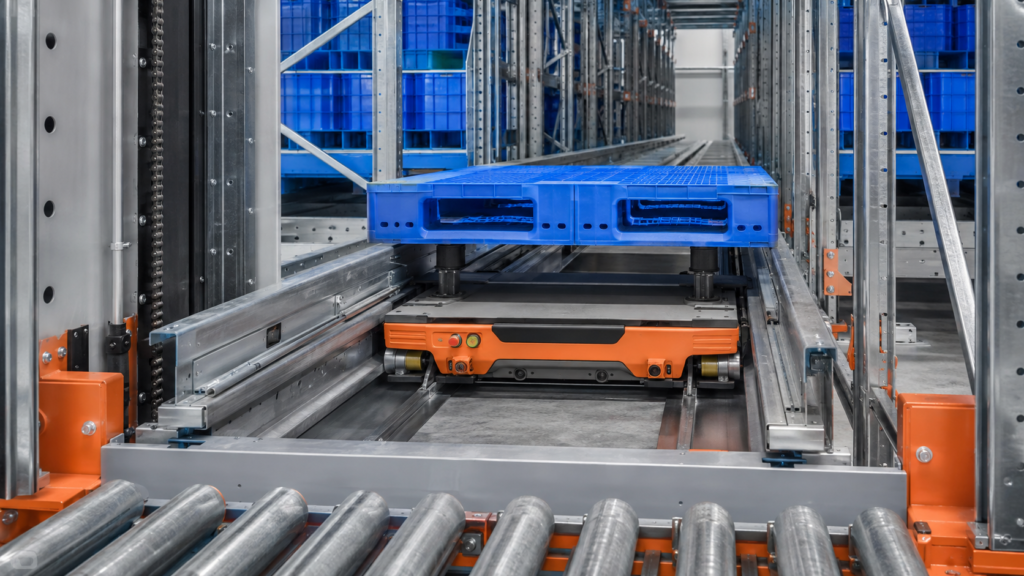
Testing is credible only when the sample, supports, load, temperature and acceptance criteria match the quoted production pallet. ISO 8611-1:2025 provides test methods for new flat pallets, and ISO 8611-2:2025 covers performance requirements and test selection. ISO also notes that load testing does not replace field trials on a specific pallet design.
A procurement-ready validation plan should cover these stages:
- Freeze the application inputs. Record the unit load, load pattern, support drawing, storage duration, operating temperature and equipment route before selecting the test.
- Freeze the sample configuration. Identify the mold, resin route, color, pallet weight, welded or assembled parts, anti-slip components and steel-tube layout. The production order must match the approved sample.
- Check dimensions and flatness. Measure the footprint, height, fork openings, runners, support seats and relevant diagonals. AS/RS projects should also define the surfaces used by sensors, guides and centering devices.
- Test the real rack support. Reproduce beam or rail centers, bearing widths, pallet orientation and overhang. Record initial deflection, deflection under load, recovery and any damage instead of reporting only “pass.”
- Add time and temperature. Hold the maximum service load for the intended duration at relevant ambient, hot or cold conditions. This exposes creep and loss of clearance that a short room-temperature test may miss.
- Challenge the load pattern. Repeat critical checks with concentrated or eccentric loading when drums, bags, rigid crates or uneven product layers do not behave like a uniform test mass.
- Run handling and interface trials. Include fork entry, turning, conveyor starts and stops, transfer gaps, pallet stops, shuttle lifting and retrieval, plus representative impacts from normal operations.
- Validate hygiene where required. Confirm cleaning chemistry, temperature, pressure, drainage and drying. Inspect for retained soil, distortion, damaged plugs, opened welds or exposed steel after repeated wash cycles.
- Pilot in the actual warehouse. Use production-intent pallets through the complete loaded cycle before volume release. Track jams, skew, deflection, product damage and operator interventions.
- Control mass production. Agree on dimensional, weight and assembly tolerances, inspection frequency, lot identification and change notification. Batch consistency is a performance requirement in automation, not only a quality-document field.
A report that omits beam span, temperature, load distribution or test duration cannot establish suitability for a different warehouse. Ask for the full condition behind every rack-load figure.
What Do Rackable AS/RS And Food-Grade Pallet Cases Prove?
These three projects show why the application data changes the pallet configuration. Customer identities are kept confidential here; the quantities and configurations come from completed project records.
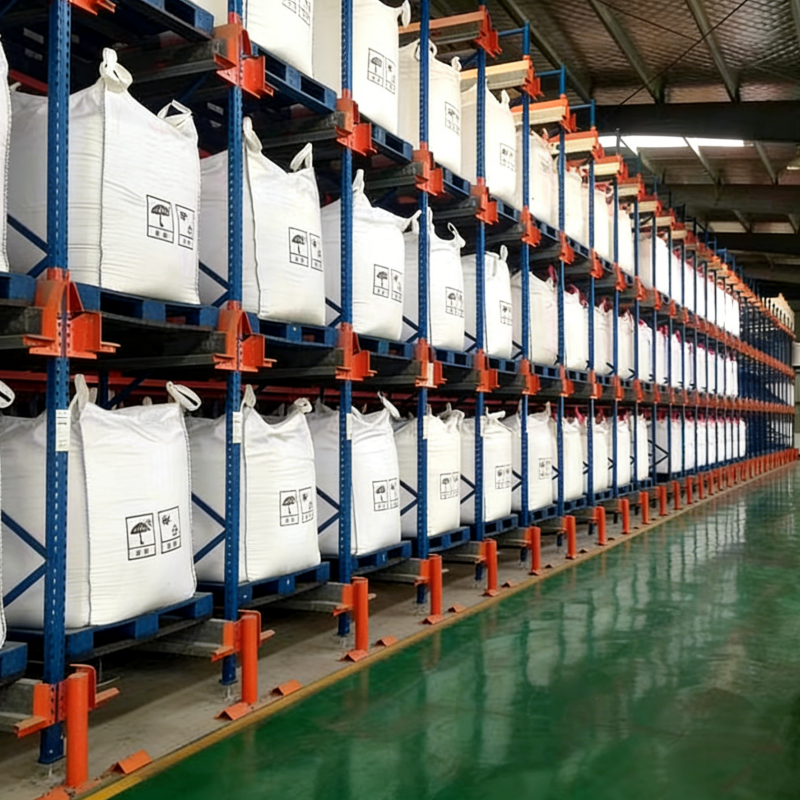
Rackable Brewery Project With Eight Steel Tubes
An East African brewery project used more than 20,000 units of 1200 x 1000 mm welded, double-sided grid pallets with eight steel tubes. The decision was not simply “heavy-duty plastic.” A dense beverage load, repeated handling and elevated storage required stiffness to be distributed through a reversible base and a defined reinforcement layout.
The procurement lesson is to specify the location and direction of every tube, then test the finished pallet on the actual rack supports. “Eight tubes” is not a transferable performance rating when another mold, beam span or pallet orientation changes the load path.
AS/RS Aviation Logistics Project With A Three-Runner Base
In an automated aviation-logistics warehouse project, the selected starting configuration was a flat plastic pallet with a three-runner base. The runners had to do more than carry weight: they created the contact path for conveyors and automated storage interfaces.
For an AS/RS pallet, a stable drawing and repeatable production dimensions are essential. Runner centers, fork openings, flatness and loaded deflection must preserve sensor and retrieval clearances on every cycle. This is why a general rackable model still needs an automation-specific interface review.
Food-Sector Project With More Than 10,000 Virgin-PE Pallets
A West African food producer specified more than 10,000 pallets made with new PE material. Material control supported the customer’s hygiene and consistency requirements, but virgin PE alone did not make the finished pallet “food grade.” The deck geometry, cleaning method, additives, colorant, traceability and required market documents still had to match the intended use.
For possible direct food contact, regulatory evidence must cover the exact material and conditions of use. The FDA explains that food-contact authorization is linked to intended use, while the European Commission describes material, GMP and documentation requirements for food-contact articles. A hygienic plastic pallet should therefore be approved as a structural, cleaning and documentation package.
What Information Should A Pallet RFQ Include?
A useful RFQ lets engineering compare existing molds, reinforcement options and custom work against the same application. Send the following information instead of requesting “a 1200 x 1000 heavy-duty pallet”:
- Pallet footprint, height, entry direction and dimensional tolerances.
- Product, packaging pattern, maximum gross unit load and center of gravity.
- Uniform, concentrated, eccentric, liquid or shifting load conditions.
- Type of pallet racking and inventory method, including FIFO or LIFO.
- Beam, rail, cart, roller or shuttle support drawing and required pallet orientation.
- Clear span, bearing width, overhang, storage duration and allowable deflection.
- Forklift, reach truck, pallet jack, conveyor, palletizer, AGV and AS/RS dimensions.
- Minimum and maximum operating, washing and storage temperatures.
- Resin, recycled-content, color, anti-slip, steel, RFID, barcode and logo requirements.
- Hygiene zone, cleaning method and any direct food-contact condition.
- Required test reports, declarations, traceability records and change-control terms.
- Order quantity, annual demand, destination, delivery schedule and target budget.
The core request can be copied into an inquiry:
Please recommend a plastic pallet for [racking system] using the attached support and equipment drawings. The maximum gross unit load is [kg] with [load pattern], stored for [duration] at [temperature]. Please state the pallet configuration, material, weight, reinforcement, rack-load test condition, measured deflection, production tolerances, sample plan, price and lead time.
When comparing quotations, make sure every proposal answers the same support condition. A lower price based on floor-load data is not an alternative to a rack-tested configuration.
Frequently Asked Questions
Can Any Plastic Pallet Be Used On Pallet Rack Beams?
No. The exact pallet needs racking evidence for the beam span, orientation, load distribution, temperature and storage time; a static load rating on a flat floor is not enough.
Does Wire Decking Make A Non-Rackable Pallet Safe?
Only if the decking and pallet have been evaluated together for the full load path. Wire mesh may reduce fall-through risk, but its structural capacity, support direction and contact with the pallet still need confirmation.
Is Shuttle Pallet Racking The Same As AS/RS?
Not always. Shuttle pallet racking can be semi-automated with a forklift placing the shuttle and pallets at the lane entrance, while a fully automated version can integrate lifts, transfer cars, conveyors and warehouse controls.
Is A Three-Runner Plastic Pallet Automatically Rackable?
No. Three runners may improve support and conveyor contact, but rackability still depends on runner orientation, unsupported span, reinforcement, load, temperature and deflection criteria.
Which Plastic Is Better For Cold-Storage Racking?
HDPE is commonly evaluated where low-temperature impact is important, while PP may offer useful stiffness in other conditions. Approve the exact formulation with the loaded pallet at the lowest service temperature instead of selecting by polymer name alone.
How Much Deflection Is Acceptable For An AS/RS Pallet?
Use the smaller of the structural limit and the clearance allowed by the equipment interface. Even deflection that does not break the pallet can cause a fork, sensor, transfer or shuttle fault.
Choose The Pallet And Rack Interface As One System
The right choice among the different types of pallet racking is the one that fits the SKU strategy and gives the pallet a defined, testable support path. Rackable, AS/RS and food-industry pallets should be approved from the same evidence set: unit load, rack or machine drawing, material, reinforcement, temperature, measured deflection, field trial and production controls.
Preface Plast manufactures rackable, hygienic, heavy-duty and automation-ready plastic pallets with standard and OEM/ODM options. Share your unit-load data, pallet rack beam or rail drawing, handling equipment, temperature, hygiene documents, quantity and budget. Our team can compare available molds, recommend reinforcement and build a sample-test plan that reduces commissioning risk and supports stable long-term supply.