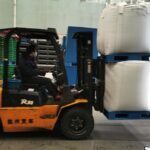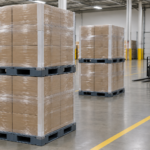
Choosing the wrong plastic pallet material can directly affect load safety, hygiene requirements, and handling cost. For example, putting a lightweight recycled export pallet into frequent rack storage or automated handling can lead to deflection, transfer jams, or unstable unit loads. At the other extreme, using virgin-resin hygienic pallets for one-way export can add purchase cost your route does not need.
This guide explains the practical difference between virgin plastic pallets and recycled plastic pallets, then shows which option fits export shipping, general warehousing, food and pharmaceutical operations, pallet racking, and automated storage.
What Is the Real Difference Between Virgin and Recycled Plastic Pallets?
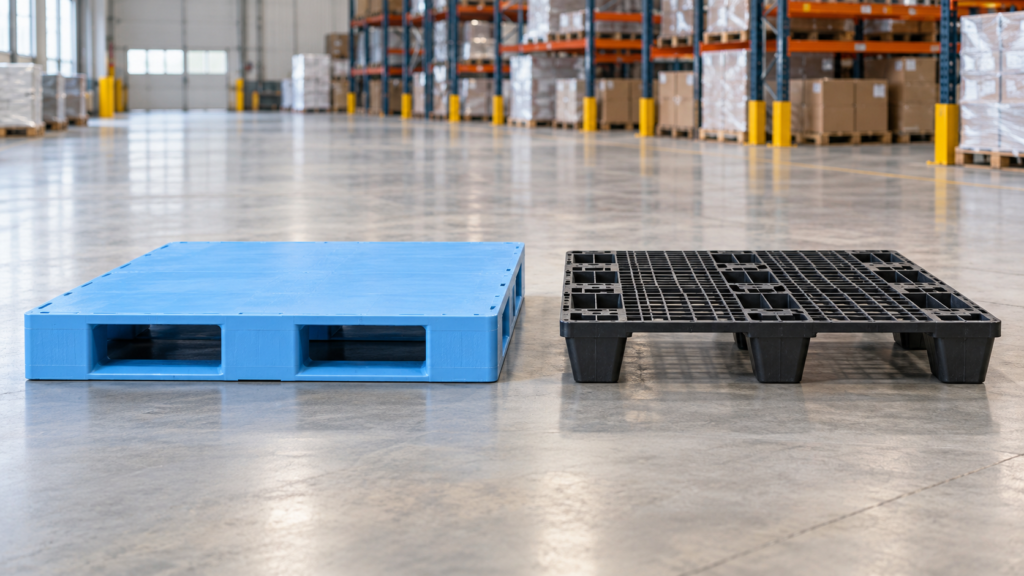
Virgin plastic pallets are made from new HDPE or PP resin that has not previously been used in a finished product. Recycled plastic pallets are made from recovered plastic that has been processed into resin again. This can include post-industrial recycled material from manufacturing scrap and post-consumer recycled material from collected plastic products.
The main difference is not simply that one material is “stronger.” It is about material source, batch consistency, colour and odour control, purchase cost, and the logistics route you need the pallet to serve.
| Comparison Point | Virgin Resin Plastic Pallets | Recycled Plastic Pallets |
|---|---|---|
| Material source | New HDPE or PP resin | Reprocessed industrial or post-consumer plastic |
| Colour and odour | Easier to keep consistent | Often used for black or dark industrial pallets |
| Batch consistency | More controlled within the same resin grade | Influenced by feedstock source, sorting, and reprocessing |
| Typical purchase cost | Usually higher | Usually more economical |
| Common applications | Food, pharmaceutical, clean areas, high-frequency reuse, automation | One-way export, general warehousing, open-loop logistics |
| Sustainability focus | Uses new resin | Keeps recovered plastic in productive use |
The value of virgin resin is consistency. The value of recycled resin is practical, cost-effective performance in the right application.
Why Can’t You Judge Pallet Strength by Material Alone?
A 1200 × 1000 mm plastic pallet can be a lightweight nine-leg export pallet, a reusable three-runner pallet, or a steel-reinforced rackable pallet. Their load performance can be completely different, even when the footprint is the same.
Virgin resin does not automatically turn a lightweight pallet into a rackable plastic pallet. Recycled resin also does not mean a pallet is only suitable for light loads. Deck thickness, rib design, pallet weight, base structure, resin formulation, load distribution, and handling method all affect performance.
If you use beam racking, start with rackable plastic pallets. If your operation includes conveyors, stacker cranes, shuttle systems, or AGVs, begin with AS/RS plastic pallets. ISO 8611-3links maximum working load to known payloads and handling environments, not simply to whether the pallet uses virgin or recycled plastic.
Which Plastic Pallet Material Fits Your Logistics Route?
| Your Application | Better Starting Direction | What Matters Most |
|---|---|---|
| One-way export shipping | Recycled plastic pallet | Lightweight design, nesting, efficient empty-pallet storage |
| General warehouse floor handling | Virgin or recycled plastic pallet | Match the pallet to load weight and forklift handling |
| Open-loop logistics | Recycled resin plastic pallet | Balance unit price with practical handling performance |
| Food, beverage, pharmaceutical, or clean areas | Virgin resin plastic pallet | Closed deck, washable surface, stable colour and odour |
| High-bay or beam racking | Rackable structure first | Runner layout, reinforcement, and rack support |
| Automated warehouse systems | Automation-ready structure first | Dimensional consistency, base interface, deck flatness |
| High-frequency internal reuse | Virgin plastic pallet often fits best | Long-term appearance and batch consistency |
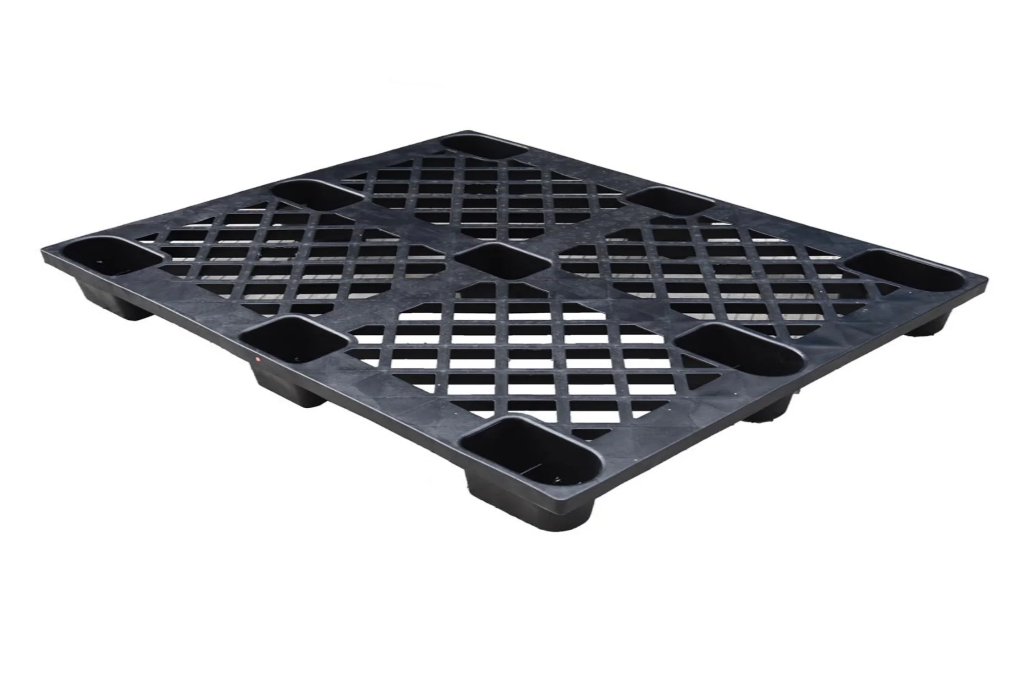
For a one-way shipping lane, one-way export plastic pallets are often the most practical starting point. A lightweight, nestable plastic pallet can reduce empty-pallet storage and return-shipment volume.
“One-way” describes the logistics model, not necessarily a single-use pallet. When the pallet remains in good condition and suits the next application, the consignee can continue using it.
How Should You Choose for Food, Pharmaceutical, Racking, and Automation?
For direct contact with unpackaged food, use a hygienic virgin-resin pallet designed for the intended food-contact use. Recycled resin is not automatically excluded from food-contact applications, but suitability depends on the recycling process and intended use—not on the word “recycled” alone. The U.S. FDA takes the same process-and-use approach to recycled plastic used in food packaging. FDA guidance on recycled plastics for food packaging
If your pallet only carries sealed products, cartons, or outer packaging, direct food contact is not the default requirement. You can choose between virgin and recycled material based on cleaning frequency, colour, odour, load, and budget.
For food, beverage, pharmaceutical, and cleanroom operations, hygienic plastic pallets with smooth closed decks are often the better direction. Virgin resin helps you keep surface appearance, colour, and material characteristics more consistent during repeated handling and washing.
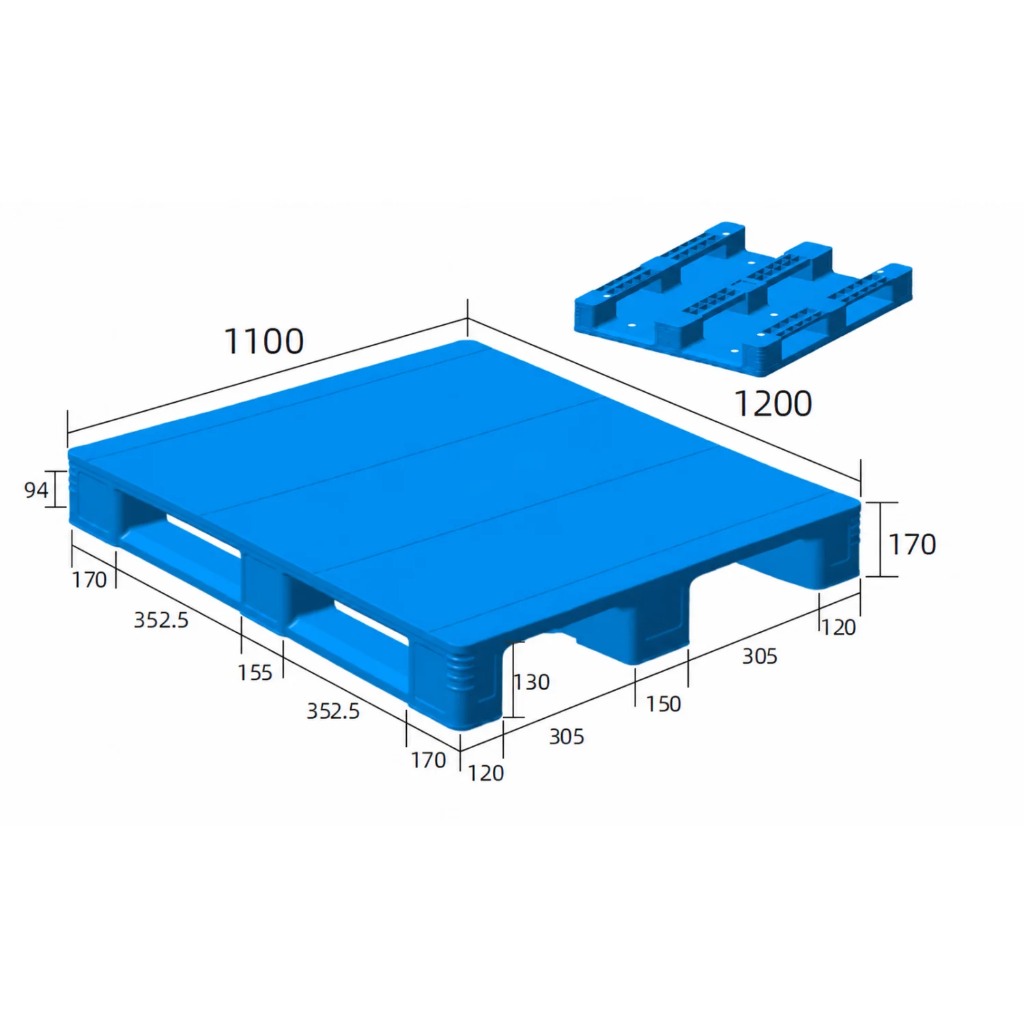
For pallet racking and automated material handling, resin is only one part of the decision. The priority is a pallet base that works with your rack beams, roller conveyors, chain conveyors, forks, shuttle lifting points, and transfer stations. Virgin resin can support batch consistency, but it cannot replace the correct rackable or automation-ready pallet structure.
Which Assumptions Can Lead You to the Wrong Pallet?
“A black pallet is always made from recycled plastic.”
Not necessarily. Colour alone does not prove the resin source or the pallet’s load capacity.
“A virgin plastic pallet is automatically food grade.”
No. White, blue, or virgin-resin plastic does not automatically make a pallet suitable for direct food contact. The intended contact use, cleaning process, and operating environment still matter.
“Recycled plastic pallets are always less durable.”
No. Recycled plastic pallets are widely used for export, general warehousing, and floor handling. With the right structure for the route, they can be a practical and economical solution.
“Virgin resin pallets can automatically go into racking.”
No. Rack performance depends on the pallet base, beam support, span, and unit load. A lightweight nine-leg pallet does not become suitable for beam racking simply because it uses virgin resin.
Choose the Material Around Your Route, Not the Label
Virgin and recycled plastic pallets are not simply “premium” versus “budget.” For export and standard warehousing, a recycled plastic pallet, lightweight export pallet, or nestable pallet can be the sensible choice. For hygiene-sensitive areas and high-frequency reuse, virgin resin and hygienic pallet design are often more suitable. For racking and automation, select the right structure first, then choose the material option that fits the route.
Preface Plast supplies export, nestable, hygienic, rackable, and automated warehouse plastic pallet solutions. Explore the full plastic pallet range to match your pallet material, structure, and logistics application.