
Choosing wrong pallet sizes creates shipping nightmares and wasted container space. Different regions use different standards. The right size saves money and prevents headaches.
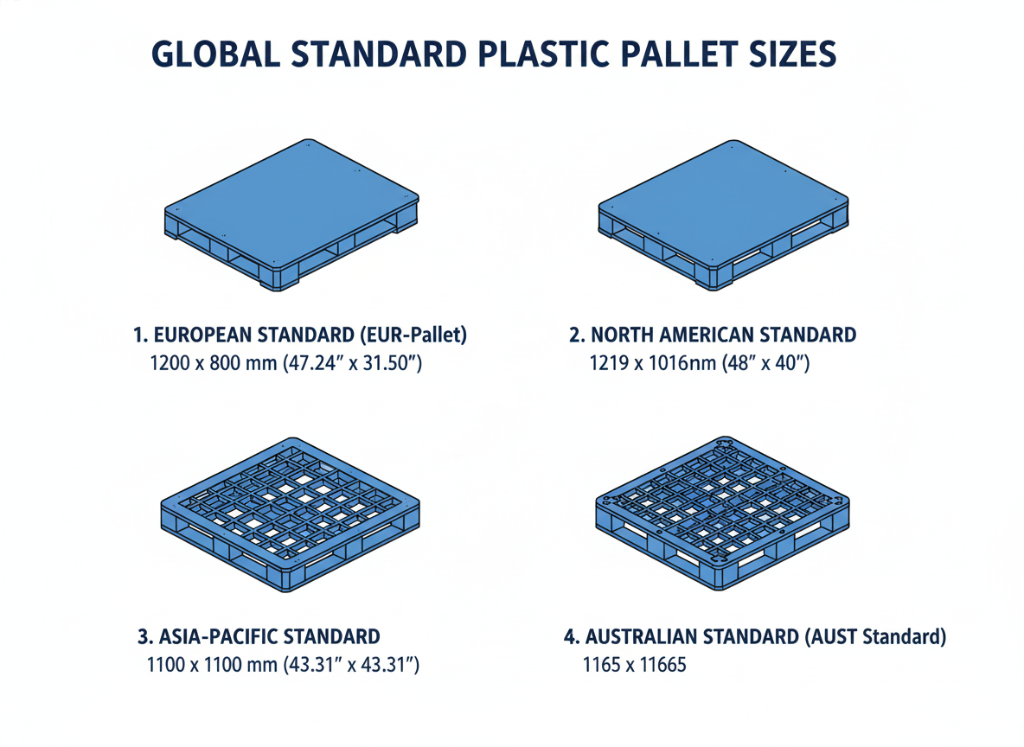
Standard pallet size varies by region: Europe uses 1200×800mm (47.24"×31.50"), North America uses 1200×1000mm (48"×40"), and Asia prefers 1100×1100mm(43.31"×43.31"). Industry requirements and local regulations also influence size selection.
After 20+ years manufacturing plastic pallets, I have learned that standard pallet size decisions are not random numbers. Each region developed their preferred standard pallet size based on specific infrastructure needs. Understanding the correct standard pallet size for your market helps you make better purchasing decisions and avoid costly compatibility mistakes.
What Are Pallet Size Requirements in Europe, America, South America, and Asia?
Regional standard size variations confuse many international buyers. Wrong standard pallet size choices lead to compatibility problems with local forklifts and [racking systems. Each region established their preferred standard pallet size based on infrastructure requirements.
Europe standardizes on [1200×800mm] standard pallet size, North and South America use [1200×1000mm]standard pallet size, Asia prefers [1100×1100mm]standard pallet size, and [Commonwealth countries]use 1165×1165mm standard pallet size for optimal equipment compatibility.
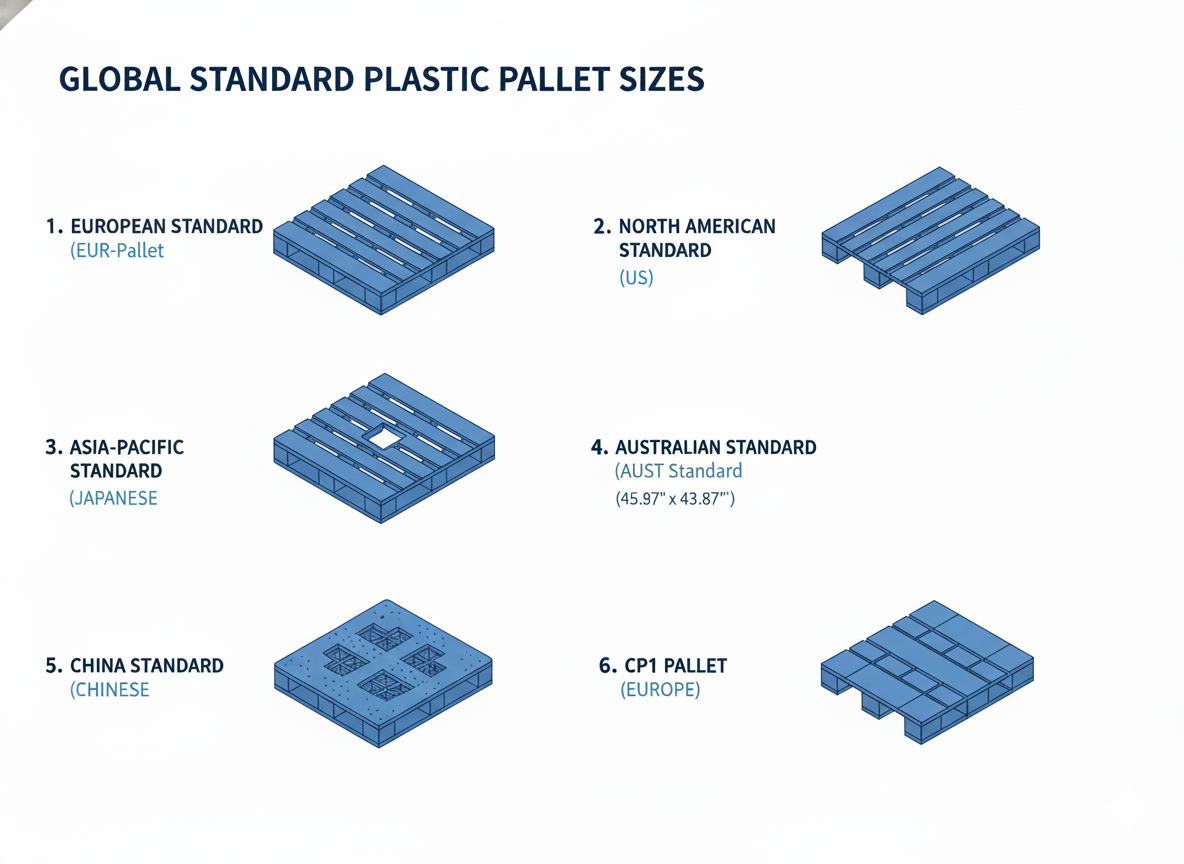
Different countries choose three main pallet size options based on their logistics infrastructure development. Our European clients, including major companies like ABlnBev in the UK, mostly select the [1200×800mm]standard pallet size. This standard pallet size is called the European pallet in our industry. The dimensions translate to approximately 47.24"×31.50" with thickness around 144mm for this standard pallet size.
North America and South America regions mainly use the [1200×1000mm]standard pallet size, which equals 48"×40". This pallet size comes from the Grocery Manufacturers Association guidelines. This pallet size works very well for export shipping because it uses container space more efficiently. The 48×40 standard pallet size fits perfectly into standard shipping containers without wasted space.
Asian regions primarily use the 1100×1100 standard size, commonly called 1111 pallets (43.31"×43.31"). This standard pallet size applies mainly in China and other export-heavy countries. The square standard pallet size works better with domestic [forklift operations] and warehouse layouts compared to rectangular options.
Other countries have different pallet size preferences based on historical development. The UK and Australia use 1165×1165mm as their preferred standard pallet size extensively. This pallet size is popular throughout [Commonwealth countries] due to shared logistics standards and equipment compatibility requirements.
Here are the main regional pallet size specifications:
| Region | Pallet Size (mm) | Pallet Size (inches) | Thickness | Primary Use |
|---|---|---|---|---|
| Europe | 1200×800 | 47.24"×31.50" | 144mm | Warehouse, retail |
| North America | 1200×1000 | 48"×40" | 150mm | Export, grocery |
| South America | 1200×1000 | 48"×40" | 150mm | Export, manufacturing |
| Asia | 1100×1100 | 43.31"×43.31" | 140mm | Domestic, export |
| Commonwealth | 1165×1165 | 45.87"×45.87" | 145mm | Regional trade |
The choice of standard pallet size significantly impacts your [supply chain efficiency]and determines whether your pallets will work seamlessly with local handling equipment and storage systems.
What Pallet Size Requirements Exist for Different Industries?
Industry-specific pallet size requirements create confusion about optimal sizing decisions. Generic standard size options do not work for specialized applications. Each industry developed their preferred standard pallet size based on unique operational and regulatory needs.
Pharmaceutical industries require smaller standard pallet size options for [cleanroom compatibility]. Food and beverage sectors use GMA-standard 48×40 standard pallet size. Automotive industries prefer custom standard pallet size specifications matching assembly line requirements.
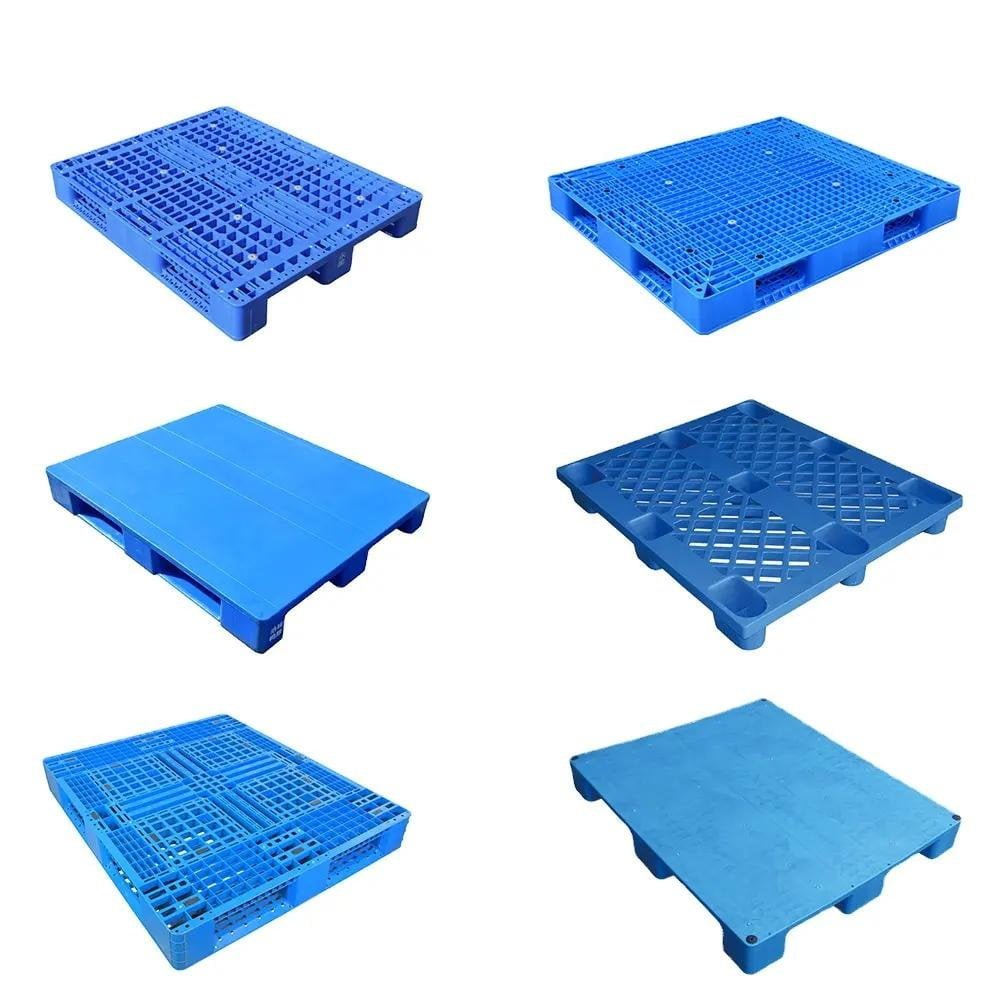
Different industries use different standard pallet size specifications because they must consider several critical factors. Usage scenarios vary widely between industries requiring different standard pallet size approaches. Racking systems and automated storage compatibility requirements influence standard pallet size selection. Transportation equipment compatibility matters when choosing standard pallet size. Local regulations create additional pallet size requirements. Our customers often change their standard pallet size habits based on these industry-specific factors.
The pharmaceutical industry demands strict standard pallet size control and cleanliness standards for regulatory compliance. They typically use smaller standard pallet size options like 1000×800mm for better cleanroom maneuverability. This standard pallet size must meet FDA requirements and maintain consistent dimensions for [automated systems integration]
Food and beverage industries largely follow [GMA standards] with the [1200×1000mm]standard pallet size for consistency. This standard pallet size handles heavy loads and resists moisture damage effectively. This pallet size works well with standard grocery distribution systems and retail receiving equipment nationwide.
Automotive manufacturers often require custom standard pallet size specifications matching their assembly line configurations. They might use 1200×1200mm pallet size for large parts or 800×600mm standard pallet size for smaller components. Precision and durability are critical factors when selecting standard pallet size for automotive applications.
Chemical industries need pallet size options that accommodate pallets resistant to chemical spills and contamination. They often use [1100×1100mm]pallet size with special materials and sealed designs for safety. Safety regulations heavily influence their standard pallet size choices and material specifications.
Industry-specific plastic pallet size requirements include:
| Industry | Preferred Standard Pallet Size | Special Requirements | Key Considerations |
|---|---|---|---|
| Pharmaceutical | 1000×800mm | FDA compliance, [cleanroom compatibility] | Precision, cleanliness |
| Food & Beverage | [1200×1000mm] | HACCP standards, [moisture resistance] | Safety, durability |
| Automotive | Custom pallet size | High load capacity, precision fit | Automation, reliability |
| Chemical | [1100×1100mm] | Chemical resistance, containment | Safety, compliance |
| Retail | [1200×800mm] | Display compatibility, standardization | Efficiency, cost |
Understanding your industry's preferred standard pallet size helps ensure compatibility with existing infrastructure and regulatory compliance requirements.
How Does Platic Pallet Size Affect Container Loading Quantities?
Container space utilization depends heavily on your chosen standard size configuration. Wrong standard size selections waste expensive shipping space and increase logistics costs. Proper standard pallet size selection dramatically improves [loading efficiency] and reduces transportation expenses.
[1200×1000mm] standard pallet size fits 20-21 units per [40ft container], [1200×800mm] pallet size fits 25-26 units, and [1100×1100mm]standard pallet size fits 20-22 units depending on height and [weight restrictions].
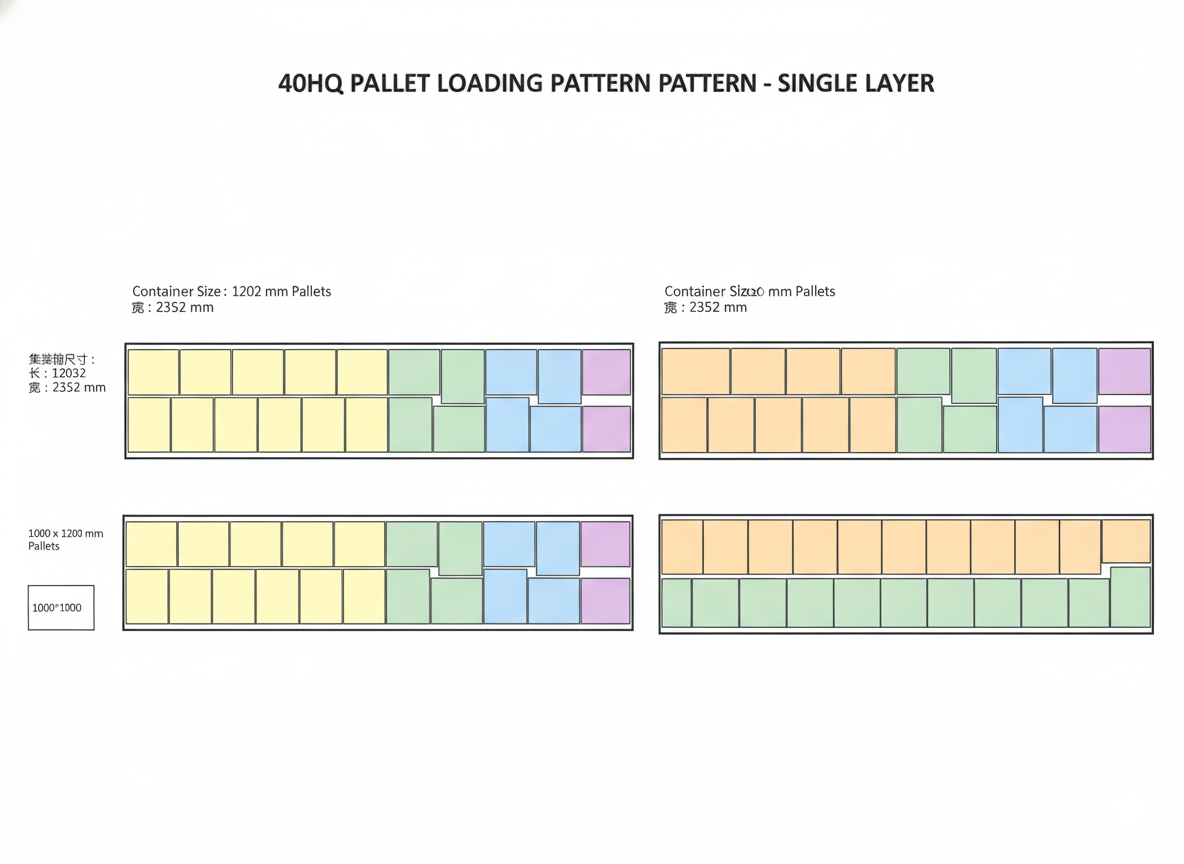
Container [loading efficiency]directly correlates with your standard pallet size selection and impacts shipping profitability. Standard shipping containers have fixed internal dimensions that interact differently with each standard pallet size option. Understanding how pallet size affects container utilization helps you choose the most cost-effective option for your specific shipping requirements.
A standard 40-foot high cube container measures approximately 12.03m × 2.35m × 2.70m internally. The [1200×1000mm] standard pallet size is specifically designed to maximize this available space efficiently. You can fit 20-21 pallets of this pallet size lengthwise in a [40ft container], depending on exact measurements and loading methods.
The European [1200×800mm] standard pallet size allows for better space utilization in certain loading configurations. You can fit 25-26 pallets of this pallet size in a [40ft container] by using optimized loading patterns. However, this narrower pallet size might not work well with all product types and packaging configurations.
Asian [1100×1100mm] standard pallet size presents unique loading challenges due to its square configuration. This pallet size limits loading flexibility but can accommodate 20-22 pallets depending on arrangement strategy. Height becomes more critical with this square standard pallet size because you cannot rotate them for better dimensional fit.
Loading efficiency also depends on product characteristics beyond standard pallet size considerations. Heavy products might reach weight limits before space limits regardless of pallet size. Lightweight, bulky products fill space before reaching weight capacity with any pallet size. Your product density determines which standard pallet size provides the best shipping value.
Container loading comparison by standard pallet size:
| Standard Pallet Size | Container Type | Quantity | Space Efficiency | Best For |
|---|---|---|---|---|
| [1200×1000mm] | 20ft | 9-10 | 95% | Heavy products |
| [1200×1000mm] | 40ft | 20-21 | 95% | Standard export |
| [1200×800mm] | 20ft | 11-12 | 90% | Light products |
| [1200×800mm] | 40ft | 25-26 | 92% | European markets |
| [1100×1100mm] | 20ft | 9-10 | 88% | Square products |
| [1100×1100mm] | 40ft | 20-22 | 90% | Asian markets |
Optimizing your platic pallet size choice for container loading can significantly reduce shipping costs while maximizing cargo capacity and improving overall logistics efficiency.
Conclusion
Choose the right standard pallet size based on target market, industry requirements, and container optimization needs for maximum efficiency and cost savings.
My Role
As someone who has manufactured plastic pallets for over 20 years, I have produced millions of pallets in various standard pallet size configurations for clients worldwide. I work directly with major companies like ABlnBev and understand how regional standard pallet size preferences developed. My experience includes designing custom pallet size solutions for specific industries and optimizing container [loading efficiency] for cost-effective international shipping.
About Preface Plast
Preface Plast is a plastic pallet manufacturer with over 20 years of production experience, headquartered in China. We provide high-quality, customized plastic pallet solutions for brand owners, wholesalers, and distributors. With more than 60 [injection molding]] and rotomolding machines, each equipped with quality control staff having over 5 years of experience, we ensure stable quality.
Service Content
- Products: One-stop plastic pallet solutions
- Customization: Custom colors, custom logos, custom molds
- International Certifications: ISO 9001[^16], CE, REACH, ROHS, SGS, FDA, GRS
Quality Assurance
- Raw Material Testing: Complies with RoHS and REACH standards, strength and performance meet international requirements
- Precision Manufacturing: Automated [injection molding], precision assembly, accuracy ±0.1mm
- Full and Sampling Inspection: 100% factory inspection, ISO 9001[^16] sampling, ensuring high standards
- Certifications: Passed ISO 9001[^16], CE, REACH, ROHS, SGS, FDA standards
Production Capacity
- High-Quality Manufacturing: 60+ [injection molding]/rotomolding machines, following [ISO 9001]
- High-End Customization: Providing customized solutions for global brands
- Flexible Solutions: Customized according to customer needs, enhancing market competitiveness
Global Impact
Serving global customers, providing reliable plastic pallets and customized logistics packaging solutions, supporting business growth and customer trust.