
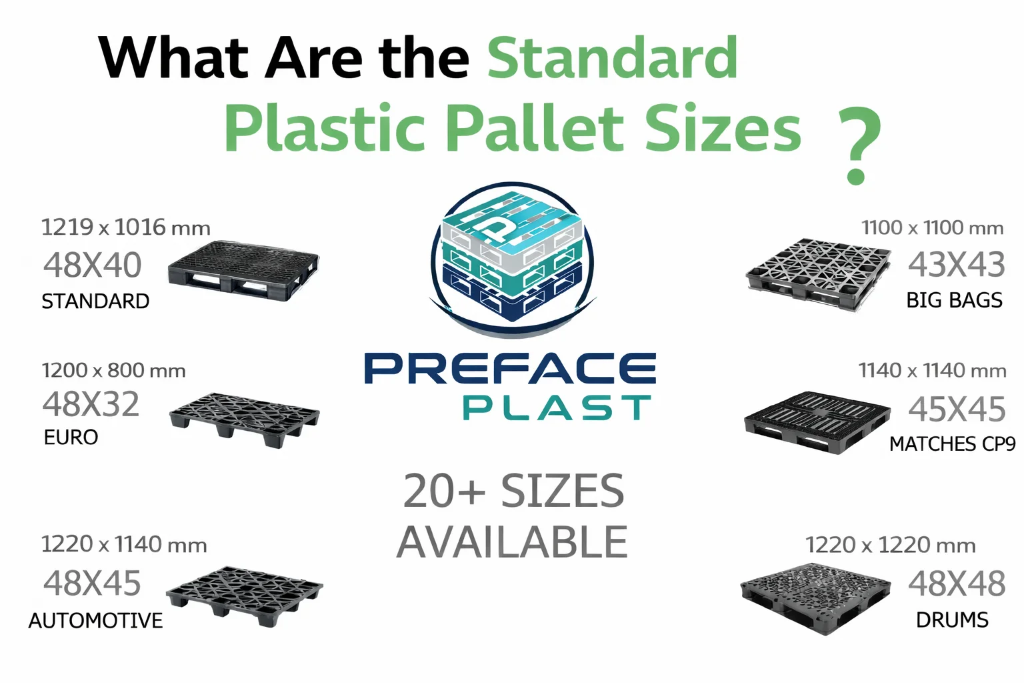
You're choosing plastic pallets for export. However, you're unsure which sizes work globally. Wrong dimensions mean rejected shipments, extra costs, and frustrated customers.
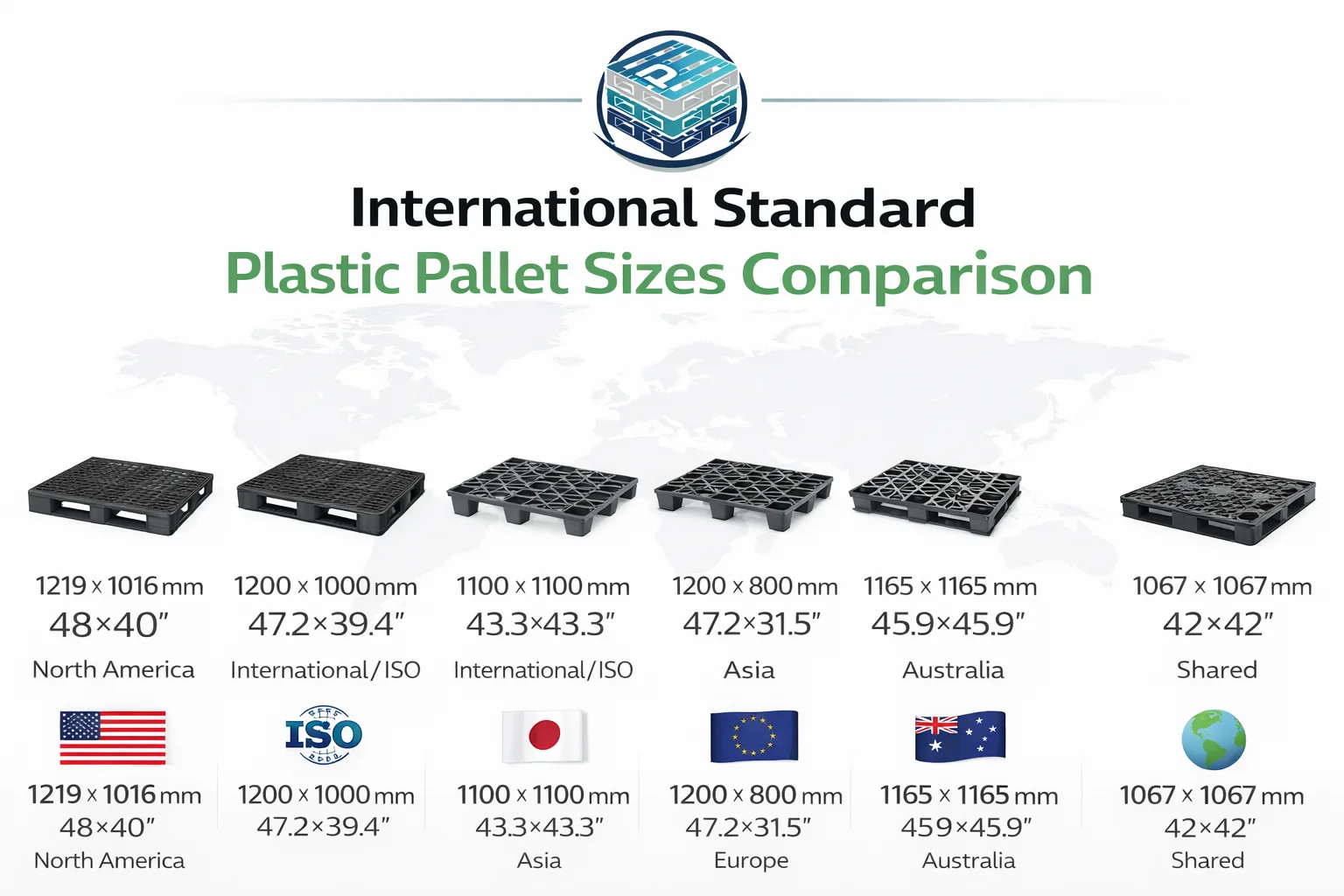
The International Organization for Standardization (ISO) sanctions six pallet dimensions, detailed in ISO Standard 6780:2003[^1] . These are: [1219×1016mm](North America), 1200×800mm(Europe), 1200×1000mm (Universal), 1100×1100mm (Asia), 1165×1165mm, and 1067×1067mm (Alternative standard). Each serves specific regional markets.
 I've spent over 15 years helping companies choose the right pallet sizes. Moreover, the wrong choice can cost thousands in rejected containers. Additionally, delayed deliveries hurt your business. Therefore, let me share the exact standards that matter for your success.
Which Size Works Best for North American Markets?
North American buyers expect specific dimensions. Moreover, these dimensions must fit their warehouse systems. Using the wrong size means your products won't move smoothly.
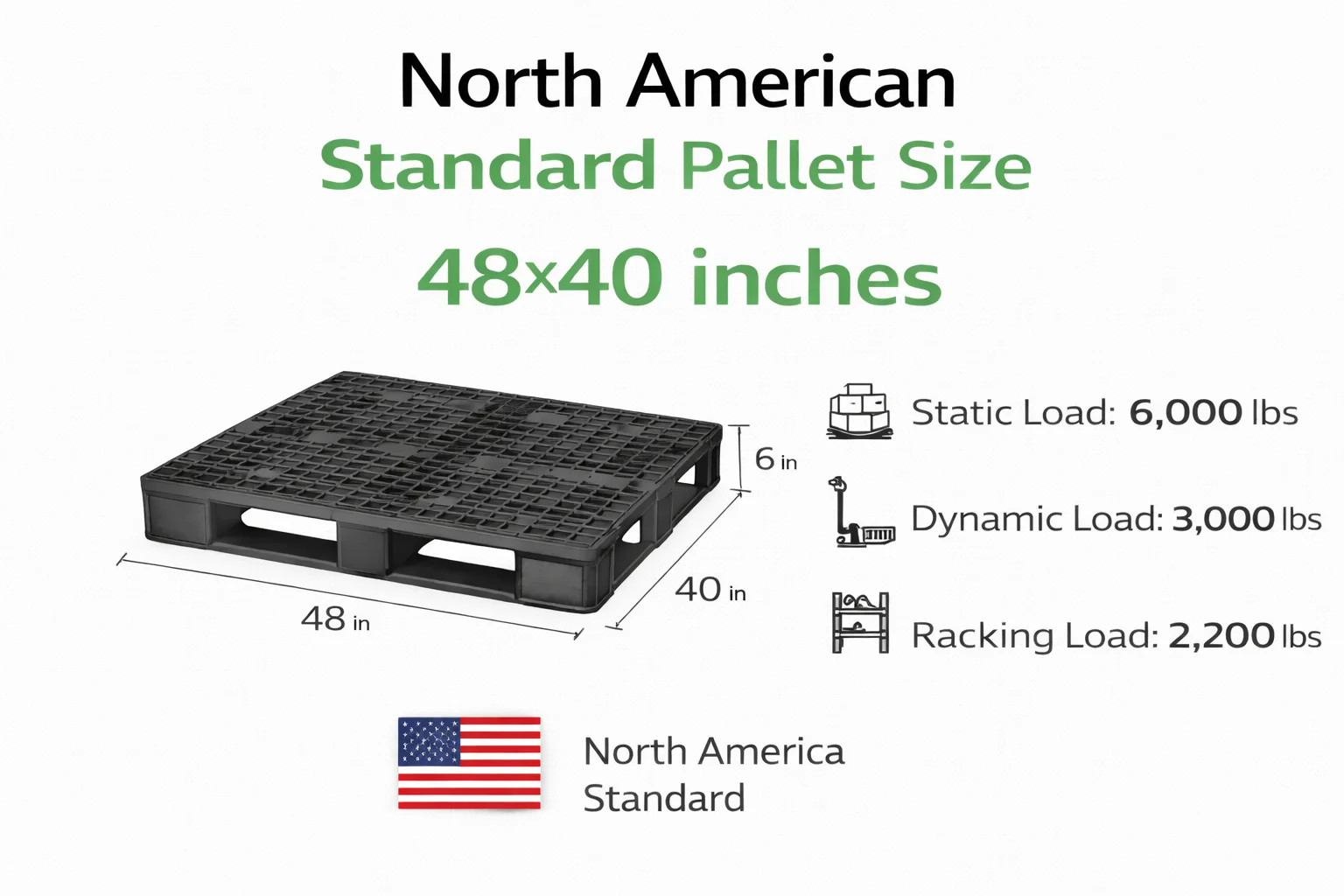
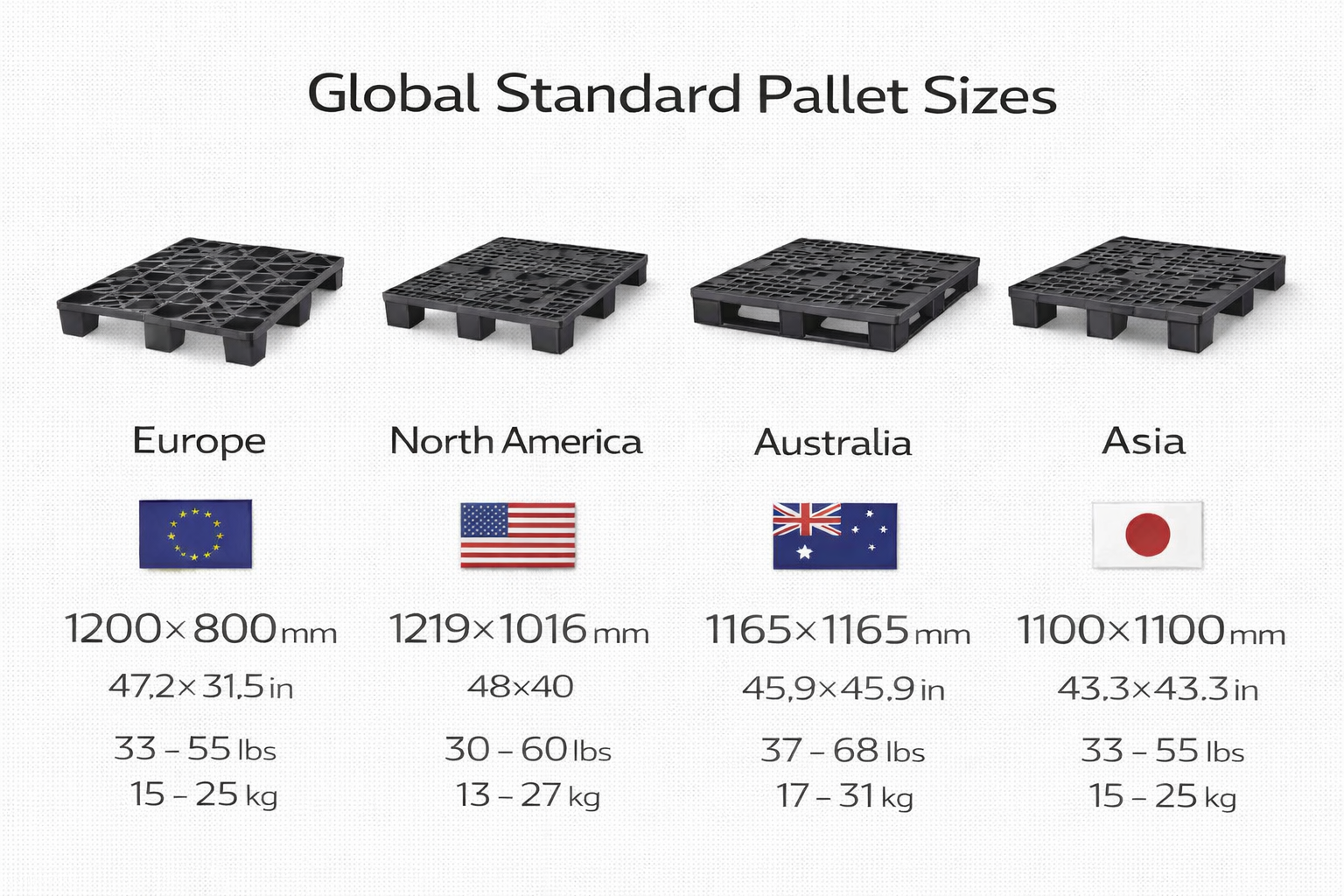
The 1219×1016mm pallet is the North American standard. It accounts for 30% of all new wood pallets produced in the United States. The ISO also recognizes the [GMA pallet]footprint as one of its six standard sizes.
Why This Size Dominates North America
The [1219×1016mm]dimension works best in grocery and retail industries. Additionally, this size maximizes truck and warehouse storage space.
When I work with clients shipping to North America, this size solves multiple problems. First, it fits through standard dock doors without issues. Second, automated warehouse systems are built around these dimensions. Third, it allows optimal space usage in shipping containers.
However, wooden pallets have weight limitations. Meanwhile, plastic versions offer higher load capacities. Furthermore, they weigh less than wooden alternatives.
| Container Type | Load Efficiency | Best Use Cases |
|---|---|---|
| 20ft Container | 85% space usage | Small batch exports |
| 40ft Container | 92% space usage | Full production runs |
| 53ft Trailer | Perfect fit | Domestic distribution |
What European Standard Should You Choose?
European markets have two main pallet standards. Each serves different purposes. Moreover, picking the wrong one limits where your products can go.
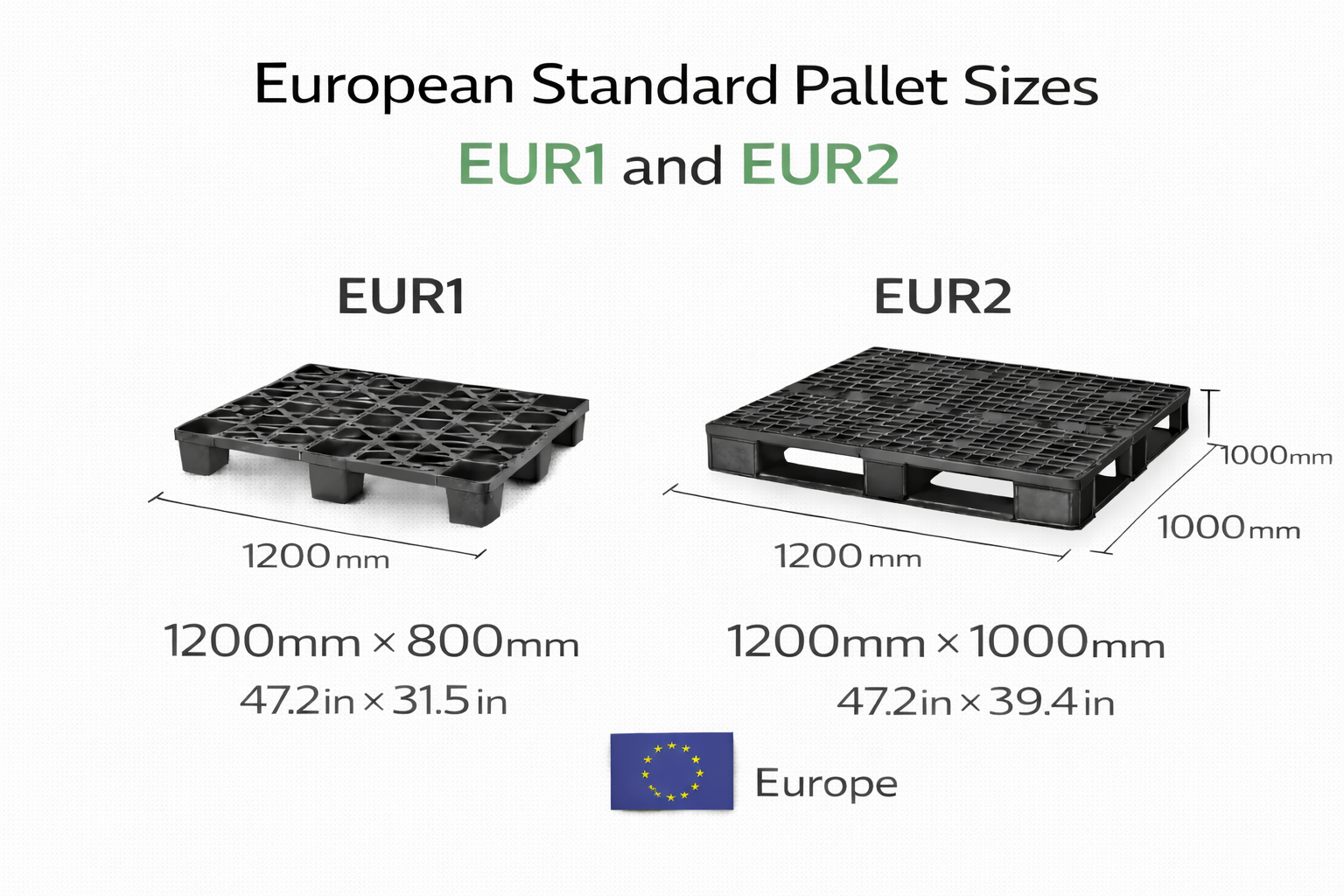
The [1200×800mm]EUR pallet is Europe's primary standard. It measures 31.50″×47.24″. However, the [1200×1000mm size offers better international compatibility.
EUR1 vs EUR2 Standards
The original European standard started in 1961. The European pallet was first introduced by the International Union of Railways. Additionally, it was based on a Swedish design. Furthermore, it brought order and consistency to European logistics systems.
The [1200×800mm][EUR1 pallet]works perfectly within Europe. However, it has limitations for international shipping. Subsequently, this footprint doesn't line up neatly with ISO shipping containers. This means wasted gaps and less-than-optimal loading space.
The [1200×1000mm] EUR2 offers better global compatibility. Moreover, this size integrates well with North American systems. When I advise clients on European exports, I often recommend this size. Additionally, it works for companies planning to expand beyond Europe.
How Much Weight Can These Pallets Actually Handle?
Weight capacity varies dramatically between plastic pallet types. Additionally, usage scenarios affect load limits. Therefore, knowing the limits prevents costly damage and safety issues.
Plastic pallet [static load capacity] ranges from 1000kg to 5000kg. Meanwhile, [dynamic load capacity] is lower when pallets move. Heavy-duty models can support up to 8,800 pounds.
Understanding Load Types
There are three critical load ratings you must understand. First, static load is the weight a pallet supports when stationary. This applies when pallets sit on warehouse floors. Additionally, weight must be evenly distributed.
Second, dynamic load is the weight a pallet supports while moving. This capacity is typically lower than static load. Moreover, this matters when forklifts move loaded pallets. Additionally, it affects warehouse and loading dock operations.
Third, [rack load] is the weight a pallet supports when stored on conventional racks. For rack use, pallets must have runners or crossbars. Furthermore, most warehouse racking systems have strict weight limits. You cannot exceed these limits safely.
In my experience with pharmaceutical and beverage clients, different sizes have different capacities. Industrial plastic pallets with 48″ x 32″ dimensions support 7,100 pounds. Meanwhile, 48″ x 40″ pallets can handle 8,800 pounds. These capacities make them suitable for dense products.
Which Asian Markets Use Different Standards?
Asian markets favor [square pallet dimensions]. These optimize their warehouse layouts. Moreover, using rectangular pallets can create storage inefficiencies.
The two most popular pallet sizes in Asia are different. The square 1100mm x 1100mm (43.30″ × 43.30″) pallet dominates. Additionally, the 1200mm x 1000mm (39.37″ × 47.24″) pallet is popular. Both are ISO-approved international standards.
Regional Preferences
Pallets in Japan are typically 1100 x 1100 mm. Meanwhile, pallet sizes in China are 1200 x 1000 mm. The square [1100×1100mm] format works well in Asian warehouses. Additionally, many facilities use square grid storage systems.
The choice between these two sizes depends on your export strategy. The 1200mm x 1000mm pallet works better for export from Asia to Europe and the USA. Moreover, these dimensions integrate nicely into European and US systems. When clients ask about Asian manufacturing with global distribution, I usually recommend the [1200×1000mm] size. Additionally, this provides maximum flexibility.
However, the 1100×1100 mm pallets are incompatible with European and North American racking systems. Furthermore, they're losing market share for international trade. This limits their usefulness for companies with global supply chains.
What About Australian Standards?
Australia uses a unique square pallet size. Additionally, this fits their railway system perfectly. However, this creates compatibility issues with standard shipping containers.
The [Australian standard pallet] is a square pallet originally made of hardwood 1,165 mm × 1,165 mm (45.9 in × 45.9 in) in size, which fits perfectly in the RACE container of the Australian Railway . Yet, they are ill-suited for the standard 20-foot and 40-foot ISO shipping containers used around the globe.
Railway vs Container Optimization
These dimensions enable two pallets to fit snugly side by side. Additionally, they fit into the Australian railway RACE container perfectly. However, this container is slightly wider than standard ISO containers. Moreover, using Australian pallets in ISO containers means lost floor space.
The [Australian standard pallet] dates back to World War II, while ISO containers date to the late 1950s. Although the pallet's dimensions predate the ISO containers, it requires less dunnage, is square, and leaves less wasted space than other pallets, including the GMA pallet.
For companies shipping to Australia, this creates a choice. You can use the local standard for domestic distribution. Alternatively, choose ISO-compatible sizes for international shipping.
How Do I Choose the Right Size for My Business?
Selecting the wrong pallet size costs money. Moreover, it affects every part of your supply chain. Therefore, the right choice optimizes shipping costs. Additionally, it prevents handling delays.
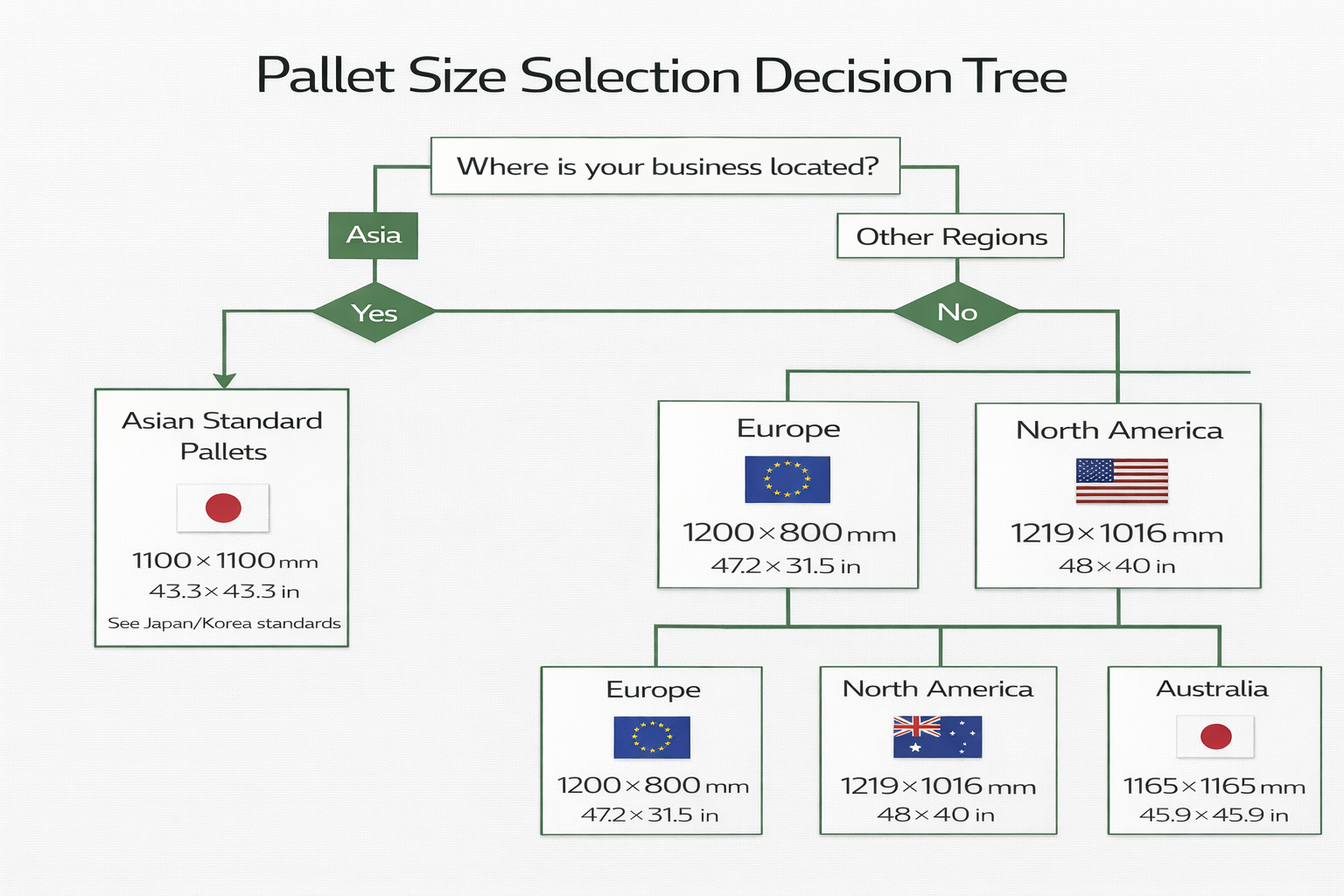
Match your pallet size to your primary target market first. Then consider secondary markets. A 48×40 inch pallet loads efficiently in North America. Meanwhile, a 1200×800 mm pallet is the safe choice in Europe. Always verify compatibility before ordering.
Key Selection Criteria
Start with your destination markets. If 70% of your exports go to North America, choose the [1219×1016mm] GMA standard. Moreover, if Europe dominates your sales, the [1200×800mm] EUR standard makes sense. For multi-region distribution, the [1200×1000mm]size offers the best compromise.
Consider your warehouse systems next. Confirm that the pallet size is compatible with existing racking systems. Additionally, ensure forklifts can move freely. If warehouses use standard industrial racking, size matters. Furthermore, shelf cells of 1200mm × 1000mm × 1500mm work best with 1200mm×1000mm pallets.
Weight requirements matter significantly. Plastic pallets can support 5,000 to 30,000 pounds of cargo. Meanwhile, wooden pallets average around 2,500 pounds. For heavy products like chemicals or beverages, plastic pallets provide necessary safety margins.
At Preface Plast, I've helped hundreds of companies optimize their pallet selection. Moreover, we manufacture all six ISO standard sizes. Additionally, our pallets have load capacities from 3,500 to 17,600 pounds. Furthermore, our plastic pallets meet [international certifications]. These include FDA, REACH, and RoHS standards. This ensures your products move smoothly through global supply chains.
Conclusion
Choose international standard plastic pallet sizes based on your primary target markets. Use [1219×1016mm]for North America, [1200×800mm] for Europe, and [1100×1100mm] for Asia to optimize shipping efficiency.
About Preface Plast
Preface Plast is a leading plastic pallet manufacturer. Moreover, we have over 20 years of production experience. Additionally, we're based in China. We provide high-quality, customized plastic pallet solutions. Furthermore, we serve brands, wholesalers, and distributors. With 60+ injection molding and rotational molding machines, we ensure quality. Additionally, each machine has quality control personnel with 5+ years of experience. This ensures stable product quality.
Services
- Products: One-stop plastic pallet solutions
- Customization: Custom colors, logos, and molds
- International Certifications: ISO 9001, CE, REACH, ROHS, SGS, FDA, GRS
Quality Assurance
- Raw Material Testing: Complies with RoHS and REACH standards. Additionally, meets international strength requirements
- Precision Manufacturing: Automated injection molding with ±0.1mm precision
- Comprehensive Testing: 100% factory inspection. Moreover, uses ISO 9001 sampling standards
- Certifications: ISO 9001, CE, REACH, ROHS, SGS, FDA standards
Production Capacity
- High-Quality Manufacturing: 60+ injection/rotational molding machines. Additionally, follows ISO 9001 standards
- Premium Customization: Customized solutions for global brands
- Flexible Solutions: Customer-specific customization. Moreover, enhances market competitiveness
Global Impact
We serve global customers with reliable plastic pallet solutions. Additionally, we provide custom [logistics packaging solutions]. Furthermore, we support business growth and customer trust.