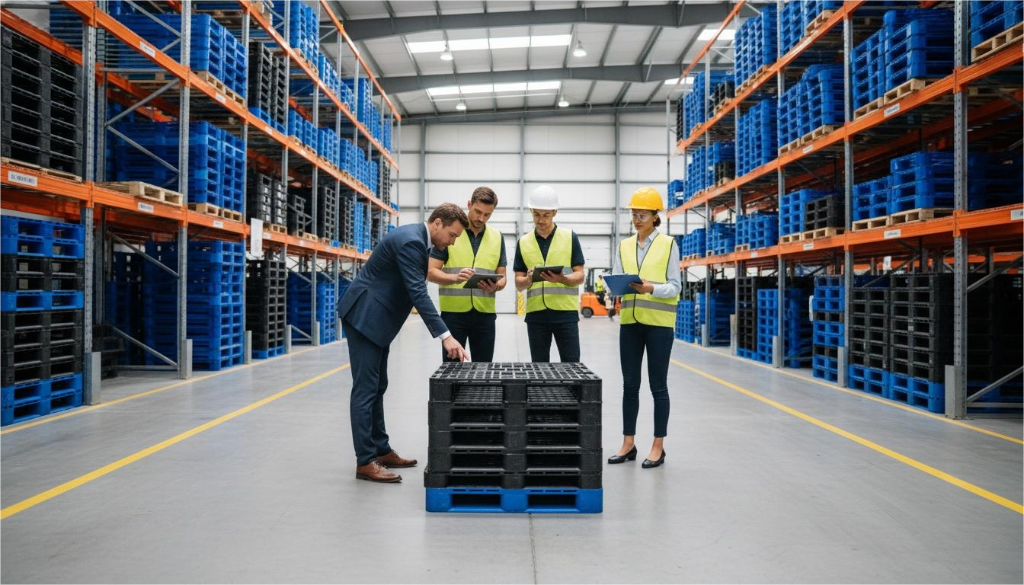
Finding reliable plastic pallet suppliers can be challenging. Poor quality pallets lead to damaged goods and costly delays. The right supplier saves money and prevents headaches.
The best places to buy plastic pallets are through established brand companies like Brambles Limited, or directly from OEM manufacturers in China and India. Choose suppliers based on your volume needs, quality requirements, and budget constraints.
 After 20+ years in this industry, I have seen the plastic pallet market evolve dramatically. The supplier landscape has changed completely. Understanding where to source quality pallets makes the difference between success and failure in your business.
How to Find the Right Pallet Supplier?
Most buyers struggle to identify trustworthy pallet suppliers. They waste time with unreliable vendors. Wrong choices cost thousands in damaged shipments and delays.
Start by researching suppliers in major manufacturing hubs like Shanghai, Qingdao, and Taizhou in China, or Gujarat and Maharashtra in India. Verify certifications, production capacity, and quality control systems before placing orders.
 The global plastic pallet industry now operates in two distinct tiers. The first tier consists of brand companies like Brambles Limited and Rehrig Pacific Company. These companies focus on branding and sales rather than manufacturing. They outsource production to smaller factories in South America and medium to large factories in Shanghai and Zhejiang provinces in China. Our company serves as an OEM partner for several of these brands.
The second tier includes OEM service providers mainly located in China and India. Chinese manufacturers cluster in key regions: Qingdao in Shandong province, Jiading district in Shanghai, Taizhou in Zhejiang province, and Chengdu in Sichuan province. These factories specialize in brand manufacturing services. Indian manufacturers concentrate in Gujarat state around Ahmedabad and Maharashtra state near Mumbai and Pune.
When selecting suppliers, consider these factors:
| Factor | Tier 1 Brands | Chinese OEMs | Indian OEMs |
|---|---|---|---|
| Quality Control | High standards | Variable | Improving |
| Price Point | Premium | Competitive | Lower cost |
| Lead Times | Longer | Moderate | Shorter |
| Customization | Limited | Flexible | Very flexible |
What Differences Exist Between Suppliers in Different Countries?
Each country offers unique advantages and challenges. Quality standards vary significantly between regions. Material choices and manufacturing processes differ across borders.
Chinese suppliers typically offer superior material quality and durability due to advanced plastic production technology. Indian suppliers provide competitive pricing but may compromise on raw material specifications compared to Chinese manufacturers.
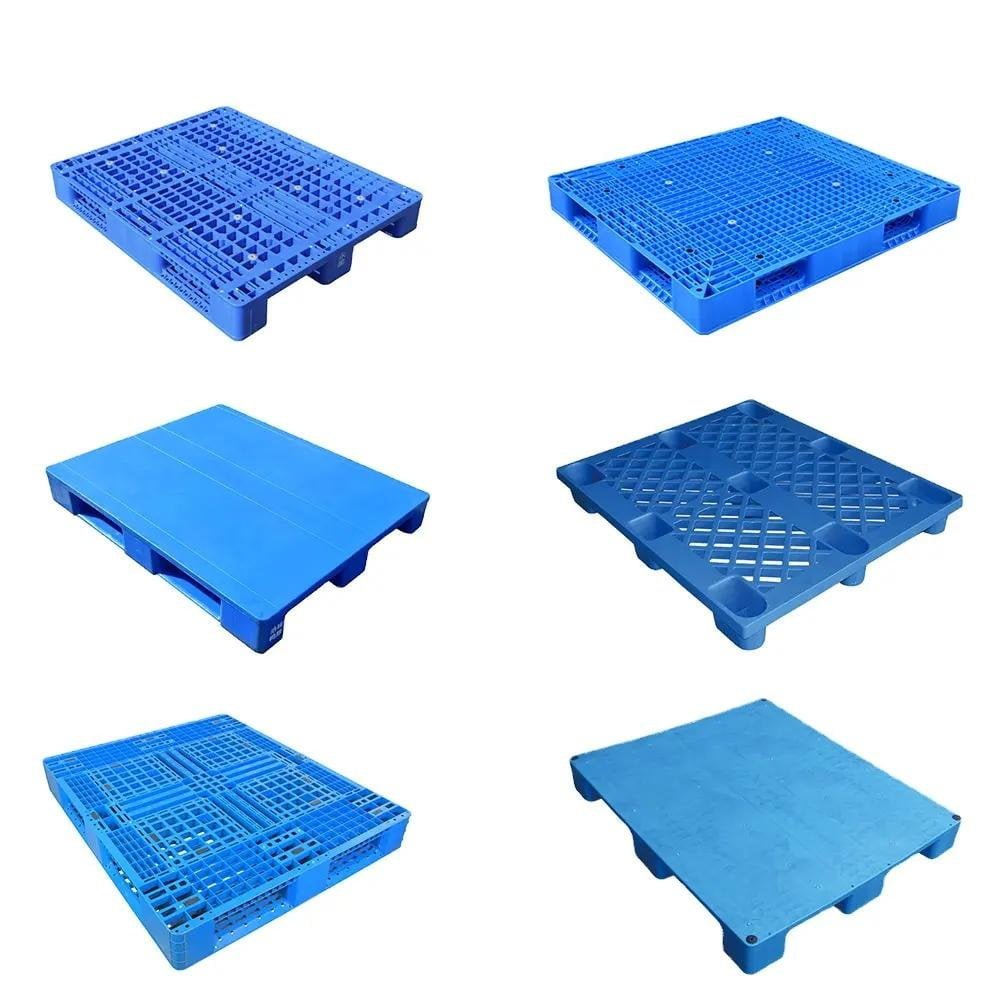 Based on my experience working with suppliers worldwide, material quality represents the biggest difference between countries. Chinese manufacturers use better raw materials because China has more advanced plastic production technology. This results in stronger, more durable pallets compared to Indian alternatives.
Chinese suppliers excel in several areas. They invest heavily in injection molding technology and quality control systems. Most established Chinese factories maintain ISO 9001 certification and follow strict quality protocols. They use virgin HDPE and PP materials that meet international standards like REACH and RoHS compliance.
Indian manufacturers focus on cost competitiveness. They offer lower prices by using recycled materials and simpler production processes. However, this approach sometimes compromises durability and consistency. Indian suppliers work well for price-sensitive applications where extreme durability is not critical.
South American factories serving tier-1 brands operate under strict brand guidelines. They follow detailed specifications and quality requirements set by their brand partners. These factories produce consistent quality but have limited flexibility for custom orders.
Consider these regional characteristics:
| Region | Strengths | Weaknesses | Best For |
|---|---|---|---|
| China | Quality, technology, consistency | Higher costs, longer lead times | Premium applications |
| India | Low cost, flexibility, quick delivery | Variable quality, material concerns | Budget projects |
| South America | Brand compliance, established processes | Limited customization, higher shipping costs | Brand requirements |
How to Choose the Correct Pallet Supplier?
Wrong supplier choices lead to quality issues and delivery problems. Many buyers focus only on price and ignore critical factors. Smart selection requires evaluating multiple criteria systematically.
Evaluate suppliers based on production capacity, quality certifications, material standards, and financial stability. Request samples, visit facilities when possible, and verify customer references before making final decisions.
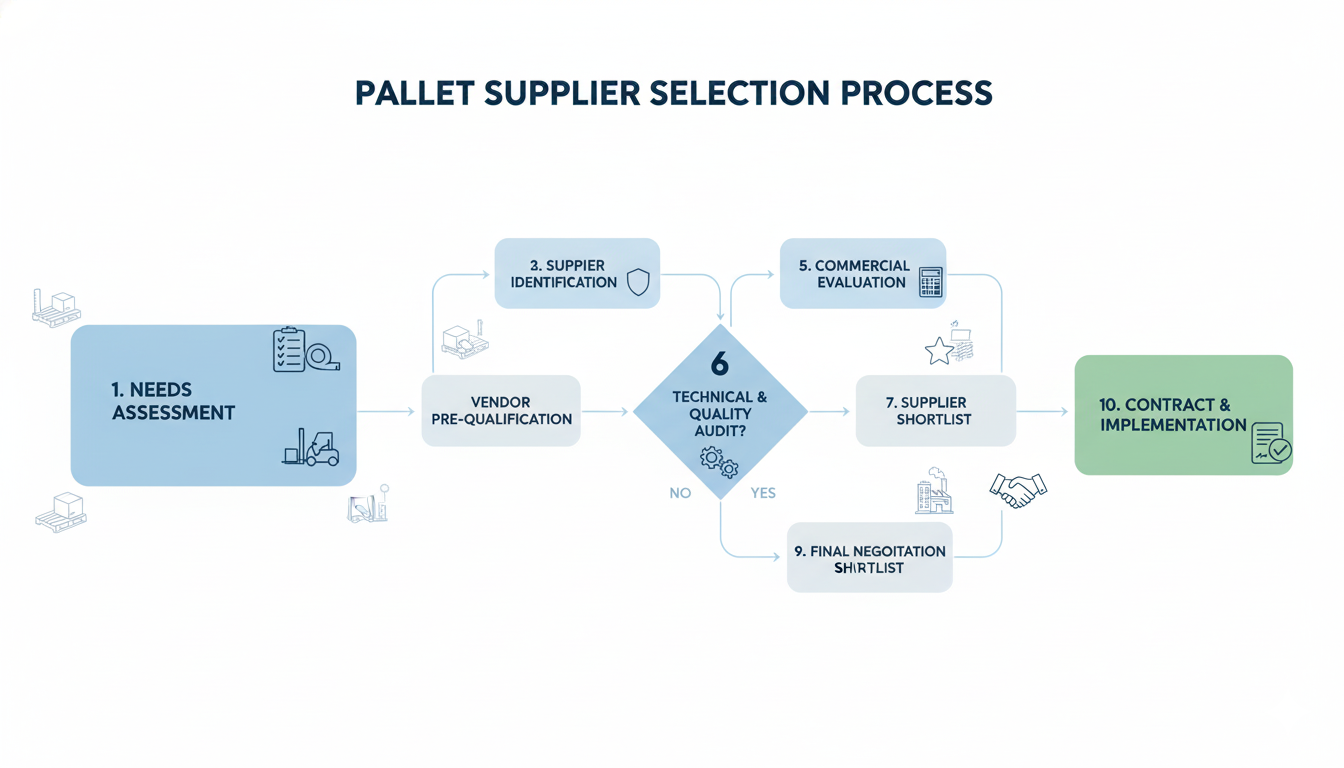
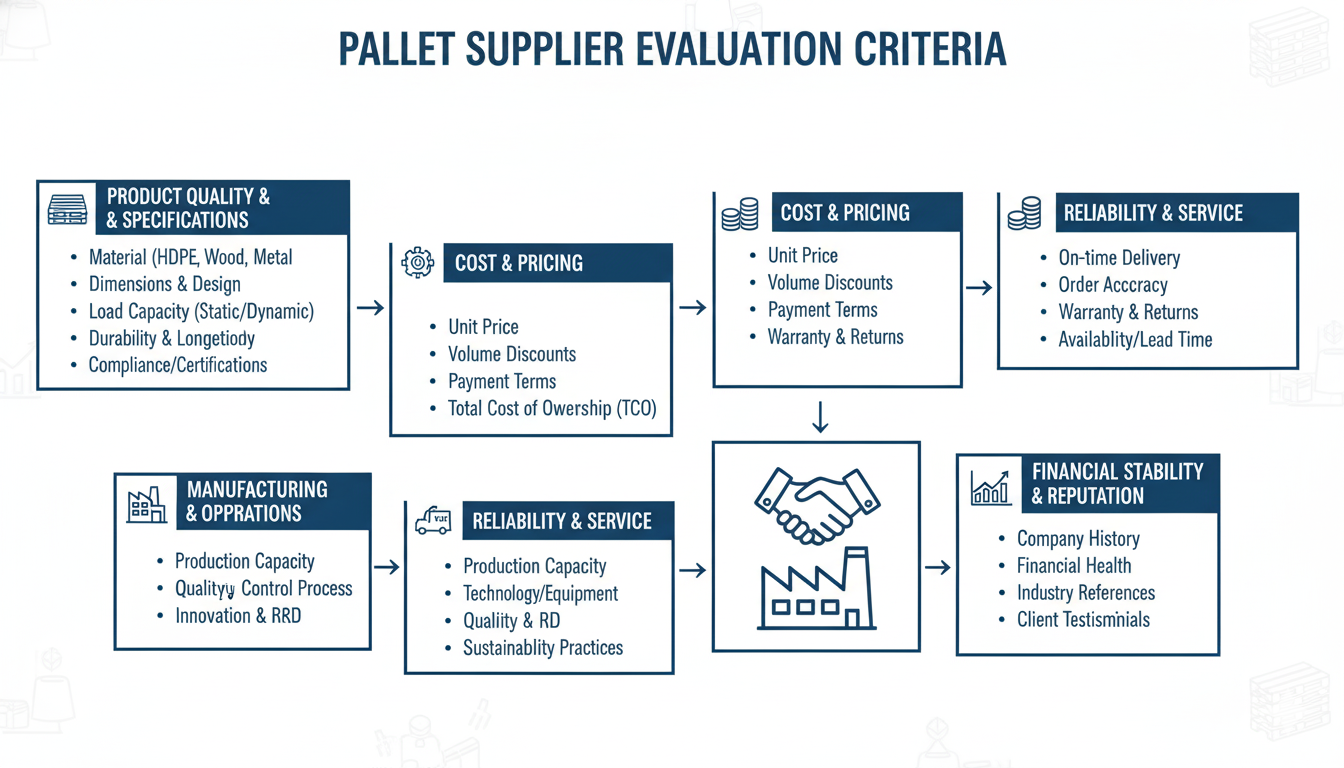 Choosing the right supplier requires a systematic approach. I recommend following a structured evaluation process that covers all critical areas. Start with basic qualification criteria then dive deeper into specific requirements.
First, verify basic qualifications. Check business licenses, export permits, and quality certifications. Look for ISO 9001, CE marking, and relevant safety standards. Request financial statements to confirm stability. Unstable suppliers create supply chain risks.
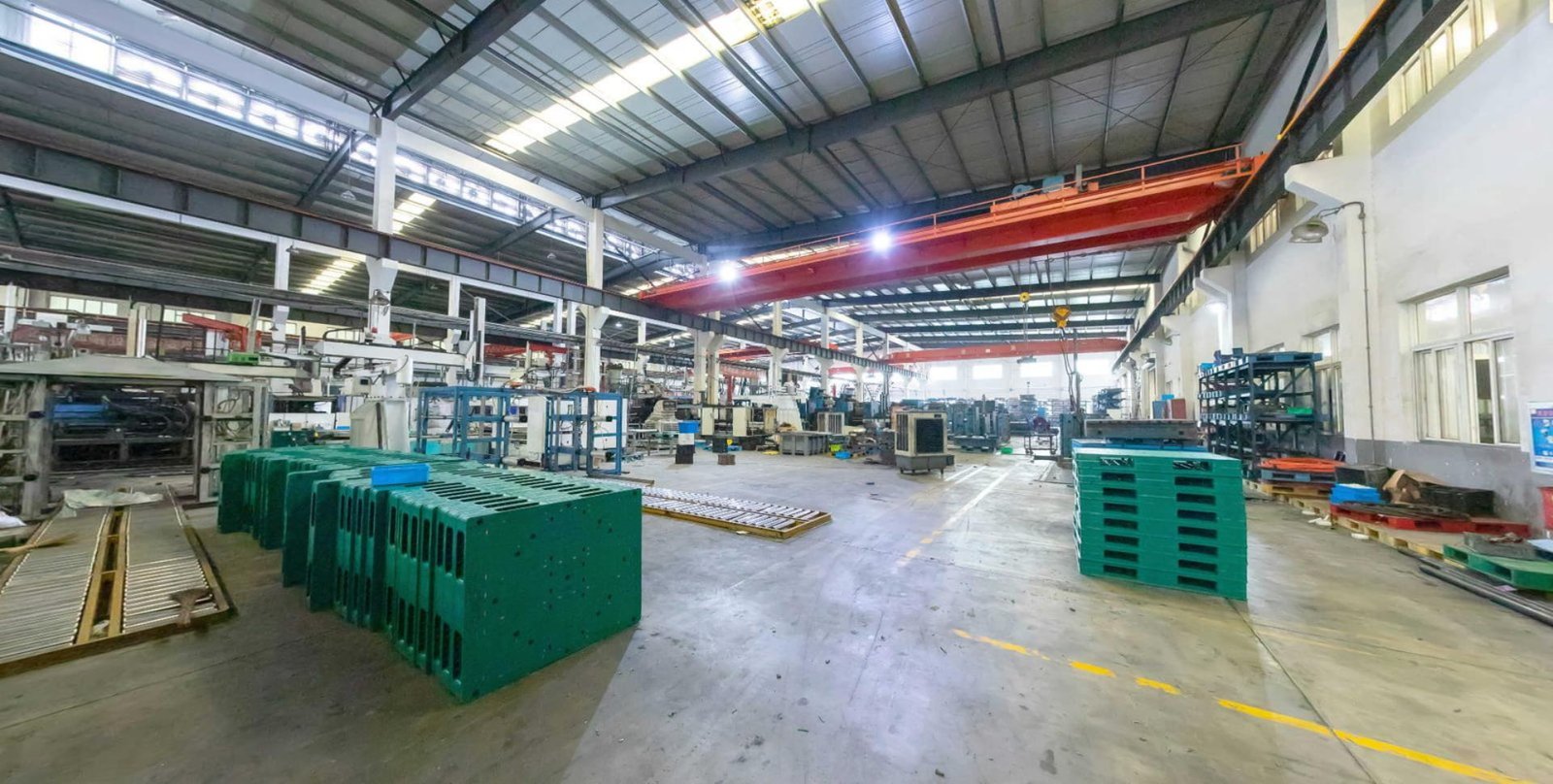
Second, evaluate production capabilities. Visit facilities or request detailed photos of production lines. Count injection molding machines and verify capacity claims. Check quality control procedures and testing equipment. Ask about peak season capacity and backup plans.
Third, assess material standards. Request detailed material specifications and certificates. Verify virgin material usage and recycling policies. Check compliance with international standards like REACH, RoHS, and FDA requirements. Test samples under actual use conditions.
Fourth, review service capabilities. Evaluate communication responsiveness and English proficiency. Check packaging and shipping procedures. Verify delivery tracking systems and damage policies. Assess after-sales support and warranty terms.
Use this evaluation framework:
| Criteria | Weight | Evaluation Method | Minimum Standard |
|---|---|---|---|
| Quality Systems | 30% | Certification review, facility audit | ISO 9001 certified |
| Production Capacity | 25% | Machine count, output verification | 50+ injection machines |
| Material Standards | 20% | Material certificates, sample testing | Virgin HDPE/PP materials |
| Service Level | 15% | Communication test, reference checks | 24-hour response time |
| Financial Stability | 10% | Financial statements, credit check | 3+ years operating history |
Create a supplier scorecard and compare multiple options. Never rely on a single supplier for critical applications. Develop backup relationships to ensure supply continuity.
Conclusion
Choose plastic pallet suppliers based on quality standards, production capacity, and service reliability rather than price alone for long-term success.
My Role
As someone who has worked in the plastic pallet industry for over 20 years, I have seen suppliers rise and fall. I have partnered with major brands as an OEM manufacturer and understand what separates good suppliers from great ones. My insights come from real experience managing production, quality control, and customer relationships across different markets and applications.
About Preface Plast
Preface Plast is a plastic pallet manufacturer with over 20 years of production experience, headquartered in China. We provide high-quality, customized plastic pallet solutions for brand owners, wholesalers, and distributors. With more than 60 injection molding and rotomolding machines, each equipped with quality control staff having over 5 years of experience, we ensure stable quality.
Service Content
- Products: One-stop plastic pallet solutions
- Customization: Custom colors, custom logos, custom molds
- International Certifications: ISO 9001, CE, REACH, ROHS, SGS, FDA, GRS
Quality Assurance
- Raw Material Testing: Complies with RoHS and REACH standards, strength and performance meet international requirements
- Precision Manufacturing: Automated injection molding, precision assembly, accuracy ±0.1mm
- Full and Sampling Inspection: 100% factory inspection, ISO 9001 sampling, ensuring high standards
- Certifications: Passed ISO 9001, CE, REACH, ROHS, SGS, FDA standards
Production Capacity
- High-Quality Manufacturing: 60+ injection molding/rotomolding machines, following ISO 9001
- High-End Customization: Providing customized solutions for global brands
- Flexible Solutions: Customized according to customer needs, enhancing market competitiveness
Global Impact
Serving global customers, providing reliable plastic pallets and customized logistics packaging solutions, supporting business growth and customer trust.