Standard Plastic Pallet Dimensions
Quick Reference Guide to Global Plastic Pallet Standards
Plastic pallets1 come in various standardized dimensions worldwide. Moreover, these specifications optimize logistics efficiency. Additionally, understanding <strong>standard pallet length2</strong> is crucial. Furthermore, pallet height dimensions3 affect logistics planning.
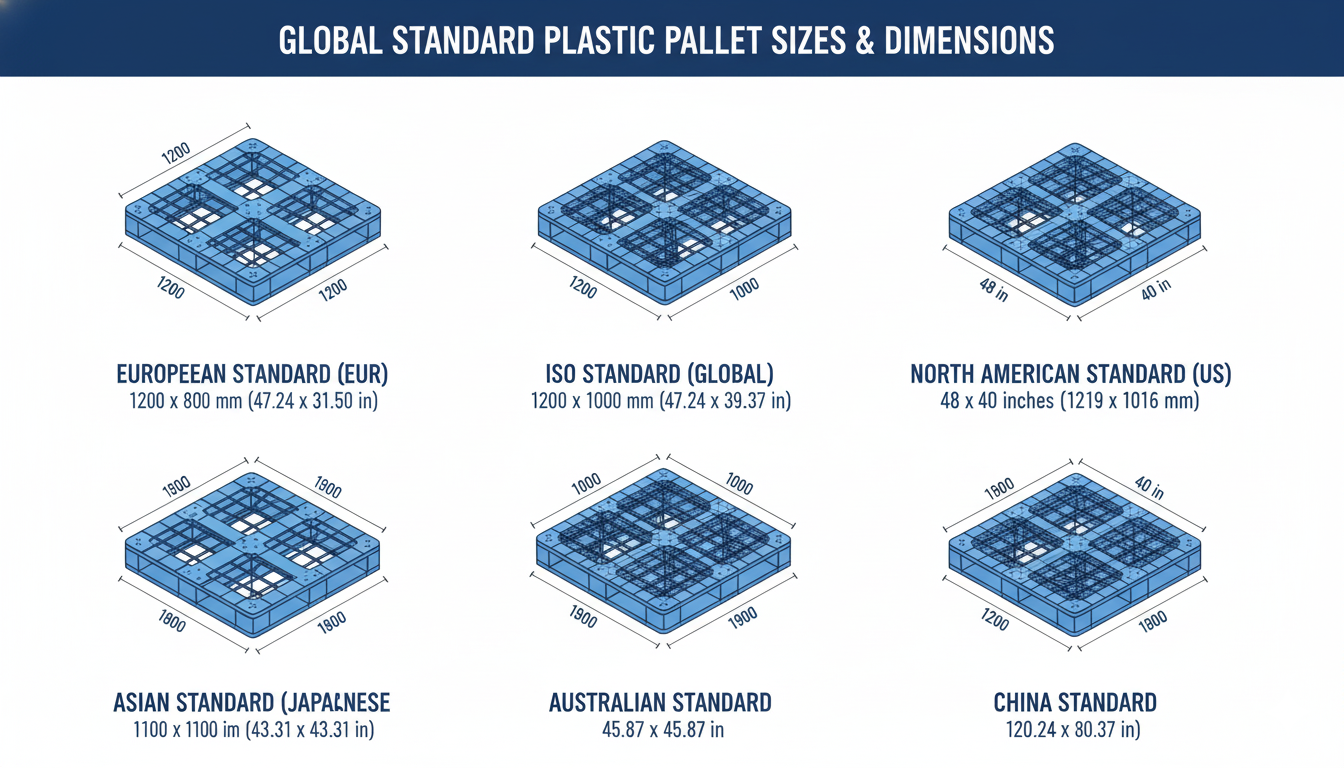
Primary Global Standards:
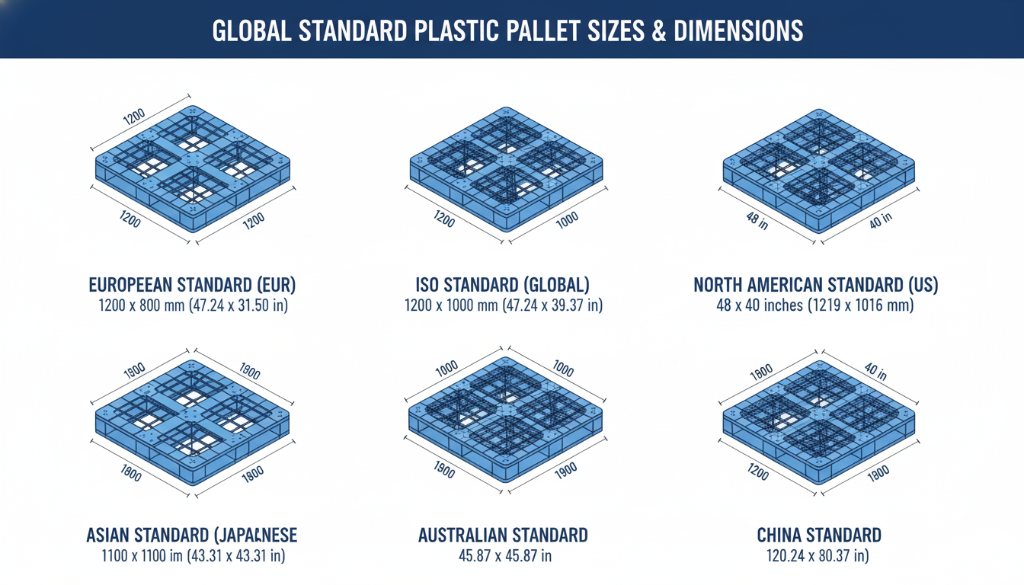
| Standard | Dimensions | Region | Primary Applications |
|---|---|---|---|
| GMA Standard | 48"×40" (1219×1016mm) | North America | Grocery, retail, general freight |
| EUR Pallet | 1200×800mm | Europe | Food & beverage, pharmaceuticals |
| ISO Standard | 1200×1000mm | International | Export trade, manufacturing |
| Asia Standard | 1100×1100mm | Asia-Pacific | Chemical, automotive industries |
Key Specifications by Application:
- Light Duty: 500-800kg dynamic load. Ideal for consumer goods.
- Medium Duty: 800-1200kg dynamic load. Suitable for general industrial use.
- Heavy Duty: 1200-1500kg dynamic load. Perfect for heavy machinery.
- Food Grade: FDA/EU certified materials. Features smooth surfaces.
Material Types:
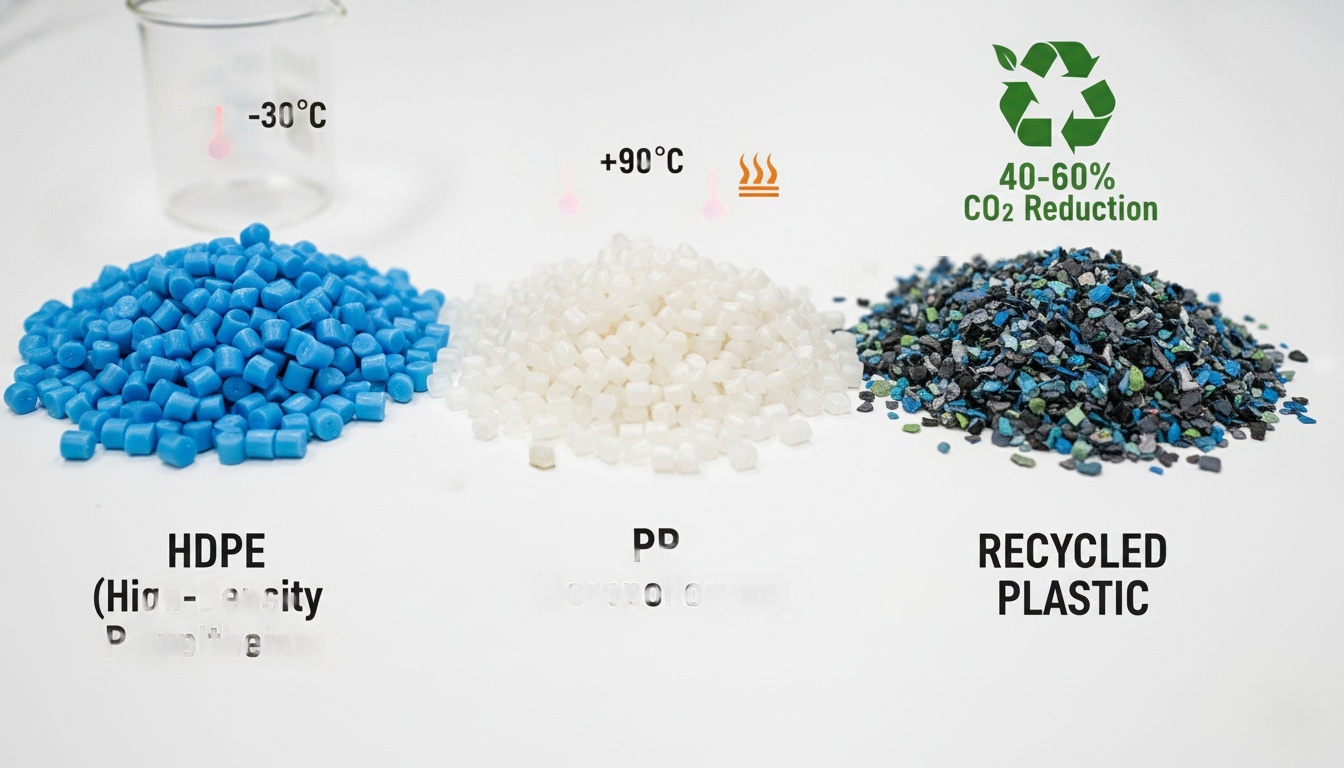
- HDPE: Temperature range -40°C to +80°C. Furthermore, offers excellent chemical resistance4.
- PP: Temperature range -20°C to +100°C. Additionally, provides superior fatigue resistance5.
- Recycled: 90% performance of virgin materials. Moreover, 40-60% lower carbon footprint6.
Container Optimization:
- 20ft Container: 1200×1000mm pallets achieve 95-98% loading efficiency7. Therefore, they maximize space utilization.
- 40ft Container: 1219×1016mm pallets optimize space at 96-99%. Consequently, they reduce shipping costs8.
Selection Criteria: First, choose based on cargo weight. Next, consider operating environment. Finally, evaluate container compatibility requirements.
1. Plastic Pallet Fundamentals
1.1 What Is A Plastic Pallet
<strong>Plastic pallets1</strong> are standardized load-bearing platforms. They are manufactured from thermoplastic materials. These include PE (polyethylene) and PP (polypropylene). Additionally, they use advanced manufacturing processes. Furthermore, these processes include injection molding and blow molding.
These platforms serve as essential logistics infrastructure. Moreover, they support storage and transportation. Additionally, they handle distribution throughout supply chains. Therefore, understanding regular pallet size9 becomes essential. Furthermore, standard skid size10 affects operational efficiency.
1. Load Deck
- Function: Primary load-bearing surface. It directly supports cargo weight.
- Design Features:
- Grid Type: Provides excellent ventilation. Consequently, suitable for goods requiring airflow.
- Solid Type: Features smooth surface design. Therefore, ideal for small items and bulk goods.
- Reinforced Type: Offers enhanced load capacity. Thus, perfect for heavy-duty applications.
2. Support Structure (Feet/Runners)
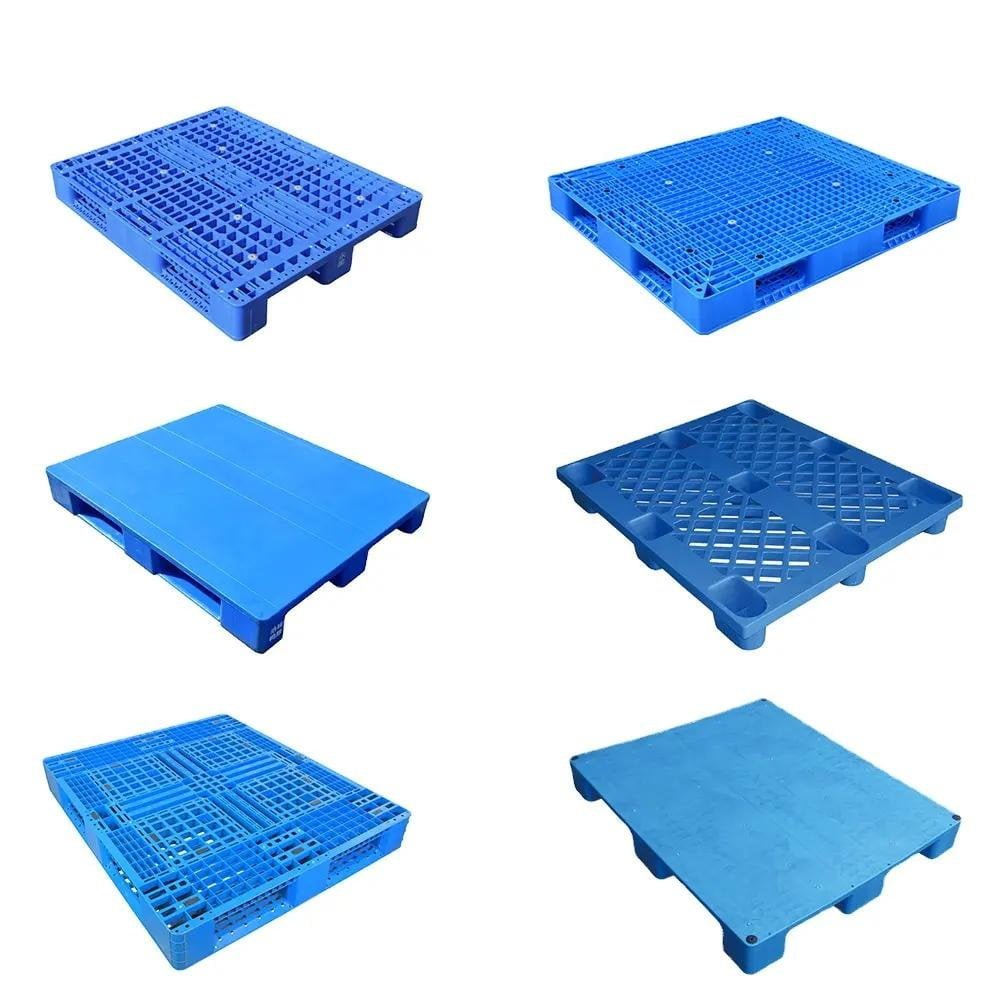
- Nine-Foot Design: Features 9 evenly distributed support points. Consequently, provides optimal stability.
- Cross-Runner Structure: Contains 4 intersecting support beams. Therefore, delivers maximum load capacity.
- Three-Runner Structure: Uses 3 parallel support beams. Hence, suitable for two-way entry.
3. Fork Entry Design
- Four-Way Entry: Allows forklift access from any direction. Thus, provides maximum operational convenience.
- Two-Way Entry: Enables access from opposite sides. Therefore, offers cost-effective option.
- Entry Dimensions: Standard width ≥120mm, height ≥75mm. These pallet height dimensions3 ensure compatibility.
Manufacturing Process Details
1. Injection Molding Process
- Process Principle: Molten plastic material is injected into precision molds. Subsequently, it cools to solidify.
- Technical Advantages:
- High dimensional accuracy (±0.5mm)
- Superior surface finish
- Complex structural capability
- High production efficiency
- Suitable Products: Medium to <strong>small pallets11</strong>. Also, precision structural pallets.
2. Blow Molding Process
- Process Principle: Compressed air inflates softened plastic preforms. Then, they take shape.
- Technical Advantages:
- Uniform wall thickness
- Lower cost production
- Suitable for large-size products
- Suitable Products: <strong>Large pallets12</strong>. Furthermore, <strong>simple structure pallets13</strong>.
3. Rotomolding Process
- Process Principle: Material softens through rotational heating. Then, it adheres to mold walls.
- Technical Advantages:
- Stress-free construction
- Controlled wall thickness
- Complex shape capability
- Suitable Products: <strong>Extra-large pallets14</strong>. Moreover,<strong> special structure pallets15</strong>.
1.2 Plastic Pallet vs Wood Pallet Advantages Comparison
| Feature | Plastic Pallet | Wood Pallet |
|---|---|---|
| Environmental Impact | 100% recyclable, fumigation-free | Requires fumigation, prone to bacterial growth |
| Durability | 5-10 years lifespan | 1-3 years lifespan |
| Hygiene | Easy to clean and sanitize, food-grade material | Difficult to clean, harbors contaminants |
| Weight | Lightweight, reduces transportation costs | Heavier, increases logistics burden |
| Maintenance Cost | Virtually maintenance-free | Requires regular repair and replacement |
2. Global <strong>Plastic Pallet Standard</strong> Systems
2.1 North American Plastic Pallet Standards
<strong>GMA Standard Plastic Pallet16</strong> (48"×40")
The GMA standard is the most mainstream plastic pallet specification. It was established by the Grocery Manufacturers Association. Moreover, this standard pallet length2 of 48 inches became industry norm. Furthermore, it dominates North American markets.
Standard Specification Parameters:
- External Dimensions: 1219mm × 1016mm (48" × 40")
- Height: 150mm (standard type)
- Dynamic Load: 1200-1500kg
- Static Load: 4000-6000kg
- Racking Load: 800-1200kg
- Self Weight: 15-25kg
Structural Features:
- Nine-foot support structure. Therefore, provides excellent stability.
- Two-way fork entry design. Thus, enables convenient forklift operation.
- Anti-slip surface17 treatment. Consequently, ensures secure cargo placement.
Other Common North American Specifications
| Specification | Dimensions(mm) | Primary Applications | Dynamic Load(kg) |
|---|---|---|---|
| 42"×42" | 1067×1067 | Chemical, paint industries | 1200 |
| 48"×45" | 1219×1143 | Automotive parts | 1500 |
| 36"×36" | 914×914 | Small cargo | 800 |
2.2 European Plastic Pallet Standards
EUR Plastic Pallet Specification (1200×800mm)
<strong>EUR pallets18</strong> are standard specifications. They are certified by the European Committee for Standardization (CEN). Additionally, they are widely used in Europe and globally. Furthermore, these regular pallet size9 specifications dominate European markets.
Standard Specification Parameters:
- External Dimensions: 1200mm × 800mm
- Height: 144mm (standard pallet height dimensions3)
- Dynamic Load: 1200-1500kg
- Static Load: 4000-5000kg
- Racking Load: 800-1000kg
- Self Weight: 18-22kg
Other European Standard Specifications:
| Specification | Dimensions(mm) | Standard Number | Primary Applications |
|---|---|---|---|
| EUR1 | 1200×800 | EN 13698-1 | Universal standard |
| EUR2 | 1200×1000 | EN 13698-1 | Chemical, construction materials |
| EUR3 | 1000×1200 | EN 13698-1 | Beverage industry |
| EUR6 | 800×600 | EN 13698-1 | Retail, distribution |
<strong>Food-Grade Plastic Pallet19</strong> Certification
The EU has strict standards for food-contact plastic pallets. These include:
- EU 10/2011 Regulation: Safety requirements for food contact materials
- FDA Certification: U.S. Food and Drug Administration certification
- BfR Recommendation: German Federal Institute for Risk Assessment
2.3 Asian Plastic Pallet Standards
Chinese National Standard Plastic Pallets (GB/T 4996-2014)
Main Standard Specifications:
| Specification | Dimensions(mm) | Application Scenarios | Load Capacity(kg) |
|---|---|---|---|
| 1200×1000 | 1200×1000×150 | Universal standard | 1200 |
| 1100×1100 | 1100×1100×150 | Chemical industry | 1500 |
| 1200×800 | 1200×800×150 | Export trade | 1200 |
| 1000×800 | 1000×800×150 | Small cargo | 800 |
Japanese JIS Standard (JIS Z 0651)
Japanese Industrial Standard main specifications include:
- T-11 Type: 1100×1100×144mm
- T-12 Type: 1200×1000×144mm
- T-14 Type: 1400×1100×144mm
2.4 Australian Plastic Pallet Standards
Standards Australia (AS) certified specifications include:
- AS 4068-1993: 1165×1165mm (Australian standard skid size10)
- 1200×1000mm: Compatible with Asian standards
- 1219×1016mm: Compatible with North American GMA standard
3. ISO International Standard Plastic Pallets
3.1 ISO 6780 Standard Specifications
Global universal specifications were established by ISO. These standardize regular pallet size9 across industries:
| ISO Code | Dimensions(mm) | Container Compatibility | Global Usage Rate |
|---|---|---|---|
| ISO1 | 1200×1000 | 20'/40' optimal | 35% |
| ISO2 | 1200×800 | 20'/40' compatible | 25% |
| ISO3 | 1219×1016 | 40' optimal | 20% |
| ISO4 | 1067×1067 | 20' compatible | 8% |
3.2 Container Loading Optimization
20-foot Container (Internal Dimensions: 5900×2350×2390mm)
- 1200×1000 pallets: Can load 9 pieces (longitudinal). Therefore, provides optimal space utilization.
- 1200×800 pallets: Can load 10 pieces (transverse). Consequently, enables higher quantity loading.
- Loading efficiency: 95-98%. Hence, achieves maximum container utilization.
40-foot Container (Internal Dimensions: 12030×2350×2390mm)
- 1200×1000 pallets: Can load 20 pieces. Thus, enables efficient space usage.
- 1219×1016 pallets: Can load 20 pieces. Moreover, provides perfect fit dimensions.
- Loading efficiency: 96-99%. Therefore, minimizes space wastage.
4. Plastic Pallet Material Classification Standards
4.1 HDPE Plastic Pallets (High Density Polyethylene)
Material Properties:
- Density: 0.94-0.97g/cm³
- Temperature Range: -40°C to +80°C
- Chemical Stability: Excellent acid and alkali resistance
- Recycling Code: ♻️2
Typical Applications:
- Chemical raw material transportation
- Food and beverage industry
- Cold storage applications
Technical Parameters:
- Impact Strength: ≥8kJ/m²
- Flexural Strength: ≥20MPa
- Vicat Softening Point: ≥120°C
4.2 PP Plastic Pallets (Polypropylene)
Material Properties:
- Density: 0.90-0.92g/cm³
- Temperature Range: -20°C to +100°C
- Fatigue Resistance: Excellent flexural performance
- Recycling Code: ♻️5
Typical Applications:
- Automotive components
- Electronic products
- Textile industry
4.3 Recycled Plastic Pallets
Environmental Advantages:
- 100% recycled plastic raw materials
- 40-60% carbon footprint6 reduction
- GRS certification compliant
- Performance reaches 90% of virgin material
Quality Standards:
- Impurity content: ≤0.02%
- Heavy metal content: RoHS compliant
- Mechanical properties: ≥85% of virgin material
5. Industry-Specific Plastic Pallet Specifications
5.1 Food and Beverage Industry Plastic Pallets
Beer Industry Specialized Pallets
- Specifications: 1200×800×150mm (standard pallet length2 for brewery)
- Load Capacity: Dynamic load 1500kg
- Special Design: Anti-slip studs. Moreover, compatible with standard beer cases.
Dairy Products Specialized Pallets
- Specifications: 1000×800×150mm
- Material: Food-grade HDPE
- Certification: FDA, EU food contact certification
- Features: Easy to clean. Furthermore, includes antibacterial treatment.
5.2 Pharmaceutical and Chemical Industry Plastic Pallets
Pharmaceutical GMP Standard Pallets
- Material: Medical-grade PP
- Surface Treatment: Antibacterial coating
- Validation Documents: DMF filing
- Traceability: Batch traceable system
Chemical Corrosion-Resistant Pallets
- Chemical Resistance: Resistant to strong acids and bases
- Anti-static: Surface resistance 10⁶-10⁹Ω
- Flame Rating: UL94 V-0 grade
5.3 Cold Chain Logistics Specialized Plastic Pallets
Ultra-Low Temperature Pallets (-40°C Applications)
- Material: Modified HDPE
- Impact Strength: No brittleness at low temperatures
- Color: Blue (cold chain identification)
- Applications: Frozen foods, vaccine transportation
Technical Indicators:
- Low temperature impact strength: ≥15kJ/m²(-40°C)
- Thermal expansion coefficient: 1.5×10⁻⁴/°C
- Weather resistance: 5000 hours UV test
5.4 Export Fumigation-Free Plastic Pallets
ISPM15 Exemption Advantages:
- No fumigation treatment required
- Save customs clearance time 2-5 days
- Avoid fumigation costs ($30-80/pallet)
- Reduce cargo damage risk
Export Certification Documents:
- Material Safety Certificate (MSDS)
- Heavy metal test report
- Food-grade certification (if required)
- Manufacturer qualification certificate
6. Detailed Technical Parameter Comparison
6.1 Load Capacity Classification Standards
Understanding standard skid size10 load capacity helps proper selection:
| Load Grade | Dynamic Load(kg) | Static Load(kg) | Racking Load(kg) | Application Scenarios |
|---|---|---|---|---|
| Light Duty | 500-800 | 2000-3000 | 300-500 | Light industrial goods |
| Medium Duty | 800-1200 | 3000-4000 | 500-800 | General industrial |
| Heavy Duty | 1200-1500 | 4000-6000 | 800-1200 | Heavy industrial |
| Extra Heavy Duty | >1500 | >6000 | >1200 | Special applications |
6.2 Temperature Resistance Comparison
| Material Type | Operating Temperature(°C) | Short-term Temperature(°C) | Brittleness Temperature(°C) |
|---|---|---|---|
| HDPE | -40 to +60 | +80 | -70 |
| PP | -20 to +80 | +100 | -35 |
| Modified PP | -30 to +100 | +120 | -45 |
| Reinforced HDPE | -50 to +70 | +90 | -80 |
6.3 Anti-Slip Design Grades
Anti-Slip Coefficient Standards:
- Grade 0: Smooth surface, μ=0.1-0.2
- Grade 1: Slight anti-slip, μ=0.3-0.4
- Grade 2: Standard anti-slip, μ=0.5-0.6
- Grade 3: High anti-slip, μ=0.7-0.8
Anti-Slip Design Types:
- Grid texture: Suitable for cardboard cargo
- Stud design
Explore why plastic pallets are becoming the preferred choice for modern logistics with superior durability and hygiene benefits. ↩
Learn about global pallet length standards to optimize your logistics operations and ensure compatibility across supply chains. ↩
Discover optimal pallet heights for your specific needs to maximize storage efficiency and transportation compatibility. ↩
Protect your chemical products and ensure worker safety by selecting pallets with appropriate chemical resistance properties. ↩
Maximize pallet lifespan and reduce replacement costs by understanding fatigue resistance in high-cycle applications. ↩
Discover sustainable logistics solutions that reduce environmental impact while maintaining operational efficiency and cost-effectiveness. ↩
Optimize shipping costs and reduce environmental impact by achieving maximum container utilization with the right pallet dimensions. ↩
Learn cost-saving strategies through lightweight, durable plastic pallets that reduce transportation expenses and handling costs. ↩
Find the right pallet size for your business to ensure seamless integration with global supply chain standards. ↩
Understand skid sizing standards to make informed decisions about material handling equipment and warehouse design. ↩
Discover how small pallets can optimize space utilization and reduce costs for specific product categories and applications. ↩
Learn how large pallets can improve efficiency for bulk goods and heavy machinery transportation in industrial settings. ↩
Explore how simple structure pallets can reduce costs while maintaining functionality for basic material handling needs. ↩
Find out how extra-large pallets can handle oversized cargo and improve efficiency in specialized industrial applications. ↩
Discover innovative pallet designs that solve specific logistics challenges in specialized industries and applications. ↩
Understand the GMA standard's dominance in North American markets and how it can streamline your logistics operations. ↩
Ensure cargo safety and reduce product damage with appropriate anti-slip surface treatments for your specific applications. ↩
Learn about EUR pallet specifications and certifications to ensure seamless operations in European supply chains. ↩
Ensure food safety compliance with proper certifications and materials for your food and beverage logistics operations. ↩