
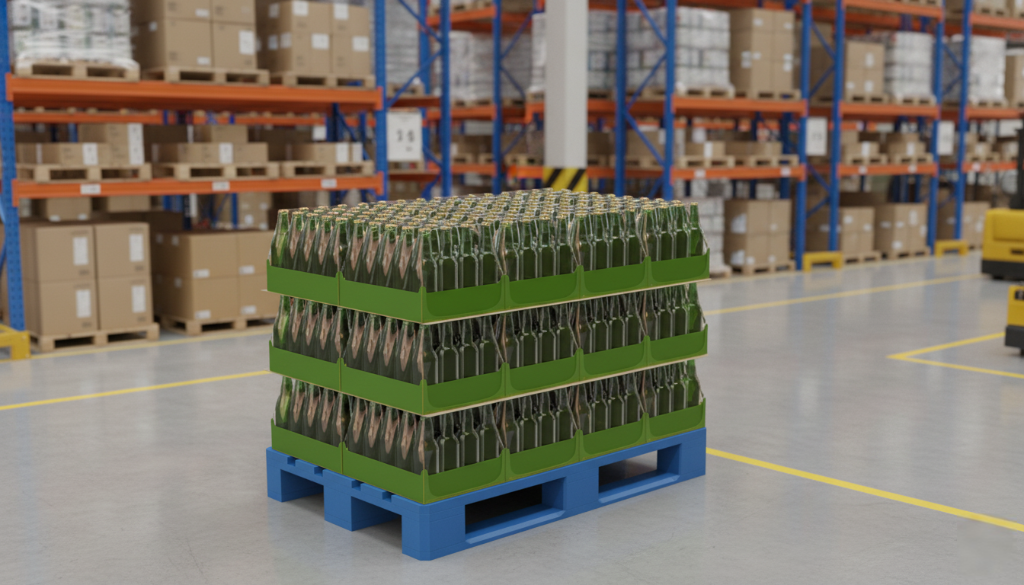
Stacking beer cases wrong leads to damaged products and angry customers. Different brands pack differently. Additionally, the wrong calculation costs money and causes headaches.
A standard pallet typically holds 72-100 cases of beer1 depending on case size and pallet dimensions. Most breweries use 48×40 inch pallets2 with 4-5 layers of beer cases3, following weight limits of 2,200-2,500 pounds4 per pallet.
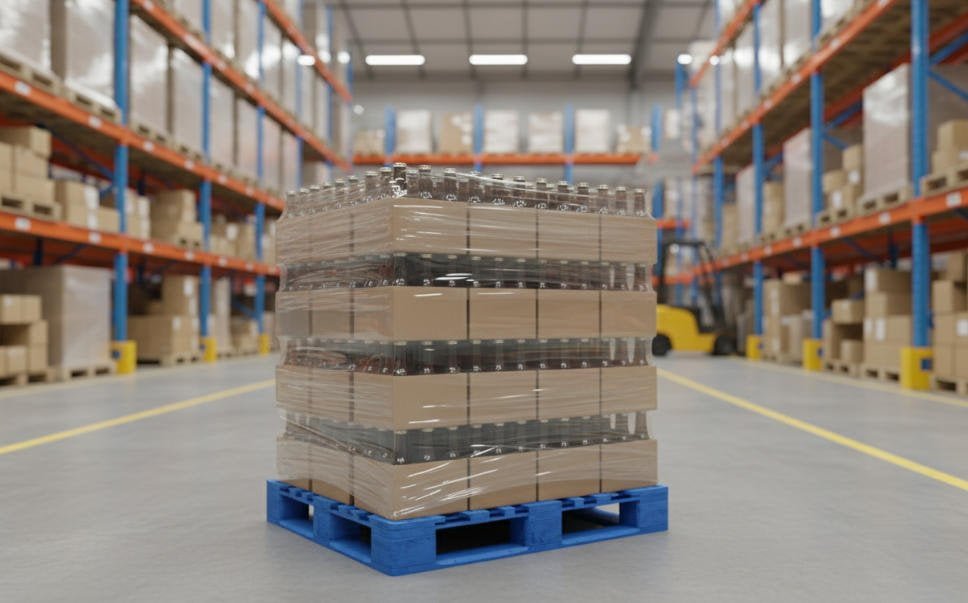 After 20+ years manufacturing pallets for beverage companies, I have seen countless loading configurations. Furthermore, each brewery has different case sizes and weight requirements. Therefore, understanding the correct loading capacity helps you avoid costly mistakes and damaged shipments.
What Factors Determine Beer Case Capacity on Different Pallet Sizes?
Pallet dimensions directly affect how many beer cases fit safely. Moreover, wrong calculations lead to unstable loads and product damage. Consequently, each pallet size requires different stacking patterns for optimal capacity.
Standard 48×40 inch pallets2 hold 72-100 beer cases, 42×42 inch pallets hold 64-84 cases5, and European 47×32 inch pallets hold 60-80 cases6 depending on case dimensions and weight distribution requirements.
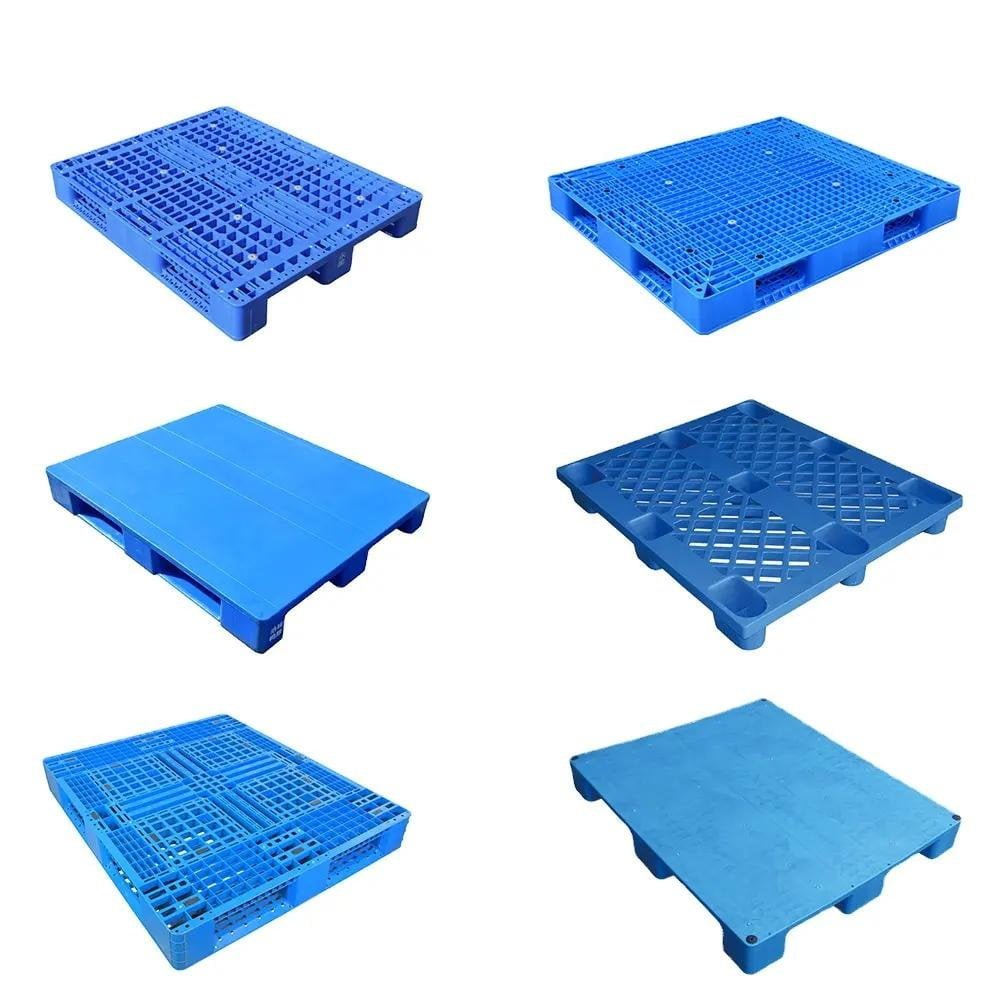 Different pallet sizes work better for specific beer packaging types. Additionally, the 48×40 inch pallet remains the most common choice in North America because it maximizes container space efficiently. Furthermore, this size accommodates most standard beer case dimensions without wasted space.
I have worked with major breweries that switched pallet sizes to improve their loading efficiency. For example, one client increased their capacity by 15% just by switching from 42×42 inch to 48×40 inch pallets2. Similarly, the rectangular shape allows better case arrangement compared to square pallets.
European pallets measure 47.2×31.5 inches and work well for export markets. However, these pallets fit European warehouse systems perfectly but hold fewer cases than American standard pallets. In addition, the narrower width limits stacking options for wider beer cases.
Here are the main capacity differences by pallet size:
| Pallet Size (inches) | Typical Case Capacity | Weight Limit (lbs) | Best For |
|---|---|---|---|
| 48×40 | 72-100 cases | 2,500 | North American distribution |
| 42×42 | 64-84 cases | 2,200 | Square case configurations |
| 47×32 | 60-80 cases | 2,300 | European markets |
| 48×48 | 80-110 cases | 2,800 | Heavy-duty applications |
The key factors include case dimensions, beer type weight, and local weight regulations. Meanwhile, heavy craft beers in glass bottles require fewer cases per pallet compared to light beers in aluminum cans.
How Do Different Beer Package Types Affect Pallet Loading Capacity?
Beer packaging varies significantly between brands and affects loading calculations. Additionally, glass bottles weigh more than aluminum cans. Therefore, different case sizes require different stacking approaches for stability and safety.
12-pack glass bottle cases allow 72-84 cases per pallet7, 24-pack can cases fit 60-72 cases per pallet8, and 30-pack cases accommodate 48-60 cases per pallet9 due to weight and dimensional constraints.
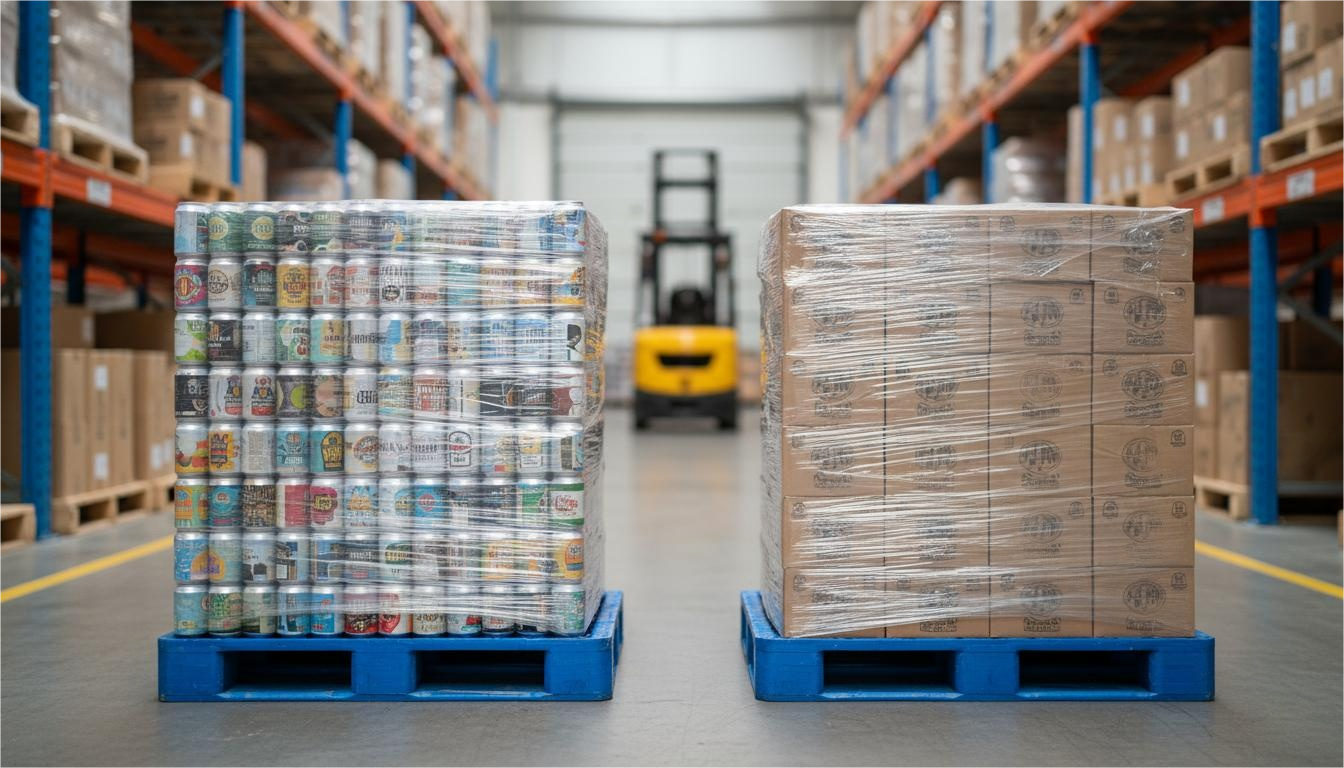 Package weight determines the maximum safe loading capacity more than size alone. For instance, a case of glass bottles weighs approximately 20-25 pounds while aluminum cans weigh 12-15 pounds per case10. Consequently, this weight difference dramatically affects how many cases you can safely stack.
I have helped breweries optimize their packaging for better pallet efficiency. Specifically, one craft brewery reduced their case weight by switching from heavy glass to lighter bottles. As a result, this change allowed them to fit 20% more cases per pallet while staying within weight limits.
Case dimensions also matter significantly for stacking efficiency. Furthermore, standard beer cases measure approximately 16×11×9 inches for 24-packs. On the other hand, smaller 12-pack cases measure 12×8×9 inches and allow tighter stacking patterns. Meanwhile, larger 30-pack cases measure 18×12×9 inches and limit stacking options.
The stacking pattern depends on case dimensions and pallet size compatibility. Therefore, most efficient patterns use 4-5 layers with specific arrangements:
| Package Type | Cases per Layer | Typical Layers | Total Capacity | Average Weight |
|---|---|---|---|---|
| 12-pack bottles | 18-21 cases | 4-5 layers | 72-84 cases | 1,800-2,100 lbs |
| 24-pack cans | 12-15 cases | 4-5 layers | 60-72 cases | 1,440-1,800 lbs |
| 24-pack bottles | 12-15 cases | 3-4 layers | 48-60 cases | 1,920-2,400 lbs |
| 30-pack cans | 10-12 cases | 4-5 layers | 48-60 cases | 1,440-1,800 lbs |
Weight distribution becomes critical with mixed loads. Additionally, never mix heavy glass bottles with light cans on the same pallet. Otherwise, this creates unstable loads that shift during transport and cause damage.
What Are the Weight Limitations and Safety Requirements for Beer Pallets?
Weight limits protect workers and prevent equipment damage. Furthermore, exceeding weight limits violates safety regulations. Therefore, different facilities have different maximum weight requirements that affect loading decisions.
Most facilities limit pallet weights to 2,200-2,500 pounds including the pallet weight. OSHA requires proper weight distribution11 and stable stacking to prevent workplace injuries and product damage during handling.
Weight distribution affects pallet stability more than total weight alone. Additionally, uneven weight distribution causes pallets to tip during forklift operations. For example, I have seen entire beer shipments damaged because of improper weight distribution during stacking.
Forklift capacity determines practical weight limits in most warehouses. Typically, standard forklifts handle 3,000-5,000 pound loads safely. However, pallet weight should stay below 2,500 pounds to maintain stability during lifting and transport operations.
Different beer types require different safety considerations. Similarly, heavy craft beers in thick glass bottles need extra care during stacking. In contrast, light beers in aluminum cans allow higher stacking but require proper securing to prevent shifting.
Safety regulations vary by region and facility type. Therefore, most distribution centers follow these weight guidelines:
Weight Distribution Requirements
- Bottom Layer: Heaviest cases, evenly distributed
- Middle Layers: Medium weight, alternating patterns
- Top Layer: Lightest cases, secure wrapping required
- Edge Support: Minimum 2-inch overlap on all sides
- Center of Gravity: Must remain within pallet perimeter
Handling Safety Guidelines
- Forklift Speed: Maximum 5 mph with loaded pallets
- Stacking Height: Maximum 6 feet including pallet
- Wrapping Requirements: Minimum 6 wrap layers for stability
- Inspection Points: Check before loading, during transport, after unloading
I always recommend using stretch wrap and corner protectors12 for beer pallets. Additionally, the wrap prevents cases from shifting during transport. Furthermore, corner protectors prevent damage from strapping and handling equipment.
How Do Major Beer Brands Compare in Pallet Loading Efficiency?
Different breweries optimize their packaging for efficient distribution. However, some brands focus on maximum cases per pallet. In contrast, others prioritize product protection over quantity. Therefore, understanding brand differences helps optimize your loading strategy.
Budweiser and Coors optimize for 84 cases per pallet13 using lightweight packaging, craft breweries typically achieve 60-72 cases14 due to heavier glass bottles, while premium imports often limit loads to 48-60 cases for product protection.
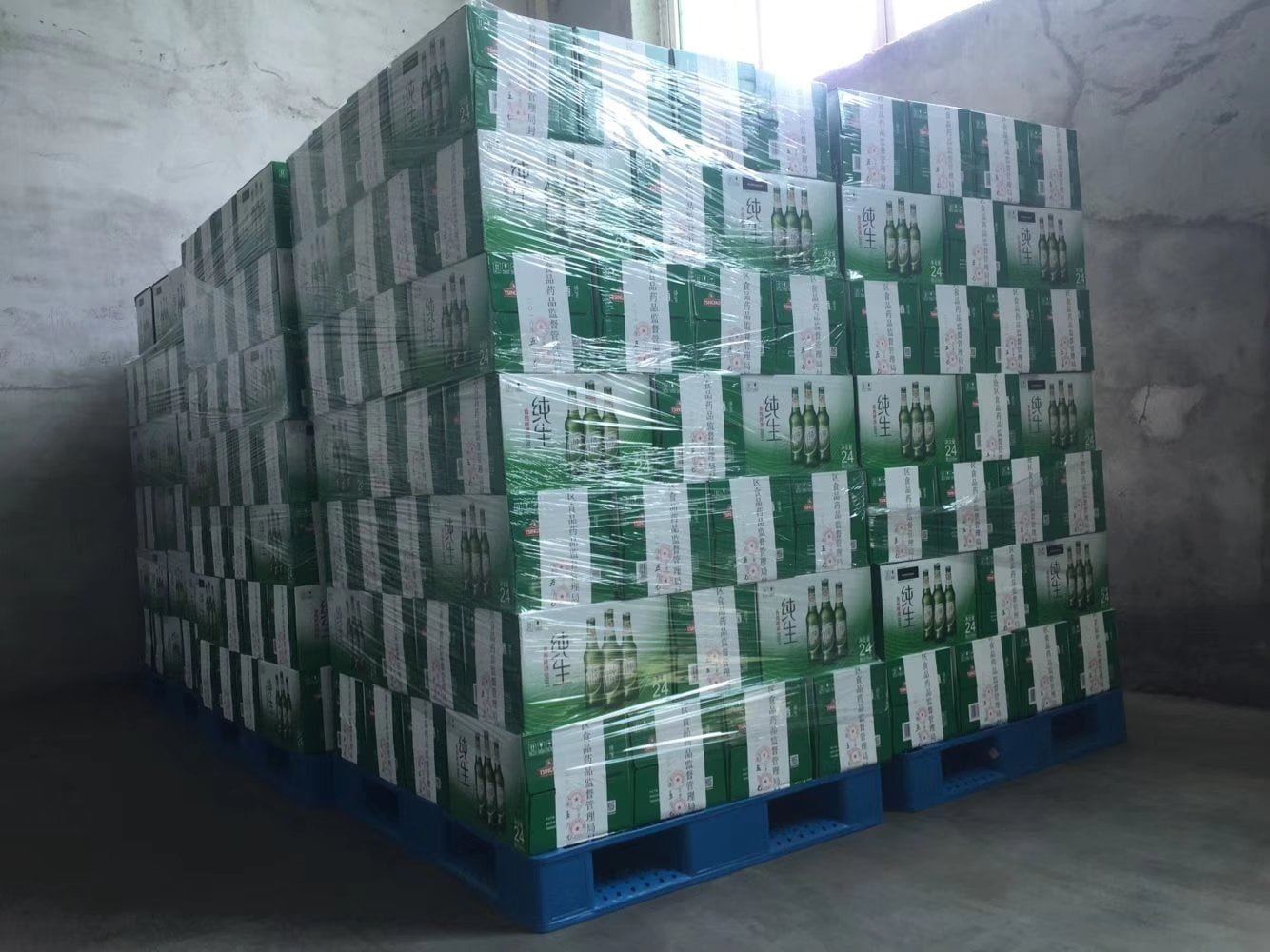 Major breweries invest heavily in packaging optimization for distribution efficiency. For instance, Anheuser-Busch redesigned their case dimensions to maximize pallet capacity while meeting weight requirements. Furthermore, their standardized approach allows consistent loading across all distribution centers.
Craft breweries face different challenges with smaller production volumes and varied packaging. Additionally, many craft brewers use heavier glass bottles that limit pallet capacity. However, their premium pricing often compensates for lower loading efficiency.
I have worked with distribution companies handling multiple beer brands simultaneously. Therefore, they create loading charts for each brand to optimize warehouse operations. Moreover, mixed brand pallets require careful planning to maintain stability and weight limits.
Here is a comparison of major brand loading characteristics:
| Brand Category | Typical Cases/Pallet | Package Weight | Optimization Focus |
|---|---|---|---|
| Major Domestic (Budweiser, Coors) | 80-84 cases | 12-15 lbs/case | Maximum efficiency |
| Premium Domestic (Sam Adams) | 72-78 cases | 16-20 lbs/case | Balance efficiency/protection |
| Craft Breweries | 60-72 cases | 18-25 lbs/case | Product protection |
| Premium Imports (Heineken) | 60-66 cases | 20-24 lbs/case | Brand protection |
| Mexican Imports (Corona) | 72-78 cases | 14-18 lbs/case | Market efficiency |
Regional preferences also affect loading strategies. For example, West Coast distributors handle more craft beers with lower pallet capacity. Meanwhile, Midwest distributors focus on major brands with higher loading efficiency. Therefore, understanding regional patterns helps optimize your operations.
What Tools Help Calculate Optimal Beer Pallet Loading?
Calculation tools prevent costly loading mistakes. Additionally, manual calculations often miss important factors. Therefore, digital tools consider multiple variables simultaneously for better accuracy and efficiency.
Pallet loading calculators15 consider case dimensions, weight limits, stacking patterns, and safety requirements to determine optimal capacity. Most breweries use specialized software that factors product specifications and distribution requirements.
I recommend using systematic approaches rather than guesswork for pallet loading. Furthermore, simple spreadsheet calculators work well for consistent products. However, more complex operations benefit from specialized loading software that optimizes multiple variables.
Basic calculation factors include case length, width, height, weight, and pallet dimensions. Moreover, advanced calculations consider stacking strength, transport conditions, and handling requirements. Additionally, the best tools integrate with inventory management systems for real-time optimization.
Basic Calculation Formula
- Cases per layer = (Pallet length ÷ Case length) × (Pallet width ÷ Case width)
- Total layers = Weight limit ÷ (Cases per layer × Case weight + Pallet weight)
- Total capacity = Cases per layer × Total layers
Advanced Considerations
- Overhang Limits: Maximum 2-inch case overhang per side
- Stacking Strength: Bottom cases must support full load weight
- Transport Vibration: Add 10% safety margin for truck transport
- Temperature Effects: Cold storage may affect case dimensions
- Handling Equipment: Consider forklift and conveyor limitations
Most distribution centers use warehouse management systems16 with built-in pallet optimization. Additionally, these systems automatically calculate optimal loading based on product databases and facility constraints. Furthermore, they also track loading patterns for continuous improvement.
Conclusion
Calculate beer pallet capacity using case dimensions, weight limits, and safety requirements for optimal efficiency and product protection.
My Role
As a plastic pallet manufacturer with over 20 years of experience, I have worked directly with major beverage companies to optimize their pallet loading efficiency. Furthermore, I understand how different pallet designs affect beer distribution and have helped clients reduce shipping costs while improving product safety through better loading strategies.
About Preface Plast
Preface Plast is a plastic pallet manufacturer with over 20 years of production experience, headquartered in China. Additionally, we provide high-quality, customized plastic pallet solutions for brand owners, wholesalers, and distributors. Furthermore, with more than 60 injection molding and rotomolding machines17, each equipped with quality control staff having over 5 years of experience, we ensure stable quality.
Service Content
- Products: One-stop plastic pallet solutions
- Customization: Custom colors, custom logos, custom molds
- International Certifications: ISO 9001, CE, REACH, ROHS, SGS, FDA18, GRS
Quality Assurance
- Raw Material Testing: Complies with RoHS and REACH standards, strength and performance meet international requirements
- Precision Manufacturing: Automated injection molding, precision assembly, accuracy ±0.1mm
- Full and Sampling Inspection: 100% factory inspection, ISO 9001 sampling, ensuring high standards
- Certifications: Passed ISO 9001, CE, REACH, ROHS, SGS, FDA18 standards
Production Capacity
- High-Quality Manufacturing: 60+ injection molding/rotomolding machines, following ISO 9001
- High-End Customization: Providing customized solutions for global brands
- Flexible Solutions: Customized according to customer needs, enhancing market competitiveness
Global Impact
Serving global customers, providing reliable plastic pallets and customized logistics packaging solutions, supporting business growth and customer trust.
Learn the exact capacity range for standard pallets to optimize your beer distribution and avoid costly loading mistakes. ↩
Discover why this pallet size is the North American standard and how it maximizes your beer loading efficiency. ↩
Learn optimal stacking heights to maximize capacity while maintaining stability and preventing product damage. ↩
Understand critical weight restrictions to ensure worker safety and prevent equipment damage during beer handling operations. ↩
Compare square pallet efficiency to standard rectangular pallets for your specific beer distribution needs. ↩
Essential information for international beer shipping and European market distribution requirements. ↩
Optimize your craft beer distribution with precise loading calculations for glass bottle packaging. ↩
Maximize your aluminum can beer distribution efficiency with accurate capacity planning. ↩
Plan large format beer distribution with proper capacity calculations for bulk packaging. ↩
Essential weight specifications for optimizing can beer pallet loading and transportation efficiency. ↩
Ensure workplace compliance and prevent injuries with official safety guidelines for beer pallet handling. ↩
Protect your beer shipments from damage with proper pallet securing techniques and materials. ↩
Learn from industry leaders' packaging strategies to improve your own beer distribution operations. ↩
Understand craft beer loading limitations and optimize your specialty beer distribution strategy. ↩
Streamline your operations with digital tools that eliminate guesswork and optimize beer pallet efficiency. ↩
Integrate automated pallet optimization into your operations for consistent efficiency and cost savings. ↩
Understand advanced manufacturing techniques that ensure durable, reliable pallets for your beer distribution. ↩
Ensure your pallets meet international quality and safety standards for reliable beer transportation worldwide. ↩