Stackable vs Rack-able Plastic Pallets: Which Type Should You Choose
When you're trying to decide between stackable and rackable plastic pallet options, the wrong choice can cost you thousands in wasted space. Furthermore, inefficient operations impact your bottom line. You need to know which type fits your specific business needs. Most importantly, the decision affects your profitability more than you might think.
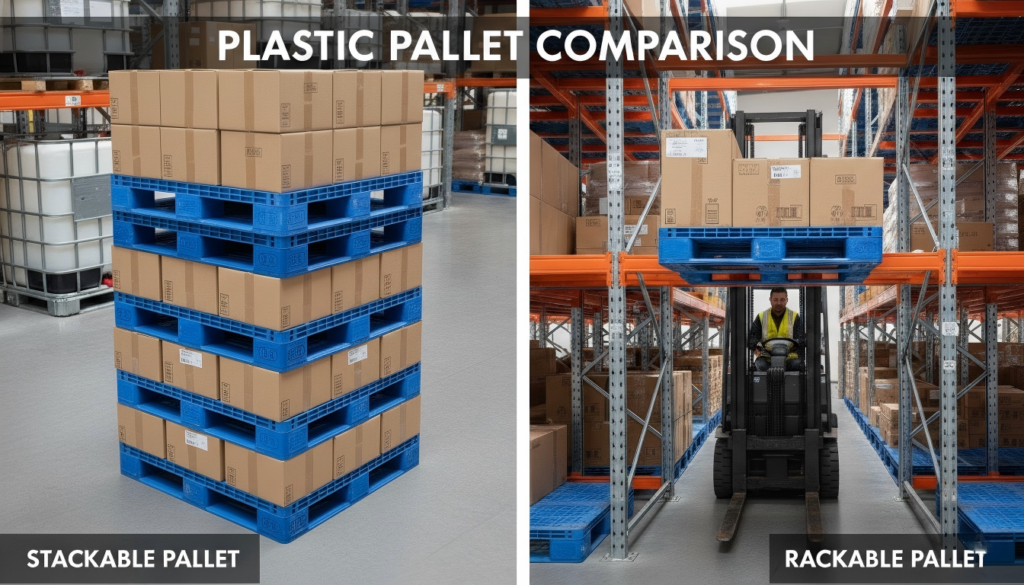
Stackable pallets nest inside each other when empty, saving up to 75% storage space. Additionally, they reduce transportation costs1. In contrast, rackable plastic pallets have flat bottoms for heavy-duty applications but require more storage space. Your choice depends on load weight2, storage constraints, and operational efficiency3 needs.
I've spent over 20 years helping businesses choose the right pallet solutions4. Furthermore, the stackable versus rackable plastic pallet debate comes up in almost every consultation. Therefore, let me share what I've learned from working with thousands of clients across different industries.
What Makes Stackable Pallets Different from Standard Options?
Many warehouse managers don't realize that stackable pallets5 can transform their storage efficiency6 overnight. Moreover, the space-saving design7 seems too good to be true. Consequently, you're probably wondering if there's a catch to this storage solution.
Stackable pallets feature tapered walls and reinforced corners. These allow empty pallets to nest inside each other. Additionally, this design reduces storage footprint by 75% compared to standard pallets. Meanwhile, they maintain structural integrity8 for loads up to 2,000 pounds static weight.
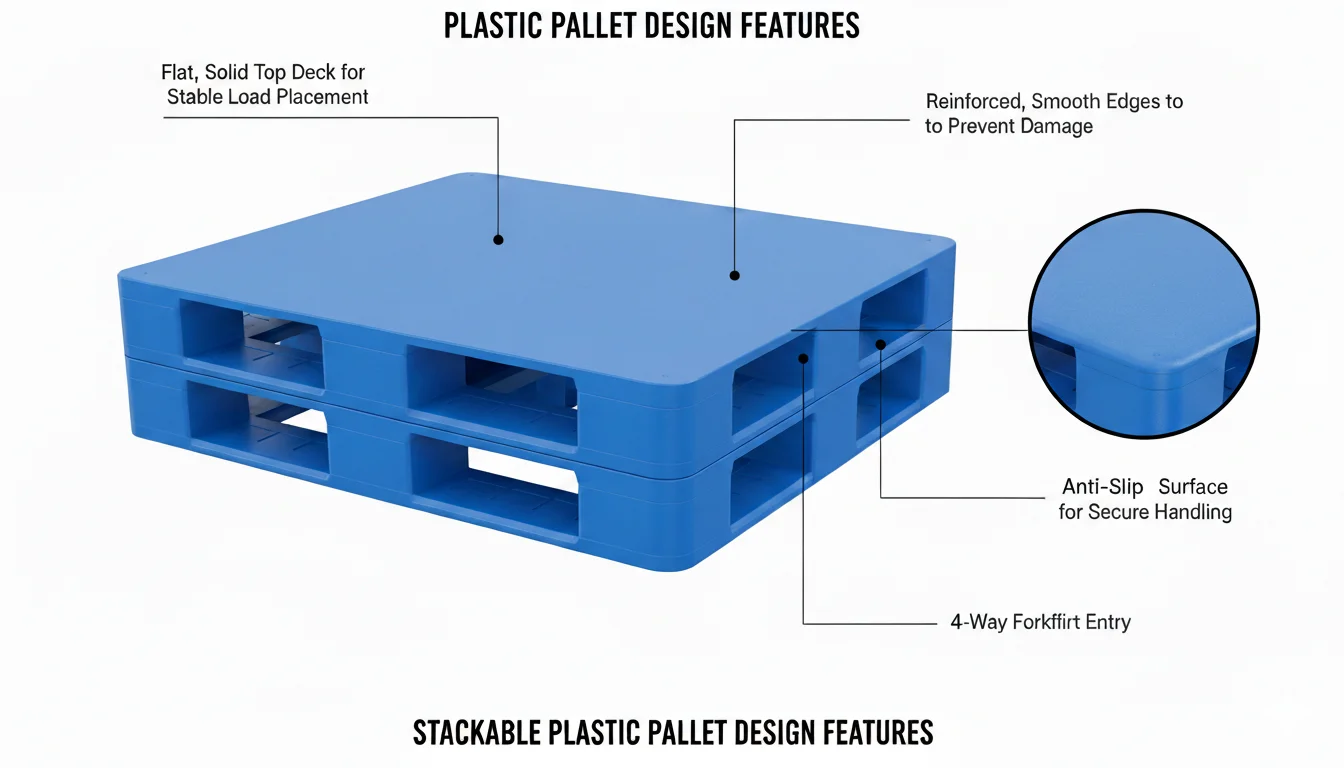
The engineering behind stackable pallets5 focuses on maximizing space efficiency. However, it doesn't compromise functionality. Additionally, the tapered sidewalls create a nesting system. In this system, each empty pallet slides into the one below it. Therefore, this design requires precise manufacturing tolerances. These ensure smooth nesting and separation.
Most stackable pallets5 can handle dynamic loads%%%FOOTNOTE_REF9%%% of 1,200 to 1,500 pounds. Moreover, they support [static loads](https://www.thomsonlinear.com/en/support/tips/what-is-the-difference-between-static-load-and-dynamic-load?srsltid=AfmBOopPbPb9O5n4neRvNg8gRLOYkb-uF0DWhiNAOMJlP5psPGhCe)10 up to 2,500 pounds. Furthermore, the reinforced corners distribute weight evenly across the structure. Similarly, the bottom design includes reinforcement ribs that prevent flexing under load.
| Feature | Stackable Pallet | Rackable Plastic Pallet |
|---|---|---|
| Empty Storage Height (10 pallets) | 18-24 inches | 60+ inches |
| Nesting Ratio | 8:1 to 10:1 | 1:1 |
| Transportation Efficiency | 400% more per truck | Standard capacity |
| Weight Capacity | Up to 2,500 lbs static | Up to 5,000 lbs static |
The material composition typically uses high-density polyethylene11 (HDPE) or polypropylene (PP). Additionally, it includes UV stabilizers. This combination provides durability while maintaining the flexibility needed for the nesting function. Therefore, the manufacturing process12 requires specialized molds. These create the precise angles for proper nesting.
Why Do Heavy-Duty Applications Prefer Rackable Plastic Pallets?
Heavy machinery and steel products need pallets that can handle extreme weights. Moreover, they must do so without flexing or breaking. Standard stackable pallets5 simply can't support these demanding applications. Consequently, you need to understand when rackable plastic pallet options become the only viable solution.
Rackable plastic pallets feature reinforced flat bottoms and structural support beams. These distribute heavy loads across warehouse racking systems. Furthermore, they handle static loads10 up to 5,000 pounds. Additionally, they manage dynamic loads9 up to 2,500 pounds. Therefore, they're essential for industrial applications.
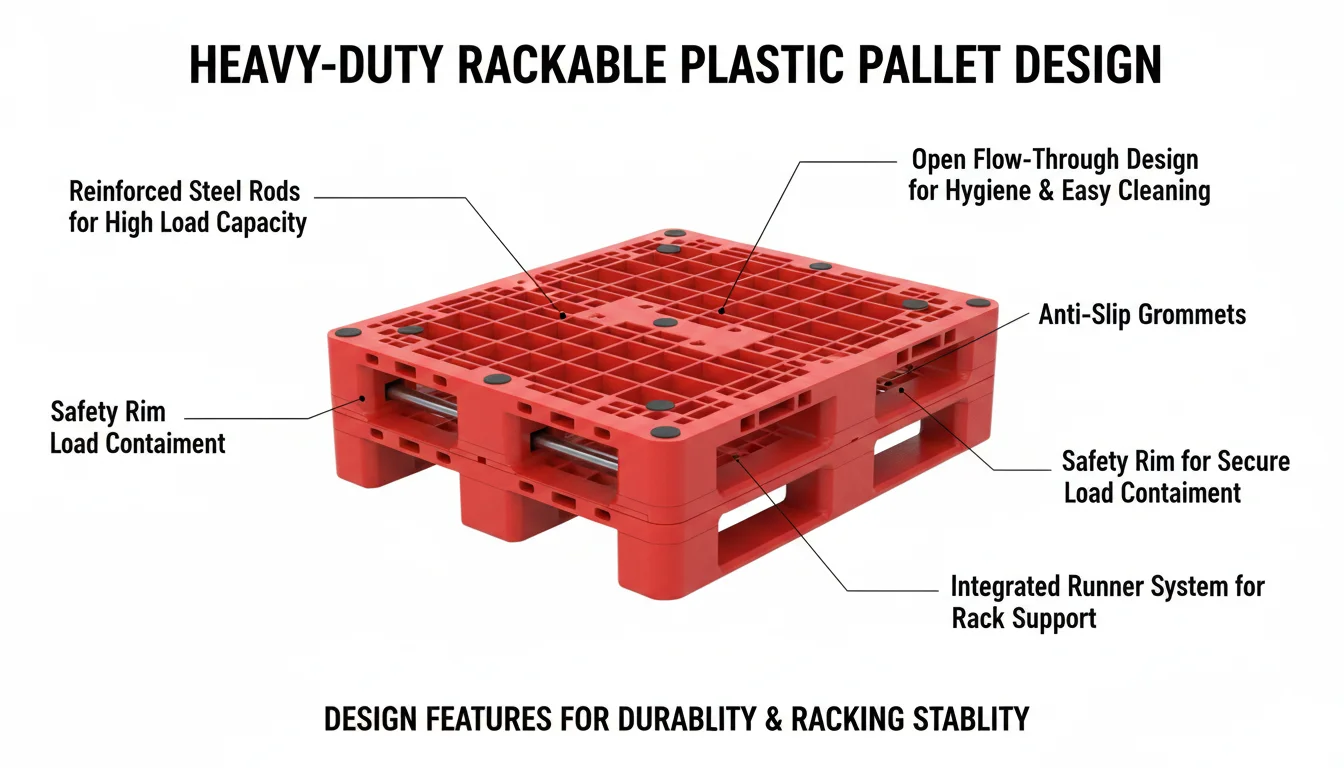
The flat-bottom design of rackable plastic pallets provides maximum contact with racking systems and forklifts. Furthermore, the reinforcement structure includes steel inserts or high-density plastic ribs. These prevent sagging under heavy loads. As a result, this design makes them ideal for automotive parts, machinery, and bulk materials.
Rackable plastic pallets excel in applications where pallets remain loaded for extended periods. The structural integrity8 maintains load stability during long-term storage. Additionally, the design prevents creep and deformation. These could otherwise compromise product safety or racking system integrity.
Load Distribution Analysis
| Load Type | Stackable Capacity | Rackable Plastic Pallet Capacity | Recommended Use |
|---|---|---|---|
| Point Load | 800 lbs | 2,000 lbs | Rackable preferred |
| Distributed Load | 2,000 lbs | 4,000 lbs | Both suitable |
| Extreme Load | Not recommended | 5,000 lbs | Rackable only |
| Long-term Storage | 1,500 lbs | 3,500 lbs | Rackable preferred |
The manufacturing process12 for rackable plastic pallets involves thicker wall sections. Moreover, it includes additional reinforcement materials. Furthermore, the mold design creates uniform thickness throughout the structure. Additionally, steel reinforcements are often molded into high-stress areas. Therefore, this prevents failure under extreme loads.
Temperature resistance becomes crucial in industrial environments. Rackable plastic pallets maintain structural integrity8 in temperatures ranging from -40°F to 140°F. Furthermore, the material selection includes impact modifiers. These prevent cracking in cold storage applications.
How Much Money Can You Save with the Right Pallet Choice?
Your pallet choice directly impacts your operational costs. Moreover, these impacts occur in ways you might not have calculated. Transportation, storage, and replacement costs13 add up quickly over time. Therefore, smart businesses analyze the total cost of ownership14 before making decisions.
Stackable pallets reduce total operational costs by 20-30%. This happens through improved transportation efficiency and reduced storage requirements. Additionally, initial savings of $5-15 per pallet multiply across your entire fleet. Meanwhile, storage space reduction can eliminate the need for additional warehouse expansion.
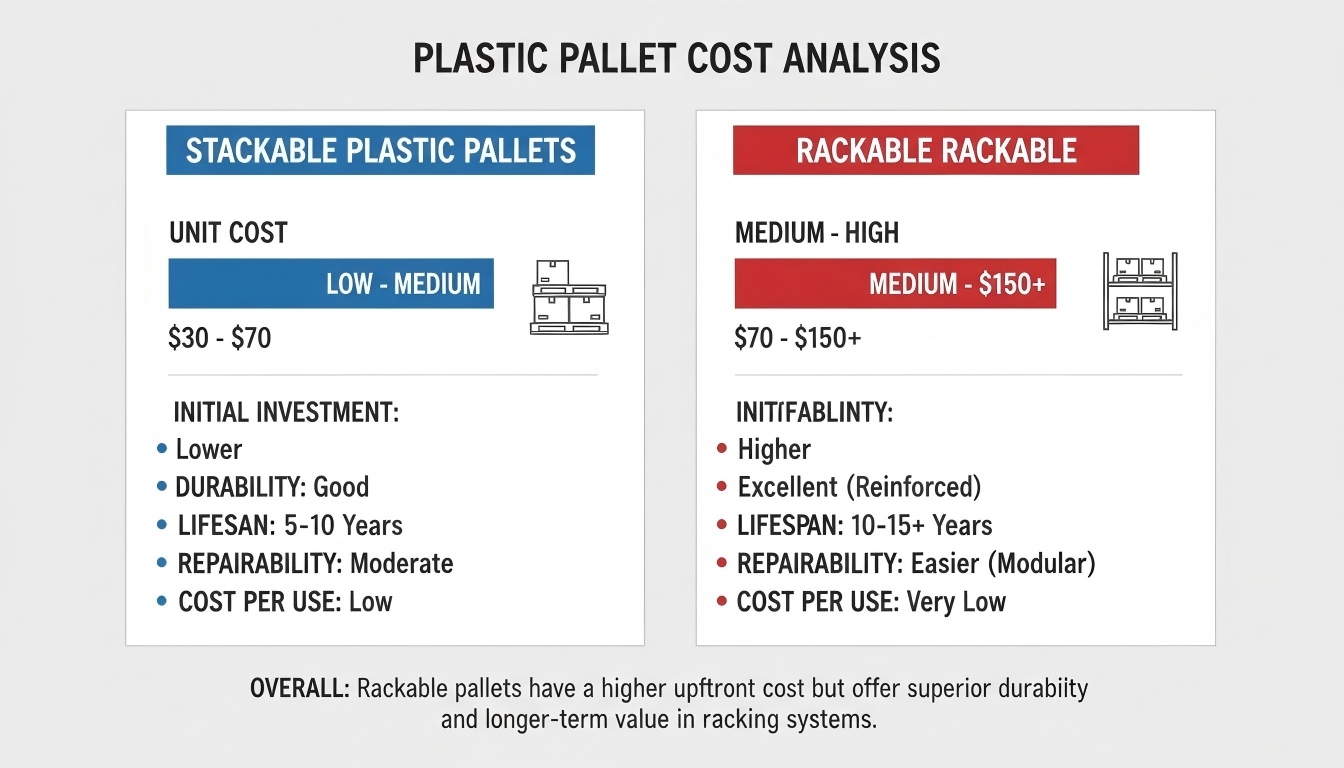
Let me break down the real numbers from my client experiences. A mid-size distribution center with 5,000 pallets can save $25,000 annually. This happens by switching to stackable pallets5. The savings come from reduced transportation costs1. Additionally, they result from smaller storage footprint and improved handling efficiency.
Transportation costs drop significantly. This is because you can fit more empty pallets per truck. A standard trailer holds 80 empty rackable plastic pallets. However, it can carry 320 empty stackable pallets5. Therefore, this 4:1 improvement reduces transportation frequency and costs by 75% for empty pallet returns.
Five-Year Cost Comparison
| Cost Factor | Stackable Pallets | Rackable Plastic Pallets | Savings |
|---|---|---|---|
| Initial Purchase (1000 units) | $45,000 | $55,000 | $10,000 |
| Storage Space (annual) | $8,000 | $12,000 | $4,000 |
| Transportation (annual) | $6,000 | $15,000 | $9,000 |
| Replacement Rate (annual) | 5% | 3% | Variable |
| Total 5-Year Cost | $278,000 | $368,000 | $90,000 |
The storage space calculation assumes $2 per square foot annual warehouse costs. Stackable pallets require 25% of the storage space needed for rackable plastic pallets when empty. Consequently, this space efficiency allows businesses to store more inventory in existing facilities. Alternatively, it helps delay warehouse expansion.
Replacement costs favor rackable plastic pallets due to their higher durability. However, the difference is offset by the initial cost savings. Additionally, the operational efficiencies of stackable pallets5 help offset this difference. Therefore, the break-even point typically occurs within 18-24 months for most applications.
Which Industries Should Choose Stackable Pallets?
Food and beverage companies face unique challenges. These include inventory turnover15 and hygiene requirements16. Retail and e-commerce operations need maximum space efficiency. Therefore, these industries benefit most from stackable pallet solutions4.
Stackable pallets work best for food processing, retail distribution, pharmaceuticals, and e-commerce operations. These are environments where inventory turns over quickly. Additionally, space efficiency matters more than maximum weight capacity17. Industries with loads under 2,000 pounds see the greatest benefits.
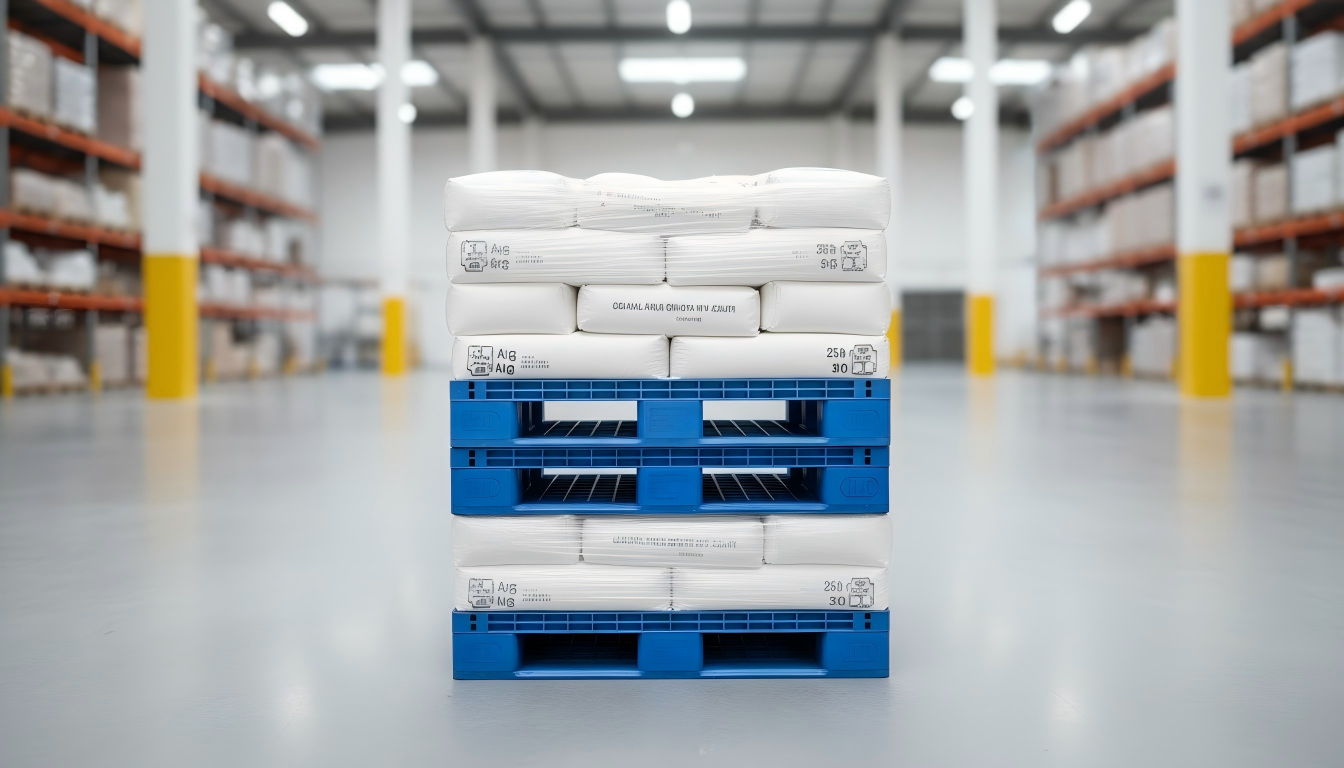
The food industry represents the largest market for stackable pallets5. This is because of rapid inventory turnover15 and strict hygiene requirements16. The smooth surfaces and closed-deck designs prevent contamination. Additionally, they allow for easy cleaning. Moreover, the space savings matter because food distribution centers handle high volumes with time-sensitive products.
E-commerce operations benefit from the flexibility stackable pallets5 provide. The ability to quickly reconfigure storage layouts helps manage seasonal demand fluctuations. Additionally, the ability to maximize cube utilization provides similar benefits. Furthermore, the lightweight design reduces handling fatigue for workers who move pallets frequently.
Pharmaceutical companies choose stackable pallets5 for their cleanroom compatibility18 and space efficiency. The plastic construction resists chemicals used in cleaning processes. Furthermore, the consistent dimensions ensure compatibility with automated storage and retrieval systems.
Industry-Specific Benefits
| Industry | Primary Benefit | Load Capacity Need | Turnover Rate |
|---|---|---|---|
| Food & Beverage | Hygiene + Space | Medium (1500 lbs) | High |
| Retail Distribution | Space + Cost | Low (1000 lbs) | Very High |
| Pharmaceuticals | Cleanliness + Control | Low (800 lbs) | Medium |
| E-commerce | Flexibility + Speed | Medium (1200 lbs) | Very High |
| Textiles | Lightweight + Nesting | Low (600 lbs) | High |
The retail sector particularly benefits during peak seasons. This is when storage space becomes premium. Therefore, the ability to nest empty pallets allows retailers to maintain normal operations. Additionally, it eliminates the need to dedicate excessive space to empty pallet storage.
When Should Manufacturing Companies Choose Rackable Plastic Pallets?
Heavy manufacturing creates different pallet requirements than distribution operations. Metal fabrication, automotive, and machinery companies handle products that exceed stackable pallet weight limits. Consequently, understanding these applications helps you make informed decisions.
Manufacturing operations handling steel, machinery, automotive parts require rackable plastic pallets. Additionally, operations with products exceeding 2,500 pounds need them for safety and structural integrity8. Furthermore, long-term storage applications and automated warehouse systems also favor rackable designs for stability.
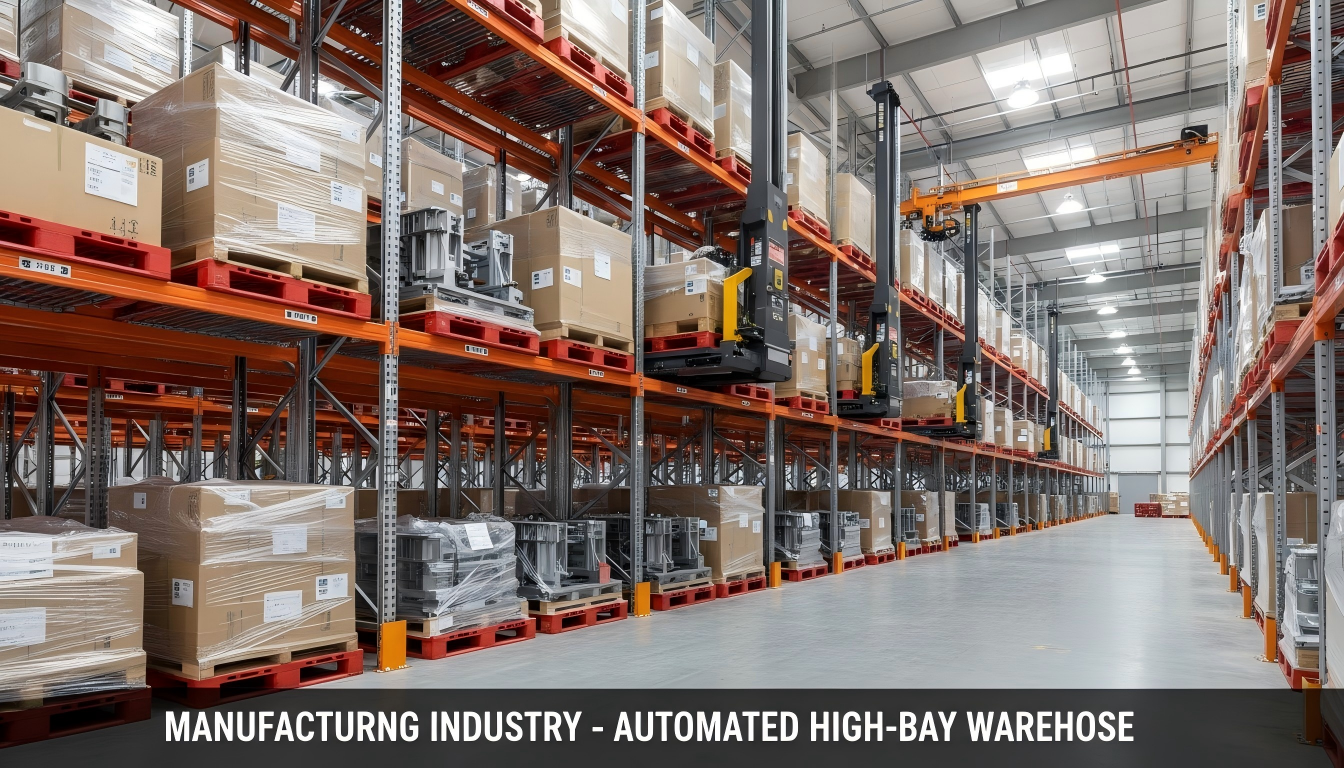
Steel fabrication shops need pallets that can handle concentrated loads from structural steel and heavy plates. The point loads created by steel beams would damage stackable pallets5. However, rackable plastic pallets distribute these loads safely across their reinforced structure.
Automotive manufacturing uses rackable plastic pallets for engine blocks, transmissions, and assembled components. The pallets must maintain dimensional stability under load. This ensures proper fit within automated assembly systems. Furthermore, any flexing could cause alignment issues in robotic handling systems.
Long-term storage applications favor rackable plastic pallets. This is because they maintain structural integrity8 under constant load. Seasonal inventory, work-in-progress storage, and archive applications benefit from this stability. Therefore, rackable plastic pallets provide better performance over extended periods.
Manufacturing Application Guidelines
| Application Type | Weight Range | Storage Duration | Recommended Pallet |
|---|---|---|---|
| Light Assembly | 500-1,500 lbs | Short-term | Either type |
| Heavy Components | 2,000-4,000 lbs | Any duration | Rackable only |
| Steel Products | 1,000-5,000 lbs | Any duration | Rackable only |
| Archived Inventory | Any weight | Long-term | Rackable preferred |
| Work-in-Progress | Variable | Medium-term | Based on weight |
The decision matrix includes factors beyond just weight capacity17. Handling frequency, storage environment, and integration with existing systems all influence the optimal choice. Additionally, manufacturing operations with established racking systems often find rackable plastic pallets integrate more easily. Therefore, they work better with existing infrastructure.
Quality control considerations also matter in manufacturing. Rackable plastic pallets provide consistent dimensions that don't change under load. Therefore, they ensure accurate measurements and proper fit within assembly processes.
Conclusion
Choose stackable pallets5 for space-constrained operations with loads under 2,000 pounds. Additionally, they work best with high inventory turnover15. In contrast, select rackable plastic pallets for heavy-duty applications exceeding 2,500 pounds. Furthermore, choose them for long-term storage needs.
About Preface Plast
At Preface Plast, I've helped thousands of businesses choose the right pallet solutions4 over our 20+ years in manufacturing. We produce both stackable and rackable plastic pallets using 60+ injection molding machines. Additionally, we maintain ISO 9001 certification.
Our team understands that every operation has unique requirements. We offer customized solutions including color matching, logo integration, and specialized mold designs. Furthermore, our quality control ensures ±0.1mm precision and 100% factory testing.
We serve global brands, wholesalers, and distributors with reliable pallet solutions4. These meet international standards including CE, REACH, ROHS, SGS, FDA, and GRS certifications. Therefore, our goal is helping you optimize your operations through better pallet selection and customization.
Find effective methods to lower transportation costs and improve logistics operations. ↩
Understand how load weight impacts your choice of pallets for different applications. ↩
Explore tips and techniques to boost operational efficiency in your warehouse. ↩
Find tailored pallet solutions that meet your specific business needs. ↩
Explore how stackable pallets can save space and reduce costs in your operations. ↩
Discover strategies to enhance storage efficiency and optimize your warehouse space. ↩
Discover the benefits of space-saving designs in maximizing warehouse efficiency. ↩
Learn about the importance of structural integrity in ensuring pallet performance. ↩
Get insights into dynamic loads and their significance in pallet design and usage. ↩
Understand the differences between static and dynamic loads for better pallet selection. ↩
Learn why HDPE is a preferred material for durable and efficient pallets. ↩
Explore the manufacturing process behind durable and efficient plastic pallets. ↩
Find ways to effectively manage and reduce replacement costs for your pallet fleet. ↩
Learn how to evaluate the total cost of ownership for better pallet investment decisions. ↩
Discover strategies to enhance inventory turnover and optimize stock management. ↩
Understand the hygiene standards necessary for pallets used in food processing. ↩
Get insights on how to accurately assess weight capacity for your pallet needs. ↩
Learn about the importance of cleanroom compatibility for pallets in sensitive industries. ↩